

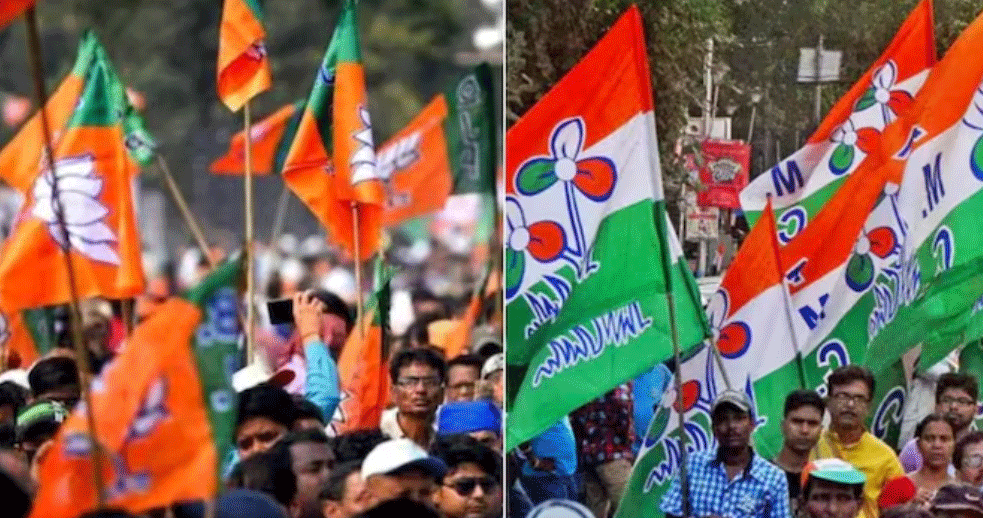
Kolkata: The 2026 West Bengal Assembly elections are occurring in a landscape defined by deep-seated political rivalries and a clear two-way contest between the incumbent All India Trinamool Congress and the Bharatiya Janata Party.
As the state moves through its two-phase polling schedule on April 23 and April 29, 2026, the central theme remains whether the long-standing leadership of Mamata Banerjee can withstand a decade and a half of anti-incumbency. The electoral atmosphere is characterized by intense mobilization on both sides, with the ruling party leaning on its extensive social welfare infrastructure while the opposition focuses on institutional challenges and governance issues.
The Trinamool Congress has structured its campaign around the success of direct benefit transfer schemes, which have historically secured a loyal voter base among women and the rural poor. Initiatives like Lakshmir Bhandar remain the cornerstone of their appeal, presented as a shield against rising living costs. To counter narratives of stagnation, the party has emphasized its commitment to Bengali identity and nativism, framing the election as a defense of the state’s cultural fabric against what it describes as outside political forces. This strategy aims to consolidate the Bengali-speaking vote across both urban and rural heartlands.
Conversely, the Bharatiya Janata Party has aggressively highlighted issues of corruption and administrative lapses. High-profile investigations into recruitment scams and the ration distribution system have been central to their messaging, aimed at swaying the youth and middle-class voters who feel bypassed by the current system. The party is also leveraging national security concerns and the implementation of the Citizenship Amendment Act to consolidate its influence in border districts and North Bengal. By focusing on law and order and economic health, the opposition seeks to present itself as a necessary agent of institutional reform for a state they claim is in a debt trap.
The 2026 contest is further complicated by localized issues such as the Dearness Allowance dispute involving government employees and the recent demographic shifts highlighted during electoral roll revisions. While the Left Front and Congress alliance attempts to reassert its relevance, the primary battle remains a test of the Trinamool’s grassroots machinery against the BJP’s organizational surge. With counting set for May 4, 2026, the result will indicate whether the traditional welfare-centric model of the incumbent still holds the majority or if the desire for a shift in governance has reached a decisive tipping point.