

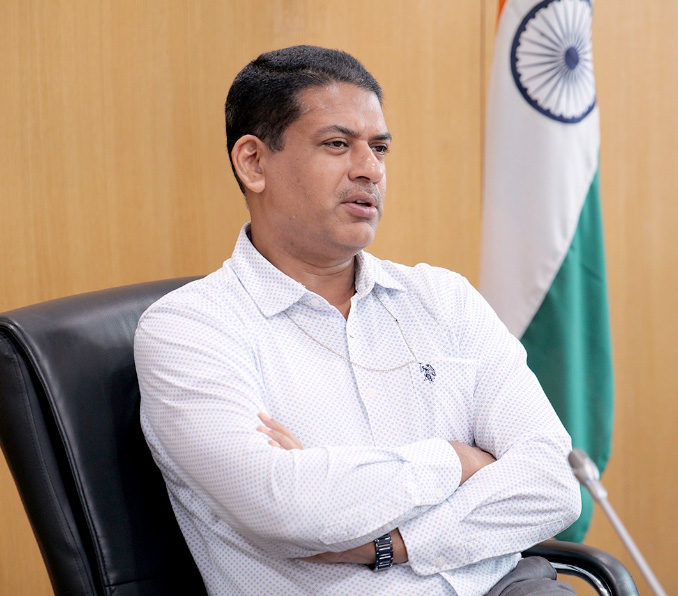
New Delhi: India’s solar power sector is experiencing unprecedented momentum, driven by strong policy direction and ambitious national targets. Expressing satisfaction over the rapid progress, Shri Santosh Kumar Sarangi, Secretary, Ministry of New and Renewable Energy (MNRE), highlighted how strategic execution is translating Prime Minister Shri Narendra Modi’s grand vision of clean energy independence into reality on the ground.
Under Prime Minister Shri Modi’s leadership, the nation’s total solar capacity has expanded over fiftyfold from around 3 GW in 2014 to over 162 GW by mid-2026. Solar energy now forms the largest share of India’s total renewable power installation, establishing the country as a global frontrunner in the green transition.
Speaking on the sector’s trajectory, MNRE Secretary, Shri Santosh Kumar Sarangi noted that comprehensive government interventions—ranging from large-scale solar parks to decentralized installations—are accelerating adoption across every tier of society. Key driver programs like the PM Surya Ghar: Muft Bijli Yojana are enabling millions of households to adopt rooftop solar systems, while the PM-KUSUM initiative continues to empower farmers with solar-powered irrigation pumps and decentralized grid supply.
Further expanding this growth momentum, the government recently approved the Pradhan Mantri Surya Sarovar Yojana with an outlay of over five thousand crore rupees. The initiative aims to harness existing water reservoirs and industrial ponds to build 5,000 MW of floating solar photovoltaic capacity integrated with energy storage systems. This policy push addresses land availability challenges while enhancing grid reliability during peak energy demand hours.
The MNRE Secretary emphasized that robust policy mechanisms, long-term Renewable Purchase Obligations, targeted financial assistance, and local manufacturing incentives under domestic content guidelines have created a thriving ecosystem. With continued focus on innovation, infrastructure creation, and citizen participation, India remains firmly on course toward achieving its broader goals of 500 GW non-fossil energy capacity by 2030 and Net Zero emissions by 2070.