

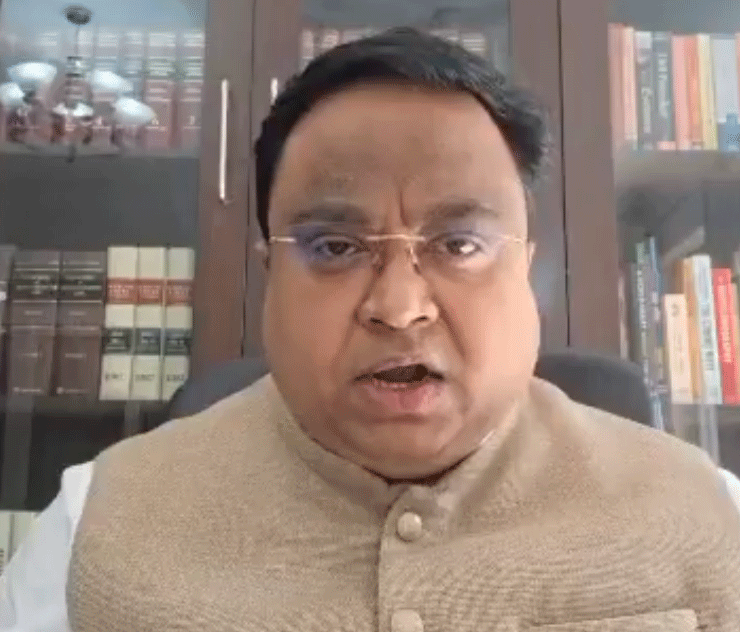
New DelhI: River Mahanadi water dispute has reached a critical juncture following a strongly worded letter from Rajya Sabha Member of Parliament Dr. Sasmit Patra to Odisha Chief Minister Shri Mohan Charan Majhi on April 25, 2026. This communication highlights a significant shift in the Mahanadi Water Disputes Tribunal’s stance, moving from procedural patience to judicial dissatisfaction as the states of Odisha and Chhattisgarh struggle to find common ground.
At the heart of the current tension is an order passed by the Tribunal on April 20, 2026, which explicitly recorded that the bench is not very happy with the conduct of the proceedings. The Tribunal noted that despite assurances given on April 11, the states failed to finalize the minutes of a crucial April 8 meeting concerning Annual Water Availability in Million Acre Feet. This specific technical data is considered foundational to all future decisions regarding water allocation, utilization rights, and downstream protection.
Dr. Patra’s letter warns that this is no longer a routine delay but a serious adverse signal that risks prejudicing the state’s position. He emphasizes that the Tribunal has issued a last opportunity for the states to finalize these minutes and present concrete settlement proposals by the next hearing on May 2, 2026. Failure to comply will result in the Tribunal abandoning settlement efforts and proceeding strictly on the merits of the case. Such a shift could limit Odisha’s strategic flexibility and potentially overlook long-term developmental and ecological concerns that might otherwise be addressed through a cooperative resolution.
The BJD MP also pointed to the unique political context, noting that because the Union Government, Odisha, and Chhattisgarh are currently governed by the same political dispensation, there was a public expectation for an expeditious, coordinated resolution. The lack of tangible outcomes despite this alignment has now drawn judicial concern.
To safeguard Odisha’s interests, Dr. Patra has urged the Chief Minister to exercise direct oversight over the Water Resources and Legal departments. He recommended high-level engagement with the Chhattisgarh government to reach a structured consensus and ensuring that a technically robust position on water availability is ready for the upcoming hearing. The outcome of these efforts remains vital for the state’s irrigation security, drinking water supply, and future industrial planning.