

Bhubaneswar: Odisha’s history does not survive only in royal chronicles, monumental temples or protected archaeological sites. It also resides in monastic courtyards, village festivals, weathered palm-leaf manuscripts, wooden images, sacred ponds and stories passed quietly from one generation to another.
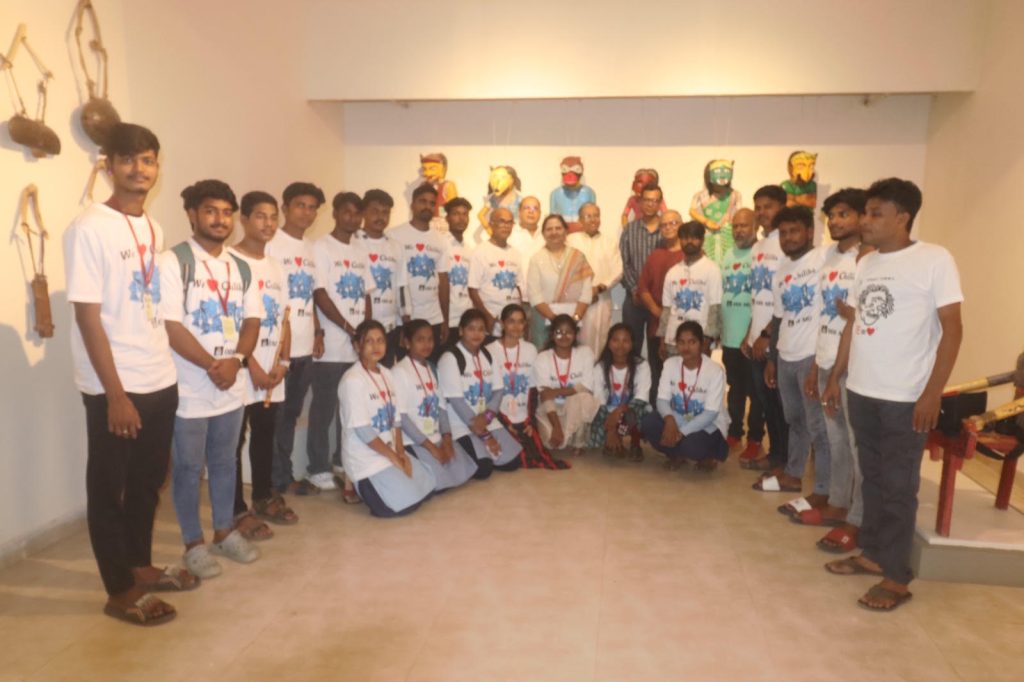
Recent heritage walks organised in Chilika-Banapur region, Bargarh and Dhenkanal brought some of these lesser-known cultural worlds into public view. While the Dhenkanal and Bargarh walks continued established local initiatives, the first-ever Chilika Heritage Walks, conducted on July 19, marked the beginning of a new effort to interpret the region’s artistic, sacred and ecological inheritance through public participation.
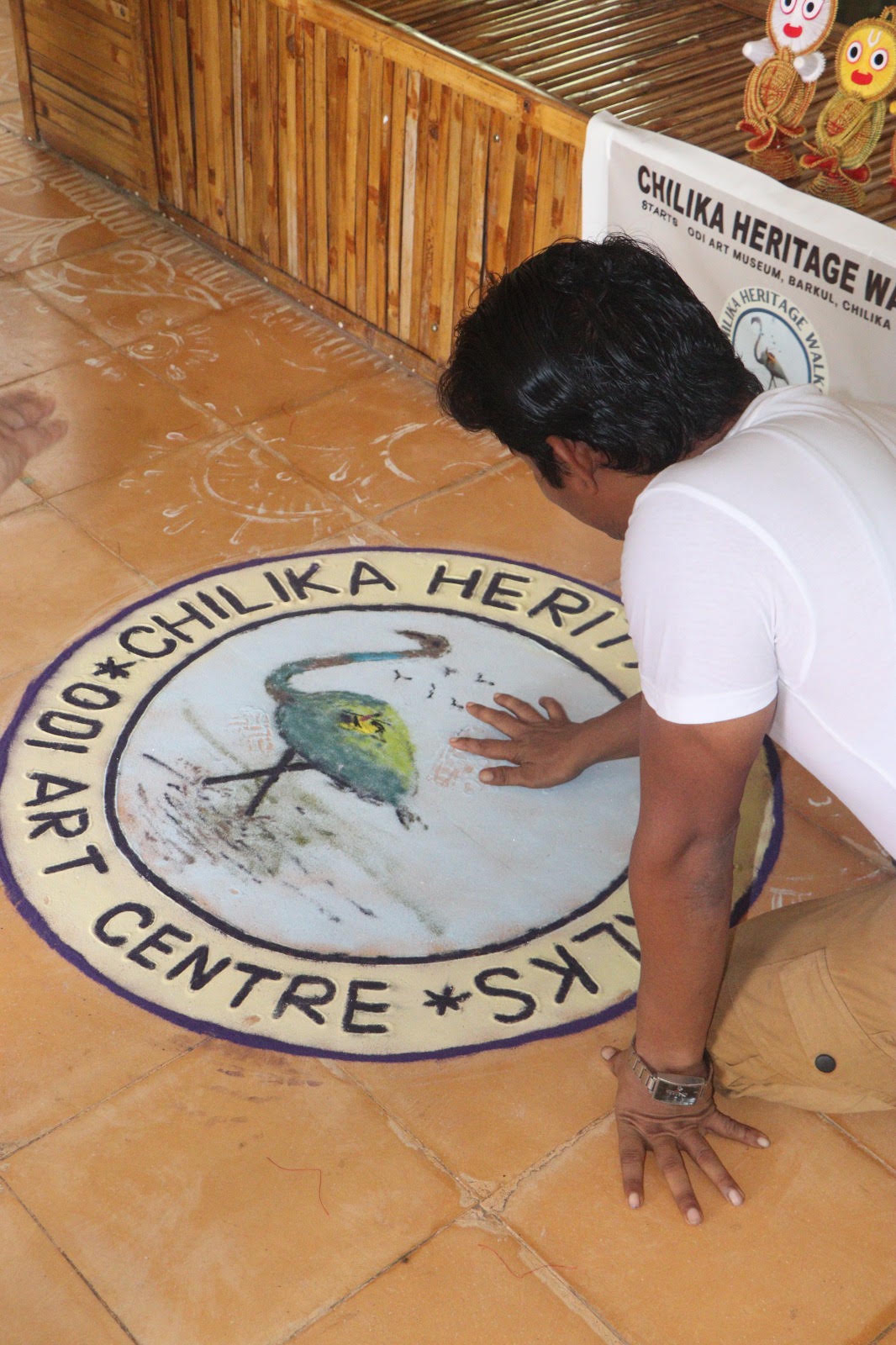
The inaugural event was significant because it extended Odisha’s community heritage movement into a region usually understood primarily through its ecological importance. The first-ever Chilika Heritage Walks was conducted by the ODI ART Centre under the leadership of its founder, Prasana Dash.
Chilika, one of Asia’s largest brackish-water lagoons, is internationally known for its biodiversity, fisheries and migratory birds. The walk began at the ODI ART Centre, an ethnic art complex dedicated to preserving and presenting Odisha’s folk and tribal artistic traditions.
However, folk and tribal art should not be understood merely as objects arranged within galleries. These traditions remain alive because artists, craftspeople, performers and ritual communities continue to practise and transmit them. A museum may preserve an object, but only a living community can preserve the knowledge that created it. Participants subsequently visited the Bhagabati Temple and the Daksha Prajapati Temple at Banapur.
The fifth Bargarh Heritage Walks was organised at Sohela under the leadership of Bargarh Heritage Walks convenor Surendra Hota. The walk began at the historic Gouri Mandap, where participants examined Sohela’s long-established Durga Puja tradition. Local accounts drew particular attention to the contribution of members of the Muslim community in supporting and preserving the festival over generations.
The walk then proceeded to the Gouranga Temple, known locally for its unusual six-handed wooden image of Sri Chaitanya Mahaprabhu. The image invites several historical questions. When was it carved? Which artistic tradition shaped its form? What theological or ritual meaning is attached to its six hands? How has the wooden image survived Odisha’s humid climate?
Participants also visited the Mahadev Temple near the old Kurmi Bandh and places associated with Siddha Dama Das, remembered in local Mahima Dharma tradition as one of the movement’s 64 siddhas or accomplished spiritual disciples.
The 39th Dhenkanal Heritage Walks (DHW) was organised at the historic Jaka Mahima Ashram in Kamakshanagar subdivision. Set within a tranquil natural landscape, the Ashram is regarded by its monks and followers as an important pilgrimage centre of Mahima Dharma. Associated with the nineteenth-century spiritual teacher Mahima Swami, the movement occupies a distinctive place in Odisha’s religious and social history.
Mahima Dharma emphasises devotion to a formless and ineffable divine reality. It is also historically associated with opposition to caste discrimination, ritual hierarchy and social exclusion. Its growth represented not merely the formation of a religious community, but also a critique of entrenched social and ritual practices.
Participants explored the Ashram’s Jyoti Mandir, Bati Mandir, monks’ residences, sacred pond and surrounding environment. The physical spaces offered an entry into the spiritual discipline and institutional life of the Mahima tradition. The event was organised under the leadership of Dhenkanal Heritage Walk convenor Suresh Prasad Mishra.
The three heritage walks revealed different yet interconnected dimensions of Odisha’s past. Whereas at Jaka, history survives through a living monastic tradition and archival records associated with Mahima Dharma. At Sohela, it is preserved through shared festivals, religious diversity, wooden images, palm-leaf manuscripts and community memory. Around Chilika and Banapur, heritage emerges through the meeting of ecology, folk art, temple traditions and sacred geography.
These places should not be described as “hidden” in the sense that local communities have forgotten them. They have continued to live within community knowledge and practice. Heritage walks, on the other hand, can help correct this imbalance. They encourage people to observe familiar places with fresh historical attention and allow local custodians to share knowledge that may not exist in official records. Plans to extend heritage walks across Odisha’s other districts could play an important role in reconnecting young people with local history.