

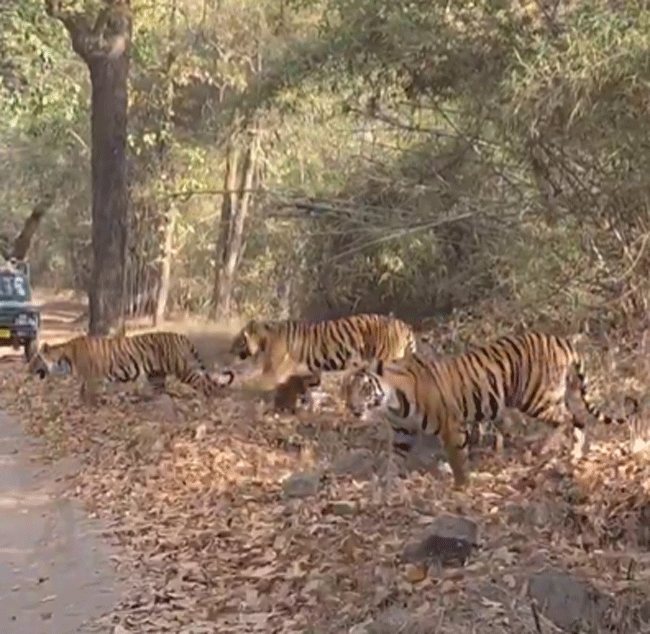
Similipal: Deep within the mist-shrouded, rolling sal forests of Odisha’s Similipal Tiger Reserve, a faint, rhythmic sound recently broke the quiet of the wilderness. It was the soft, high-pitched crying of four newborn tiger cubs. To the scientists, field staff, and forest guards who had spent months tracking every footprint and camera trap image, it was a sound that brought tears to their eyes.
This is not just another statistic for India’s wildlife census. These four tiny cries represent the definitive moment a majestic tiger landscape was pulled back from the brink of genetic fading.
For decades, Similipal existed as a breathtaking but heartbreaking paradox. It is a vast, ancient wilderness, famous globally for hosting the legendary melanistic or “black” tigers—a striking, dark-furred genetic marvel found nowhere else on Earth. Yet, that very uniqueness was a symptom of a quiet crisis. Cut off from neighboring forests by human development, Similipal’s tigers were trapped in genetic isolation. Generation after generation, the same genes looped inward. The population was drifting toward severe inbreeding, a vulnerability that threatened to quietly erase these magnificent predators from the landscape.
Realizing that nature needed an active lifeline, a bold, historic intervention was set in motion. In the autumn of 2024, two young tigresses, Jamuna and Zeenat, were carefully selected from the thriving woodlands of Maharashtra’s Tadoba-Andhari Tiger Reserve and translocated across state lines to Similipal. The mission was clear: introduce fresh bloodlines, shatter the isolation, and rewrite the evolutionary future of the reserve.
An ambitious plan on paper only breathes life through unyielding human dedication. The miraculous turnaround witnessed today in Similipal is the direct fruit of an exceptional administrative synergy. A visionary trio of top officials worked in perfect tandem to shield this landscape: Shri Satyabrat Sahu, the former Additional Chief Secretary of the Forest, Environment and Climate Change Department; Shri Susanta Nanda, the former Principal Chief Conservator of Forests (Wildlife) and Chief Wildlife Warden; and Shri Debidatta Biswal, the former PCCF and Head of Forest Force. Together, they turned policy into a protective shield.
Field Director of Similipal Tiger Reserve and Regional Chief Conservator of Forests, Baripada Circle, Shri Prakash Chand Gogineni’s role is praiseworthy.
Under their watch, Similipal was transformed into a fortress of hope. The state government poured resources into the ground, blanketing the forest with an advanced network of AI-enabled camera systems that caught forest fires and poachers in near real-time. Modern firefighting fleets were deployed, crushing the seasonal blazes that used to ravage the ecosystem. To truly give the tigers their forest back, an unprecedented security apparatus was built, culminating in the deployment of armed police and the creation of a dedicated Similipal Tiger Protection Force battalion.
The forest grew quiet, safe, and resilient. And then, nature responded.
Tigress Zeenat, the traveler from Maharashtra, gave birth to four healthy cubs. This birth is the ultimate validation of the sweat, sleepless nights, and scientific daring of the teams involved. By nesting these cubs in the heart of Odisha, Zeenat has successfully infused the fresh genetic diversity required to ensure that the black tigers of Similipal do not become a memory, but a thriving legacy.
When scientific strategy is met with absolute institutional will and deep empathy for the wild, the trajectory of an entire species can change. In the deep silence of Similipal, four new heartbeats are proving that humanity can, when it chooses, heal the natural world.