

New Delhi: The Ministry of New and Renewable Energy has taken a significant step toward achieving a self-reliant solar ecosystem during a high-level meeting at Atal Akshay Urja Bhawan. The meeting was haired by Union Minister Shri Pralhad Joshi, alongside Minister of State Shripad Naik.
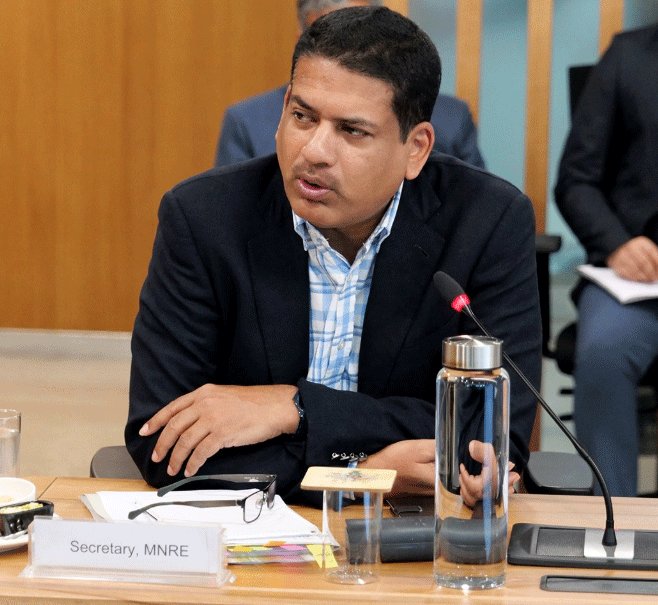
MNRE Secretary Shri Santosh Sarangi outlined the deliberation points in the session, that brought together major solar PV manufacturers to discuss the roadmap for domestic manufacturing.
The primary focus of the meeting was the upcoming implementation of the Approved List of Models and Manufacturers for solar ingots and wafers, scheduled to take effect on June 1, 2028. This move is designed to ensure that the entire solar value chain, from raw silicon processing to finished modules, is rooted within the country.
MNRE Secretary Shri Santosh Sarangi highlighted the necessity of strengthening domestic production to advance the Aatmanirbhar Bharat initiative, noting that reducing dependence on imports for upstream components like wafers is critical for long-term energy security.
Under the proposed guidelines, only manufacturers with integrated ingot and wafer production capacities will be eligible for enlistment. The regulation specifies that the mandate will be triggered once at least three independent domestic units reach a combined annual capacity of 15 GW. This structured approach aims to provide industry players with a clear transition timeline while ensuring that government-backed projects source fully indigenous components.
Union Minister Shri Pralhad Joshi urged manufacturers to expedite their capacity-building efforts, reaffirming the government’s commitment to supporting the industry through policy interventions and the Production Linked Incentive scheme. The discussion concluded with an agreement to maintain a regular dialogue between the ministry and stakeholders to resolve technical and logistical challenges ahead of the 2028 deadline.