

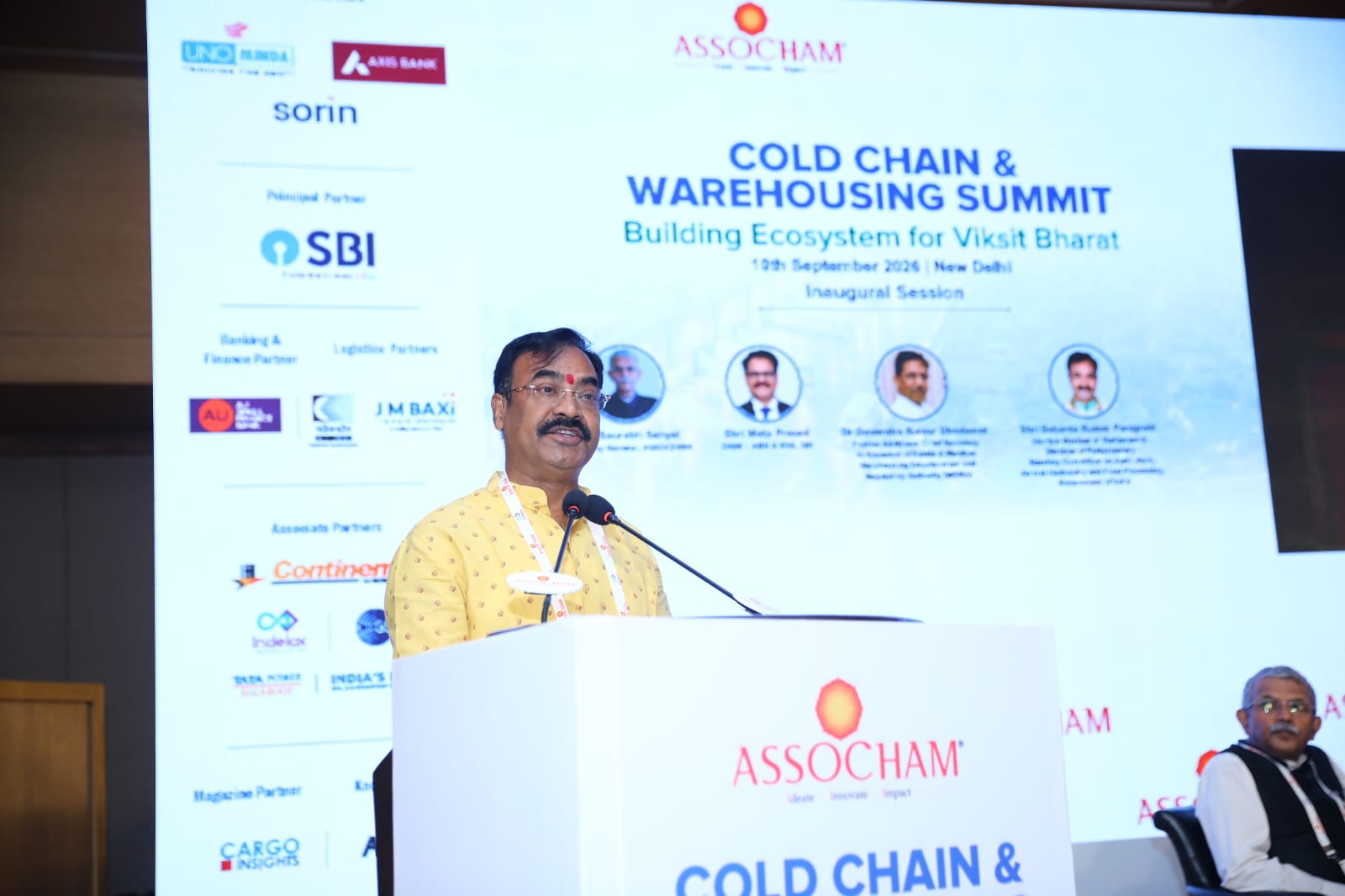
New Delhi: The ASSOCHAM Cold Chain and Warehousing Summit opened with a strong focus on creating an integrated supply chain network to support the vision of a developed nation.
Shri Sukanta Kumar Panigrahi, Member of Parliament and Member of the Parliamentary Standing Committee on Agriculture, Animal Husbandry and Food Processing, Government of India, attended as the Guest of Honour. In his address, he highlighted the critical role that a well-integrated cold chain plays in securing the nation’s food supply and enhancing farmer incomes across the country.
He emphasized that the industry needs to transition from isolated cold storage facilities toward a fully connected cold chain ecosystem. To achieve this, he called for comprehensive integration across every stage of the supply chain, linking farm-gate infrastructure directly with advanced storage, reliable transportation, modern technology, and efficient market linkages.
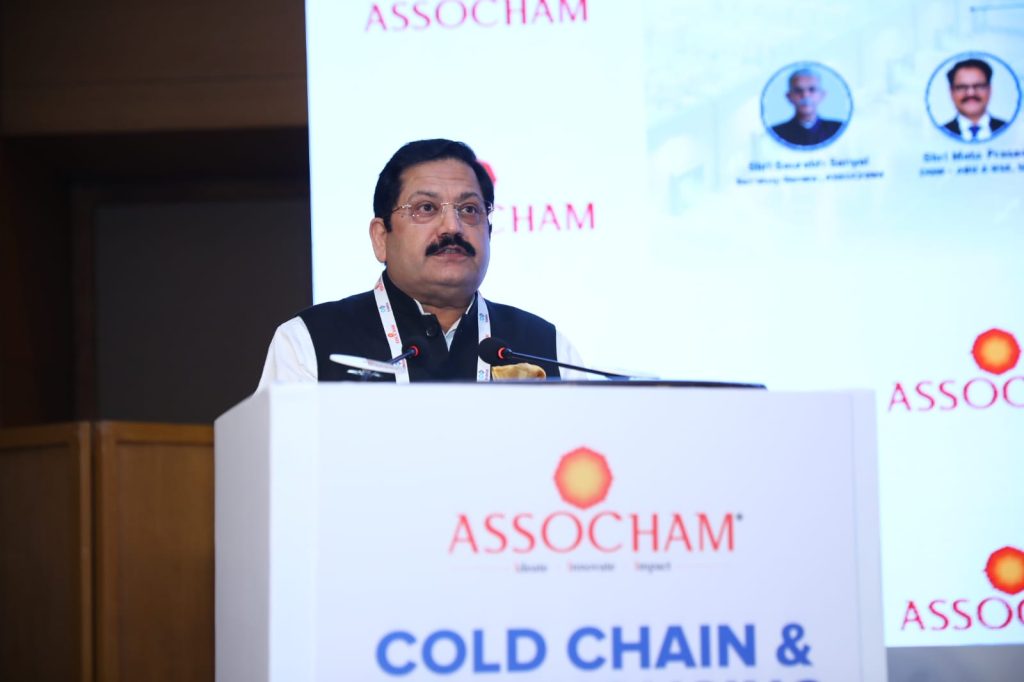
Speaking under the theme Building Ecosystems for Viksit Bharat, Shri Saandip Wadhwa, Chairman of the National Council on Logistics and Warehousing at ASSOCHAM and Group Director at JM Baxi Group, delivered the welcome address and outlined the strategic vision for the sector.
In his speech, Shri Wadhwa stressed that the expansion of physical infrastructure alone is no longer sufficient for sustainable growth. Instead, the focus must shift toward seamless integration across all segments of the supply chain. He urged industry stakeholders to bridge the gaps between warehousing, cold storage, transportation, food processing, commercial markets, and distribution networks to create a fully connected ecosystem.
Addressing the core drivers of modern supply chains, he pointed to digital technology, multimodal transit options, sustainable practices, and innovative funding mechanisms as essential tools for progress. He highlighted that strengthening these areas, along with fostering close collaboration between the government and private enterprise, will be critical to lowering post-harvest and logistical wastage, improving operational efficiency, and elevating the global competitiveness of Indian businesses.
Concluding his address, Shri Wadhwa noted that the ultimate success of the nation’s logistics network will depend not simply on the volume of physical assets constructed, but on how intelligently and efficiently those assets are connected to serve the economy.