

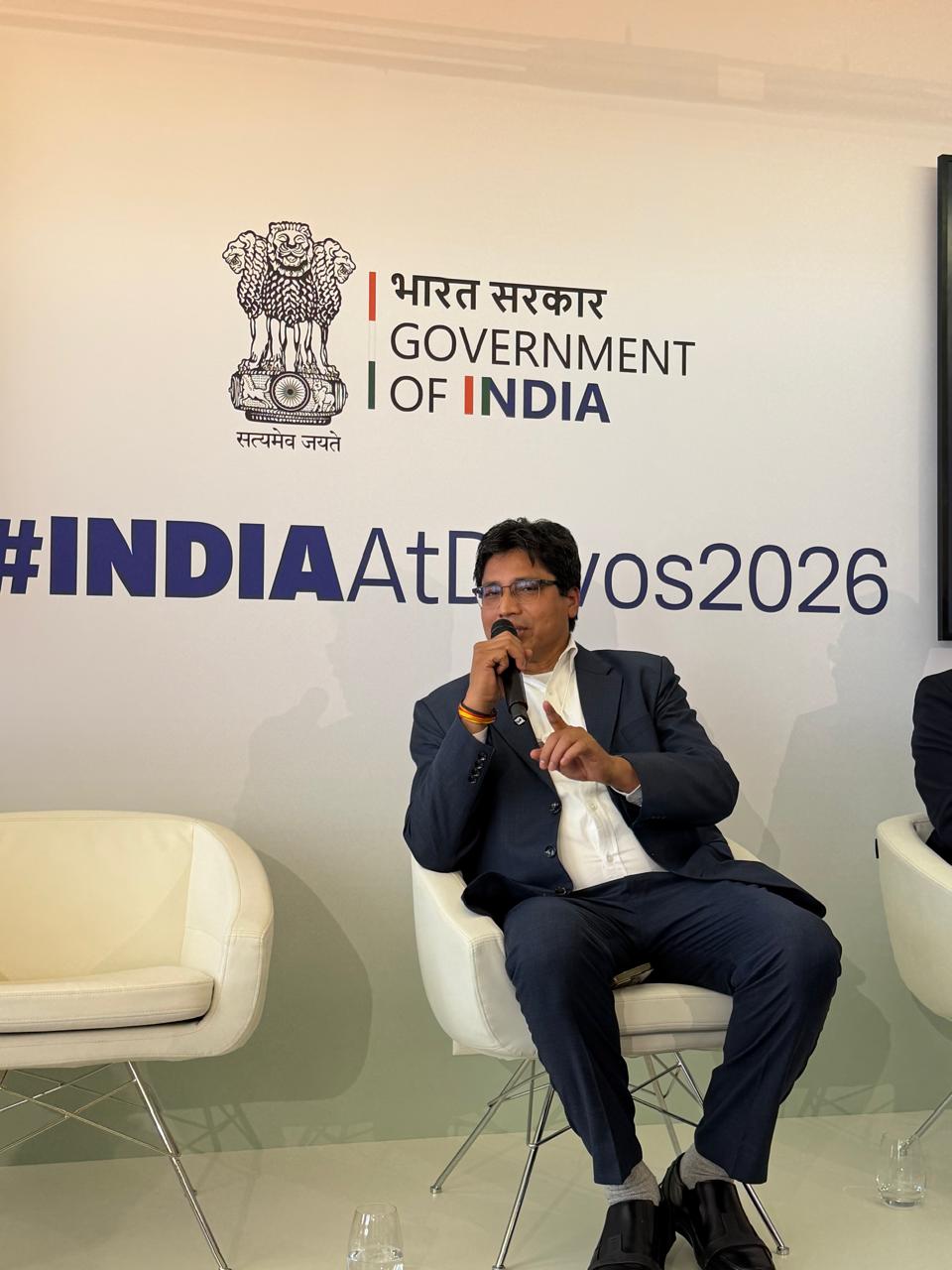
Davos: Shri Pradip Kumar Das, Chairman and Managing Director of the Indian Renewable Energy Development Agency Ltd. (IREDA), took center stage at the World Economic Forum (WEF) today, sharing critical insights on India’s solar expansion during a panel discussion titled Scaling Solar Where It Matters: India’s Lessons on Rooftop, Agriculture and Decentralized Energy for the Global South. The session followed a keynote address by Shri Pralhad Joshi, Honorable Union Minister for New and Renewable Energy.
Throughout the discussion, Shri Das highlighted how decentralized renewable energy serves as a vital tool for systemic efficiency. He explained that by adopting these technologies, governments can effectively reduce subsidies and technical and commercial losses, which in turn lowers overall costs and ensures energy remains affordable for the public.
Addressing concerns regarding the risks inherent in emerging renewable energy segments, Shri Das argued that perceived challenges in risk profiling can be overcome through effective project design and prudent management. He supported this claim by citing IREDA’s remarkable financial track record. Despite financing approximately 1.81 lakh crore rupees since its inception over 38 years ago, the agency has maintained an exceptionally low cumulative write-off of just 149 crore rupees. Shri Das attributed this success to the company’s robust appraisal and monitoring systems, which have successfully de-risked new sectors.
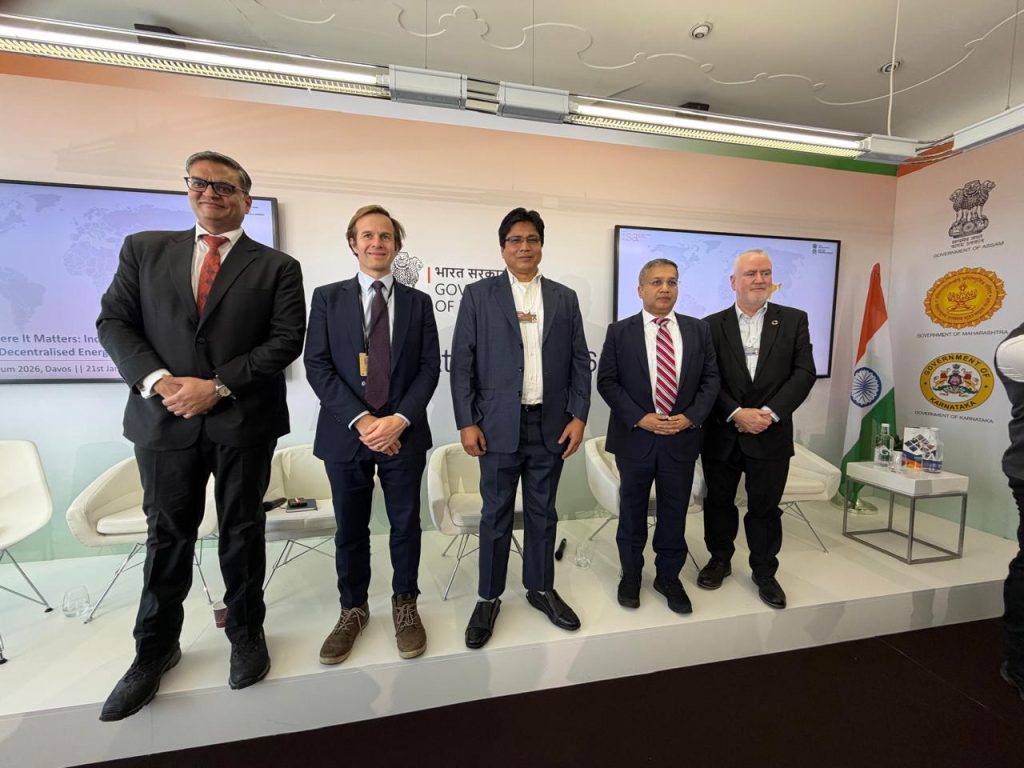
Shri Das also detailed IREDA’s practical impact on clean energy access, noting that the agency finances between 70 percent and 80 percent of project costs for Rooftop Solar and PM-KUSUM schemes using an aggregator mode. This approach has been instrumental in accelerating the adoption of renewable energy across rural India.
In his concluding remarks, Shri Das thanked Minister, MNRE, Shri Pralhad Joshi for the opportunity to use the World Economic Forum platform to showcase India’s mature renewable energy ecosystem. He emphasized that IREDA’s role in steering the national energy transition offers valuable lessons for other nations. Pointing to successful agricultural solarization in Maharashtra, he called for the global community to build enabling environments that de-risk the sector to attract patient global capital.