

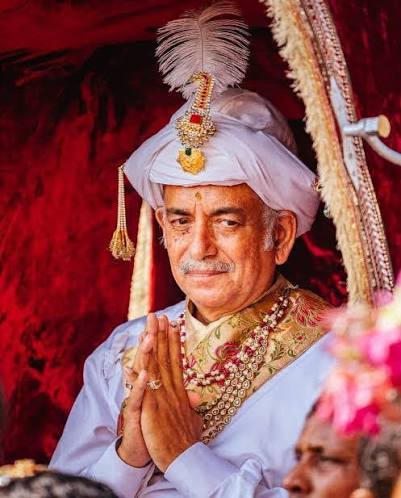
Puri: The ancient land of Odisha is gripped by a deep spiritual unrest as a profound theological conflict unfolds over the sacred traditions of Lord Jagannatha. Puri Gajapati Maharaja Dibyasingha Deb, the revered titular king and frontline servant of the Lord, has reached out to the highest offices of the nation, writing urgent letters to President Shrimati Droupadi Murmu and Prime Minister Shri Narendra Modi.
Seeking the immediate intervention of the central government, the Gajapati has expressed the collective agony of millions of devotees, stating that the regular staging of off-season Rath Yatras across the globe by the International Society for Krishna Consciousness deeply hurts religious sentiments and violates timeless Vedic scriptures.
At the heart of this emotional crisis is a painful contradiction. ISKCON followers are known across the world as ardent, ecstatic devotees of Lord Krishna, who is non-different from Lord Jagannatha. Yet, this global spiritual organization finds itself at severe odds with the Moola Peetha, the original seat of the deity at the Shree Jagannatha Temple in Puri.
Dr. Arabinda Kumar Padhee, the Chief Administrator of the Shree Jagannatha Temple Administration, has time and again brought this critical issue to the fore, trying to safeguard the sanctity of the divine calendar. Despite repeated theological discussions, high-level appeals, and meetings with scholars, ISKCON continues to conduct the sacred chariot festival outside its divinely ordained time, seemingly unwilling to align its global schedule with the established rituals of Puri.
To understand why ISKCON is defying these ancient traditions, one must look at the clash between strict ritualistic devotion and global missionary zeal. According to the Skanda Purana and centuries of unbroken tradition in Odisha, the Snana Yatra can only occur on Jyestha Purnima, and the Rath Yatra must strictly begin on Ashadha Shukla Paksha Dwitiya, lasting for a precise nine-day period. The Puri temple administration argues that Lord Jagannatha is a living deity governed by precise cosmic tithis or astronomical timings, and changing these dates reduces a sacred cosmic phenomenon to a mere convenient public event.
However, ISKCON has its own reasons for not listening to the traditional mandates. The organization traces its practice back to its founder, AC Bhaktivedanta Swami Prabhupada, who introduced the Rath Yatra to the Western world as a grand festival of congregational chanting. For ISKCON, the primary spiritual objective is the absolute distribution of the Lord’s mercy to the masses, especially to those who can never travel to Puri.
They argue that when organizing massive public processions in foreign nations like Russia, Europe, or the Americas, they face severe practical challenges. Severe winter climates, stringent local municipal laws, traffic regulations, and the availability of civic permissions often force them to host the festival on weekends or during peak summer months, far away from the actual calendar date in India. Furthermore, ISKCON scriptural scholars argue that alternative interpretations of ancient texts provide provisions for celebrating the Lord’s pastimes for universal welfare at different times of the year.
For the traditional servitors of Puri and the people of Odisha, this reasoning feels like an dilution of an ancient heritage. Dr. Arabinda Kumar Padhee and the temple administration maintain that while adaptations in the style of celebration are permissible, altering the sacred tithi itself is spiritually unacceptable. As the debate intensifies, the Odia diaspora and devotees worldwide look towards the central government, hoping that a respectful resolution can preserve the absolute scriptural sanctity of Lord Jagannatha’s journey without dampening the global devotion that celebrates His glory.