

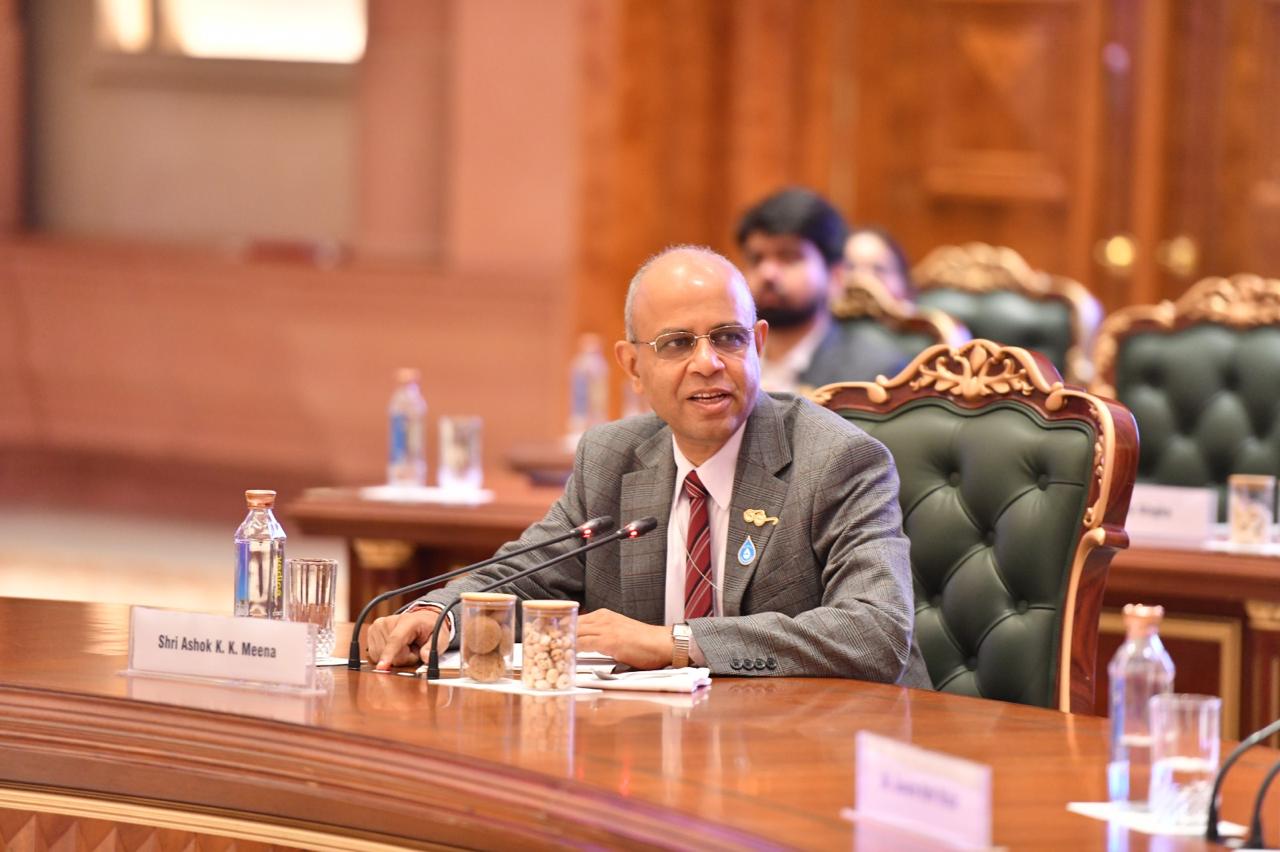
New Delhi: India’s journey toward universal access to clean water and sanitation is fundamentally a story of public health, human dignity, female empowerment, and grassroot ownership, stated Shri Ashok K. K. Meena, Secretary, Department of Drinking Water and Sanitation (DDWS), Ministry of Jal Shakti.
Speaking at the high-level Indo-Africa Roundtable on Water, Sanitation and Hygiene (WASH) convened during the 9th India International Water Week (IIWW) 2026 at Bharat Mandapam, Shri Meena addressed global delegates to share India’s transformative experience in rural water governance.
Shri Meena underscored that physical infrastructure alone cannot sustain long-term change. Instead, strong political conviction and local institutional ownership remain the true pillars of India’s flagship initiatives, the Jal Jeevan Mission (JJM) and Swachh Bharat Mission-Gramin (SBM-G). Through a decentralized framework, Gram Panchayats and Village Water and Sanitation Committees lead the planning, operation, and daily monitoring of their own rural water systems.
A key highlight of this grassroots movement is the active participation of women. Over 2.48 million women across rural India have been trained to use Field Testing Kits, placing water-quality surveillance directly into the hands of local female leaders and transforming community governance.
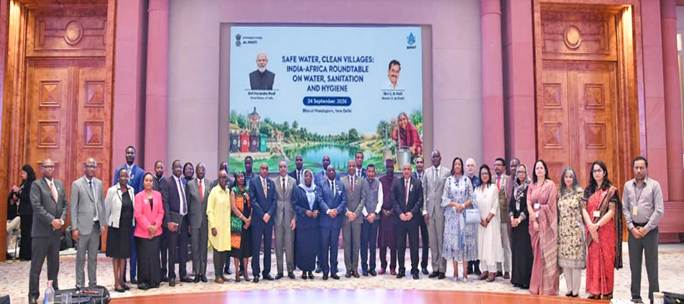
Reflecting on the overarching vision, Shri Meena outlined five core lessons from India’s operational model: unwavering political leadership, empowered local self-governance, parallel investment in human capital alongside physical structures, early planning for long-term operation and maintenance, and the deployment of simple, interoperable digital tools to ensure complete transparency.
The vision set by Shri Meena was further supported by detailed operational insights from Shri Kamal Kishore Soan, Additional Secretary and Mission Director for the National Jal Jeevan Mission. Highlighting the scale of public investment, Shri Soan shared that functional tap-water coverage in rural Indian households has expanded dramatically from 32.4 million in 2019 to over 159.4 million households today, successfully tackling ground-water reliance and water quality issues through active community partnership.
Shri Meena concluded by reaffirming India’s commitment to global collaboration. India remains honored to share its digital frameworks and community governance models while learning from innovative solutions emerging across Africa, working together toward the shared goal of Sustainable Development Goal 6 for safe water and dignified living worldwide.