

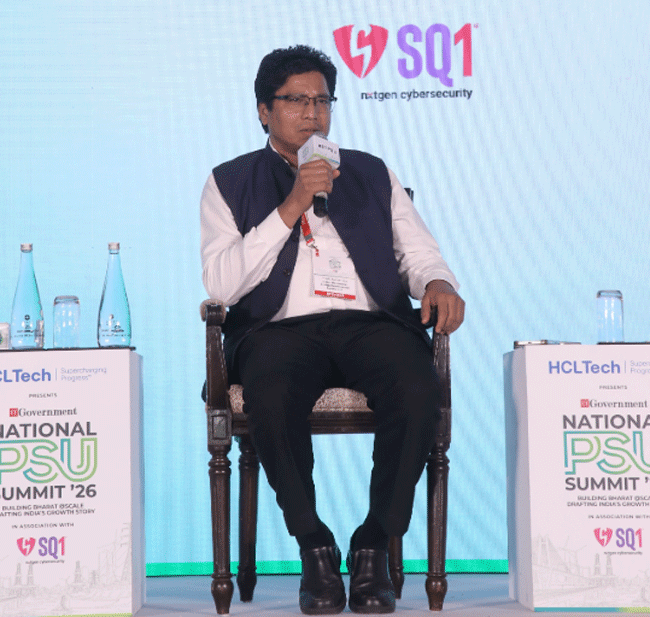
New Delhi: Shri Pradip Kumar Das, the Chairman and Managing Director of the Indian Renewable Energy Development Agency Ltd. (IREDA), positioned himself as a key visionary for India’s future economic landscape during his participation in a panel discussion at the 9th National PSU Summit in New Delhi.
Speaking on the theme of PSU Leaders’ Vision: Drafting India’s Growth Story Towards 2047, IREDA Chief Shri Das reconfigured the narrative around India’s economic ambitions, asserting that the nation’s journey toward a USD 30 trillion economy by 2047 is fundamentally an energy story rather than a purely financial one.
Throughout his address, CMD IREDA, Shri Das placed strong emphasis on the pivotal role of green finance. He framed it not just as an environmental necessity, but as a strategic lever essential for securing India’s energy security, boosting industrial competitiveness, and reducing the country’s dependence on imports. To illustrate the scale of the task ahead, he provided stark investment projections, estimating that India’s power sector will require Rs. 50 lakh crore by 2032 and a staggering Rs. 200 lakh crore by 2047. In light of these numbers, Shri Das called upon development finance institutions to step up by de-risking emerging sectors and actively mobilizing broader commercial capital.
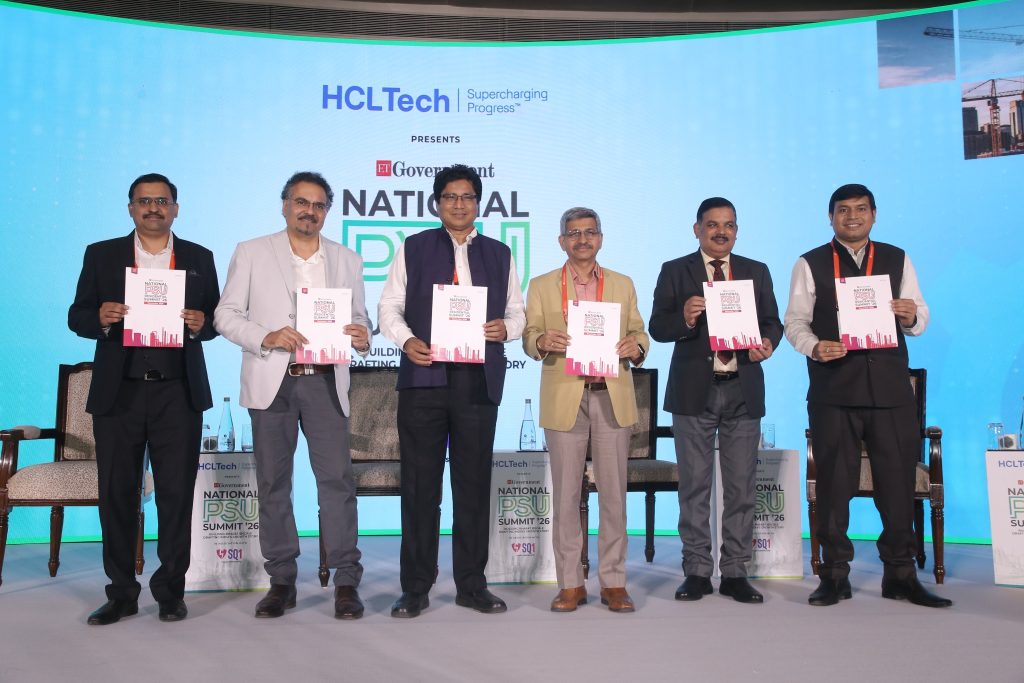
A central contribution of Shri Das’s speech was his focus on what he identified as the next critical challenge for the nation: the dispatchability gap. He highlighted a significant disparity in India’s current energy profile, noting that while the country has successfully achieved a 53.7 percent non-fossil installed capacity, these non-fossil sources account for only 29.2 percent of actual energy generation. By spotlighting this gap, Shri Das underscored the urgent need to prioritize storage solutions and grid flexibility in the coming years.
IREDA CMD, Shri Das also advocated for a more holistic definition of national progress. He argued that achieving the Viksit Bharat vision requires development that harmonizes economic strength with environmental sustainability. In his view, metrics like clean air, affordable energy, and public wellbeing are just as vital as GDP growth. Looking toward the future, Shri Das mapped out the specific industries that will define India’s next growth cycle, identifying battery storage, green hydrogen, offshore wind, and sustainable mobility as the critical frontiers under his radar.