

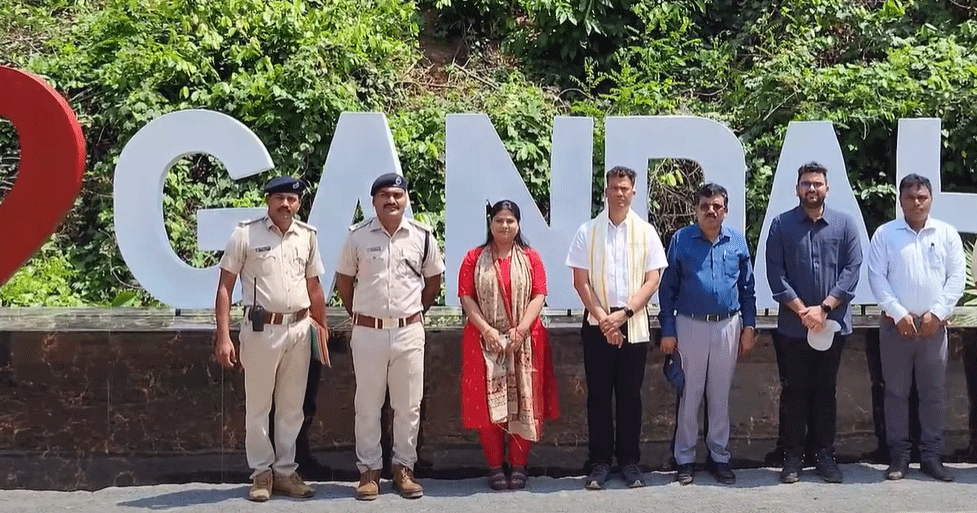
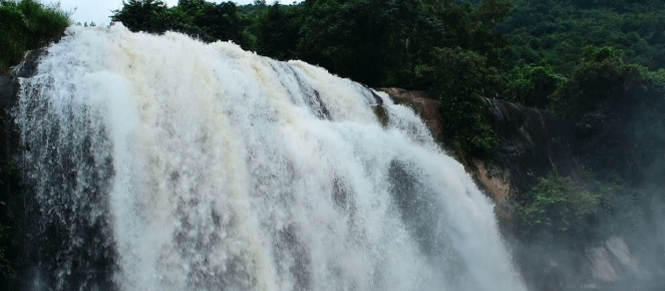
Paralakhemundi: In a major push toward ecological conservation and low-impact tourism, the Gandahati Waterfall in Gajapati district has become a focal point for nature enthusiasts, prompting a fresh perspective on how the region’s wilderness is managed.
During a recent field visit, Dr. K Murugesan, Principal Chief Conservator of Forests and Head of Forest Force, acknowledged the heavy footfall at the cascade and urged local forest officials to rethink traditional tourism promotion.
Instead of heavy commercialization, Dr. Murugesan emphasized a unique, nature-first approach that highlights the irreplaceable biodiversity of the surrounding Mahendragiri Range.
Dr.Murugesan truly is, and it really shows in the way he approaches his work. It takes a genuine appreciation for the wilderness to look at a high-traffic, popular tourist spot like Gandahati and see an opportunity for deep ecological education rather than just standard commercial tourism.

Promoting a site by focusing on its delicate flora and fauna—especially an ecologically sensitive area like the Mahendragiri Range—ensures that the local environment is respected and preserved for the long run. It’s exactly the kind of forward-thinking leadership needed to protect Odisha’s natural heritage while still letting people experience its beauty.
The roaring waters of Gandahati, born from the Mahendratanaya River, act as a gateway to the Mahendragiri ecosystem, a designated Biodiversity Heritage Site. Forest authorities are shifting their focus toward educational and community-led conservation frameworks. This approach allows visitors to experience the wild landscape while actively respecting its fragile ecological makeup, which represents nearly forty percent of the total higher plant species found across Odisha.
The Mahendragiri Range serves as a rare, high-altitude transitional zone where the species of the Western Ghats and the Himalayas meet. Rising above one thousand meters, the range is characterized by unique dry evergreen Shola forests, tropical semi-evergreen zones, and moist deciduous canopies. The botanical diversity is immense, housing over one thousand three hundred plant species. Among these are forty-four distinct types of orchids, insectivorous plants, and rare tree ferns like Cyathea gigantea. The hills also harbor several localized, endemic flora such as Selaginella mahendragiriensis and various threatened medicinal plants that have been preserved for generations by the indigenous Soura and Kandha communities.
This botanical abundance directly sustains a highly diverse animal population. Mahendragiri is recognized as a critical herpetofauna hotspot, providing sanctuary to rare reptiles and amphibians like the Eastern Ghats endemic Golden Gecko, the limbless Caecilian, and the endemic Mahendragiri gecko, Hemidactylus sushilduttai. Mammals such as the elusive four-horned antelope, also known as the chowsingha, bark deer, and leopards navigate the thick undergrowth, while the avian community thrives in the canopy. Birdwatchers can spot species of high conservation value, including the East-Himalayan long-tailed minivet, the white-eared bulbul, and the slender-billed scimitar babbler.
By steering the promotional focus away from standard amusement and toward this profound ecological wealth, the Forest Department aims to transform Gandahati from a simple weekend getaway into a hub for environmental literacy. The upcoming initiatives will focus on interpretive nature trails, community-managed eco-guards, and visual guides that introduce travelers to the delicate web of life moving between the waterfall and the high peaks of the Eastern Ghats.