

Kolkata: The 2026 election rhetoric between Narendra Modi and Mamata Banerjee reflects a clash between a vision of national integration and a staunch defense of regional autonomy. While both leaders have engaged in “competitive populism” to win over the electorate, their specific messaging and delivery styles highlight fundamentally different political philosophies.
Narendra Modi’s rhetoric is built on the promise of systemic change and the narrative of a double engine government. His speeches consistently frame the Trinamool Congress (TMC) as a barrier to central development, accusing the state administration of “looting” central funds and depriving the poor of schemes like Ayushman Bharat.
A significant portion of his 2026 campaign is dedicated to the issue of women’s safety and dignity, frequently referencing local incidents to argue that the state’s current leadership has failed its most vulnerable citizens. By using cultural symbols—such as his widely publicized moment eating jhaal muri in Jhargram—Modi attempts to blend his “Viksit Bharat” (Developed India) vision with a personalized connection to Bengali everyday life, softening his image from a distant national figure to a “brother” who understands local struggles.
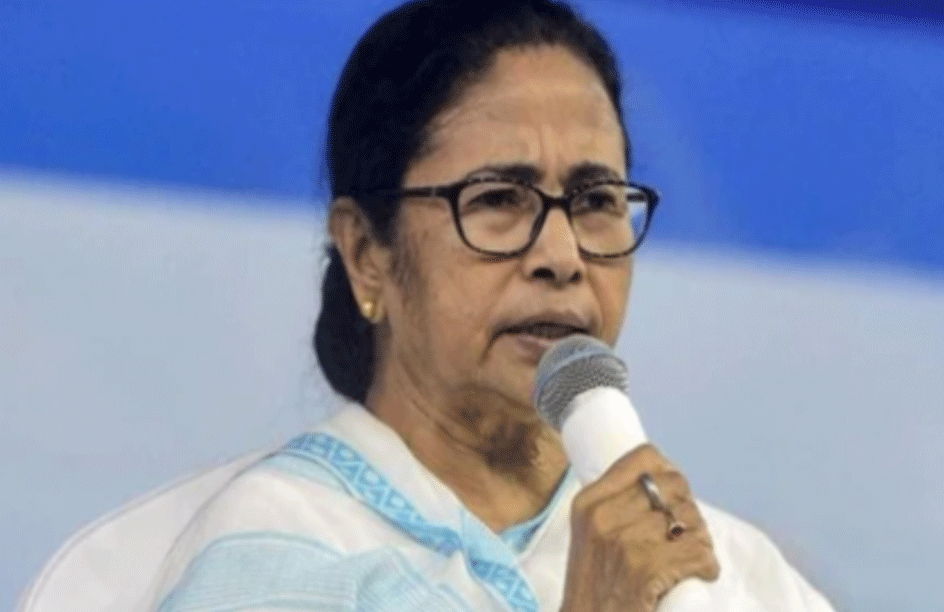
In contrast, Mamata Banerjee’s rhetoric remains rooted in Bengali Asmita (pride) and the role of the state as a protector against external interference. She frames the election as a battle between “insiders” and “outsiders,” positioning herself as the sole defender of Bengal’s unique cultural fabric against what she describes as a “Delhi-centric” agenda. Her speeches focus heavily on the success of her “Ma, Mati, Manush” (Mother, Soil, People) philosophy, specifically the tangible benefits of the Lakshmi Bhandar scheme. She counters the BJP’s promises of higher cash transfers by characterizing them as “electoral bribes” that lack the soul and historical continuity of her own grassroots welfare network. Her tone is often combative and protective, portraying the central government’s use of investigative agencies as a direct attack on the mandate of the Bengali people.
The conflict between their rhetorical styles also extends to the issue of identity and citizenship. Modi and the BJP have amplified concerns regarding border security and infiltration, linking these to national safety and the rights of original residents. This is often paired with promises of effective implementation of the Citizenship Amendment Act (CAA) in refugee-heavy pockets. Mamata Banerjee counters this by framing the NRC and CAA as tools of exclusion and harassment, using her rallies to reassure minority and refugee communities that she stands as a “human shield” against any policy that would question their belonging. This rhetorical divide ensures that the 2026 contest is viewed not just as a choice between two leaders, but as a choice between two distinct futures for the state’s social and political identity.