

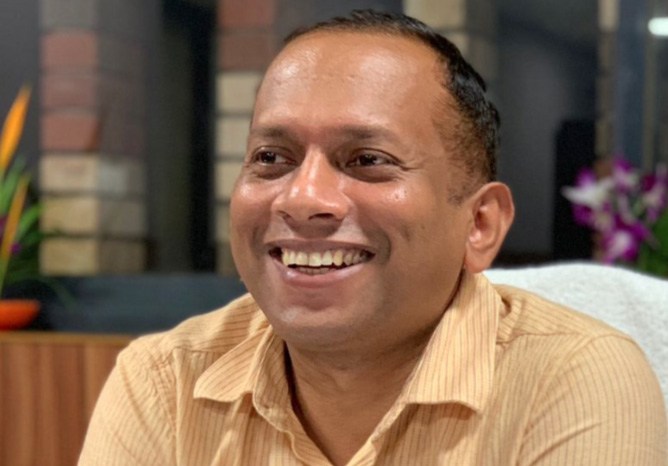
In a far reaching impact ruling that underscores the importance of statutory safeguards for civil servants, the Orissa High Court has quashed a long-standing corruption case against senior IAS officer Dr.Bijay Ketan Upadhyaya, observing that the prosecution was founded on a perfunctory investigation and suppression of vital exculpatory evidence.
The judgment, delivered by Dr. Justice Sanjeeb K. Panigrahi, marks the end of a legal ordeal for the 2009-batch officer who served as the Director of Horticulture and was allegedly targeted by the “earlier regime” through a motivated vigilance trap.
The case dates back to late 2019 when the State Vigilance Department alleged that Upadhyaya had demanded a bribe from an empanelled supplier, SRM Plastochem Pvt. Ltd., for the clearance of pending bills under the Pradhan Mantri Krishi Sinchayee Yojana.
The prosecution claimed that the officer directed the supplier to pay the bribe through an intermediary, a bank official who was allegedly caught in a trap receiving one lakh rupees. Dr.Upadhyaya was subsequently arrested and faced a harrowing period of incarceration and professional suspension.
However, the High Court’s detailed analysis revealed a narrative of vengeance, harassment, procedural lapses and “slow violence of pendency”.
Dr.Upadhyaya’s legal team argued that the entire case was a “motivated and engineered exercise” initiated because the officer had refused to comply with the “illegal and irregular oral directions” of powerful bureaucrats in the previous government.
They contended the prosecution was a tool for vengeance designed to tarnish his image as an honest officer with deep roots in the state.
A critical turning point in the court’s reasoning was the revelation that the Vigilance authorities had suppressed a key digital recording from December 24, 2019.
In this recorded interaction, the complainant repeatedly offered money to Dr.Upadhyaya, who sternly refused the bribe twice, stating, “I do not need it”. The court noted that this exculpatory material was deliberately omitted from the FIR and was not placed before the Sanctioning Authority, thereby vitiating the very foundation of the prosecution.
“It is also material that the State Vigilance has not specifically met this contention by showing that the said material was, in fact, placed before the sanctioning authority, or that even if omitted, it was of no consequence to the decision to grant sanction. In the absence of such a response, the petitioner’s objection cannot be treated as a mere technical plea. The challenge goes to the completeness of the record placed before the competent authority and, consequently, to the validity of the satisfaction recorded while granting sanction.”
Furthermore, the court found the prosecution’s theory of a bribe as a precondition for payments to be factually unsustainable.
The petitioner is challenging the prosecution’s version of events by pointing to official financial and administrative records. They argue that the evidence shows the corruption charges are factually impossible.
According to the petitioner, the records from the Directorate prove that all necessary approvals for payments had been granted by December 27, 2019.
By December 29 or 30, there were no bills from the complainant’s company waiting for payment at the petitioner’s level.
On December 30, a large payment of over 1 crore rupees was released to various suppliers, which included the complainant’s company.
Because of this, the petitioner claims the accusation—that they demanded a 1 lakh rupee bribe to release 50 lakh rupees in pending bills—cannot be true, as the money was already processed and paid.
The petitioner also explained that any delays in the payment process were not caused by a plan to solicit bribes. Instead, they blamed standard bureaucratic hurdles.
These included multi-level scrutiny, the need for GPS tagging, following strict financial rules, technical glitches with the National Informatics Centre software, bank verification steps, and issues with uploading required photographs.
In short, the petitioner argues that just because some bills took time to process does not mean that corruption was taking place. They maintain that the timing of the payments and the routine procedural delays prove their innocence.
The court observed that any delays in processing bills were due to standard administrative requirements like GPS tagging and software issues, rather than a corrupt design.
The judgment emphasized that Section 19 of the Prevention of Corruption Act acts as a “jurisdictional gateway” and a statutory safeguard for public servants.
By failing to disclose the officer’s recorded refusal of the bribe, the investigative agency had misled the sanctioning authority, resulting in a “failure of justice”.
The petitioner’s argument hinges on the legal principle that a valid sanction for prosecution requires the sanctioning authority to review all relevant evidence, not just the incriminating files provided by the prosecution.
By specifically citing the recording from December 24, 2019, the petitioner contends that the investigating agency suppressed exculpatory material—evidence favourable to the accused—which purportedly shows a refusal to accept a bribe and the absence of a demand.
The core of this legal challenge rests on substance over form; the petitioner is not attacking a clerical error or a minor procedural flaw in the sanction order, but is instead challenging the integrity of the decision-making process itself.
For a sanction to be legally sound, the authority must demonstrate a conscious application of mind, which the petitioner argues is impossible if the authority was kept in the dark regarding the 24th December 2019 recording.
Referencing the precedent in Ashok Kumar Aggarwal, the petitioner asserts that the prosecution is obligated to present the entire record, “including defence-tilting material”.
Ultimately, the argument posits that if the sanction is found to be based on an incomplete and biased record, it is rendered void, thereby dismantling the legal foundation required for the court to take cognizance of the case.
Consequently, Justice Dr.Panigrahi set aside the cognizance order dated January 16, 2023, and quashed all criminal proceedings against Upadhyaya, noting that continuing the trial would be an abuse of the court’s process and failure of justice.
This ruling not only exonerates the IAS officer but serves as a stern reminder against the malicious use of state machinery to target honest officials.