

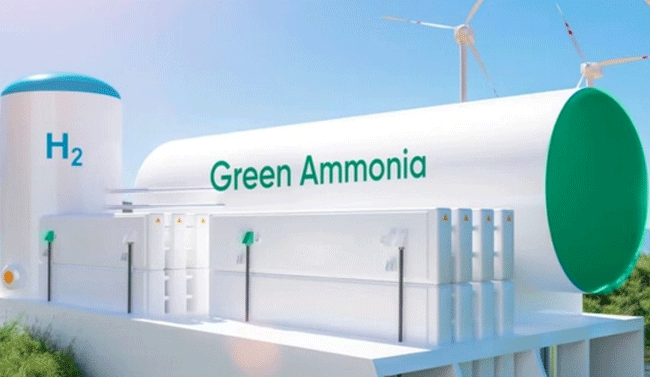
New Delhi: The Government of India has officially notified the Green Ammonia and Green Methanol Standards as of 27 February 2026, marking a pivotal step for the National Green Hydrogen Mission. Issued by the Ministry of New and Renewable Energy, these standards establish specific emission thresholds and eligibility criteria required for ammonia and methanol to be classified as green.
For Green Ammonia, the standard mandates that total non-biogenic greenhouse gas emissions must not exceed 0.38 kg CO2 equivalent per kg of ammonia. This calculation includes emissions from hydrogen production, synthesis, purification, compression, and on-site storage, averaged over a 12-month period.
The Green Methanol standard sets a limit of 0.44 kg CO2 equivalent per kg of methanol under similar operational parameters. The notification allows carbon dioxide for methanol production to be sourced from biogenic origins, Direct Air Capture, or existing industrial sources, with the Ministry retaining the right to revise these sources prospectively.
The framework clarifies that renewable energy used in these processes includes electricity from renewable sources that is either stored in energy storage systems or banked with the grid. Detailed methodologies for measurement, reporting, and certification will be issued separately by the Ministry.
While new projects must adhere to these benchmarks, existing tenders or bids issued prior to this notification may continue under their original terms, though parties are encouraged to align with the new standards where feasible. These notifications provide necessary regulatory clarity for investors and stakeholders, aiming to decarbonize sectors like fertilizers, shipping, and heavy industry while positioning India as a global leader in green fuel exports.