

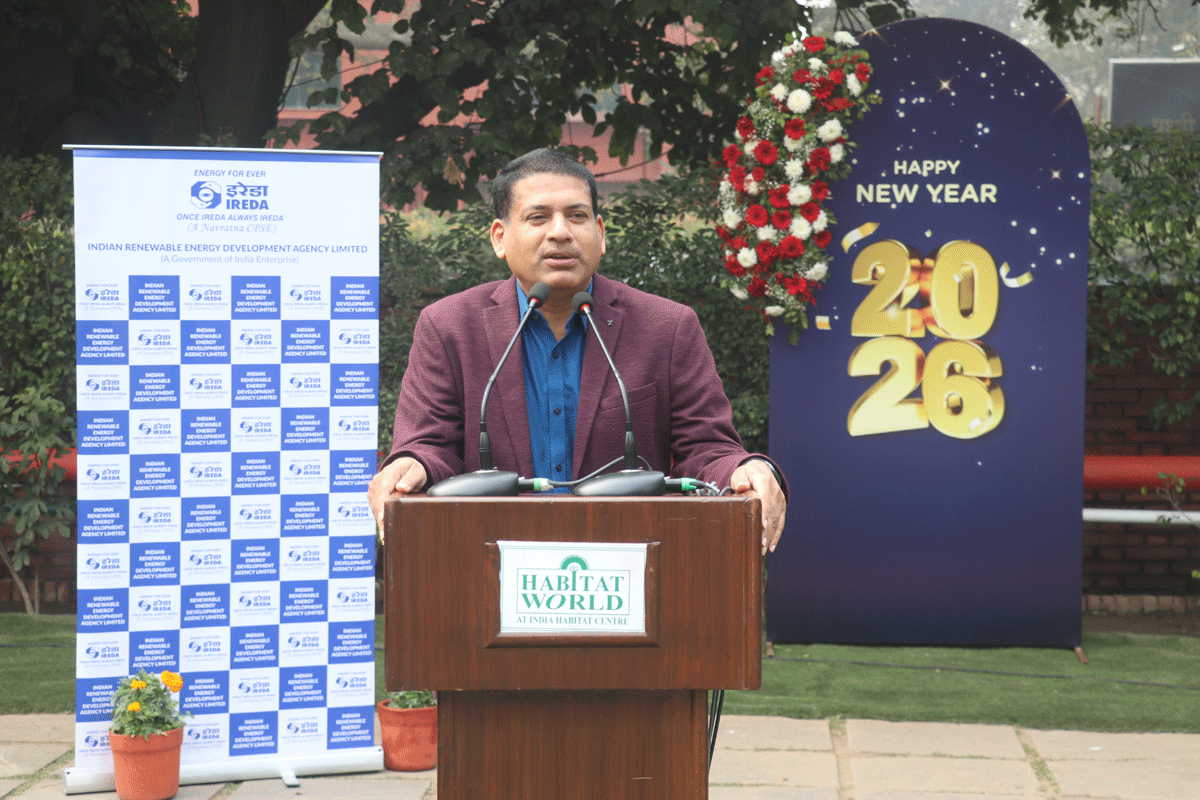
New Delhi: Beneath the canopy of the India Habitat Centre on January 1, 2026, the Indian Renewable Energy Development Agency (IREDA) articulated a vision that transcends mere corporate milestone, positioning its New Year Assembly as a manifesto for structural equity and systemic decarbonization.
The gathering represented a synthesis of fiscal power and moral urgency, where the Secretary Ministry of New & Renewable Energy, Shri Santosh Kumar Sarangi emphasized that the agency’s true capital lies not just in its balance sheet, but in its capacity to cultivate future leaders and integrate MSMEs into the national grid. This transition from a central financier to a socio-economic architect is defined by a rigorous adherence to socio-legal precision, ensuring that the green energy revolution is both technically sound and ethically grounded.
IREDA under CMD Shri Pradip Kumar Das’s leadership, the financial architecture supporting this mission remains robust and transparent, reflecting a fiscal discipline facilitates sovereign-level stability. As of December 31, 2025, IREDA reported cumulative loan sanctions of ₹2,78,016 crore and a loan book valued at ₹87,975 crore. These figures, alongside a record Profit After Tax of ₹1,699 crore and an upgraded S&P Global credit rating, serve as the material evidence of the agency’s resilience. By de-risking renewable investments, IREDA acts as a primary engine for the PM Surya Ghar scheme, ensuring that the benefits of solar energy reach the grassroots level of Indian society through decentralized financial support.
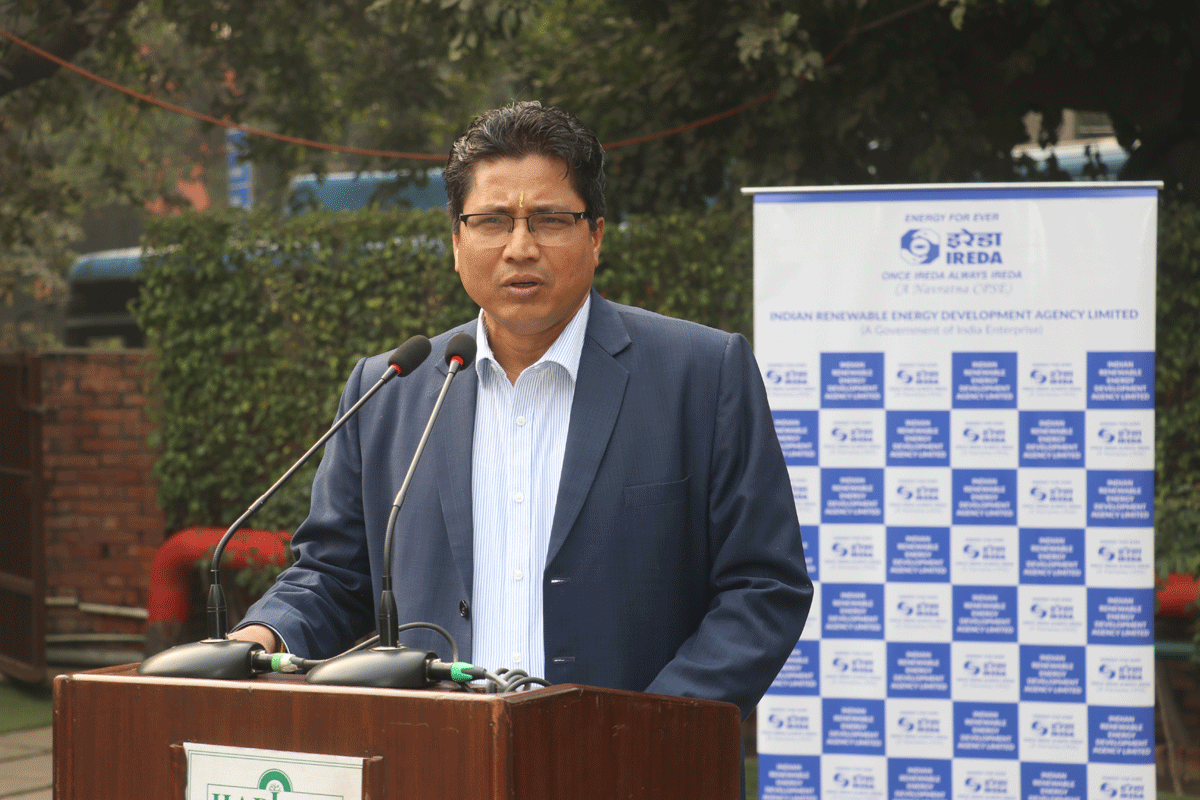
In the spirit of continuity and universal balance, much like the governance overseen by Lord Jagannatha over the cosmos, IREDA has pledged to maintain its trajectory of sustainable growth and ethical responsibility. The agency’s roadmap for 2026 is anchored in the belief that financial strength is inseparable from the spirit of unity and teamwork. By focusing on the empowerment of young professionals and the integration of small-scale enterprises, IREDA is ensuring that the transition to a renewable future is a collective journey, upheld by the highest standards of governance and a profound commitment to the public good.
expanded its workforce to 227 personnel, with women now comprising 23% of the organization—a figure that starkly contrasts with the CPSE average of 9.5%. This shift is presented as a deliberate outcome of qualitative corporate governance, suggesting that the institutional integrity required to manage the energy transition must first be modeled within the agency’s own walls. The expansion of the workforce is not merely a quantitative increase but a strategic reinforcement of the human architecture necessary to sustain long-term environmental stewardship.