

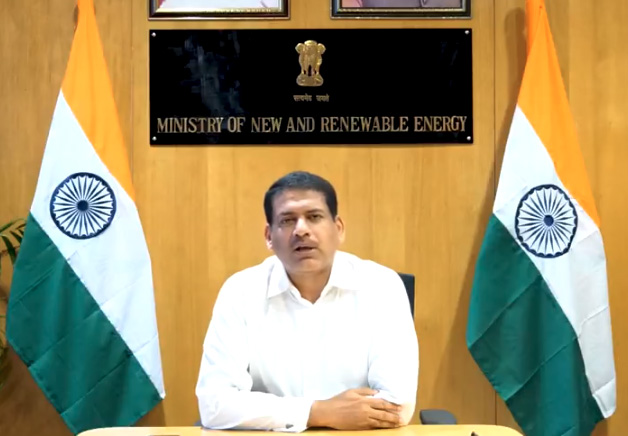
New Delhi: India’s solar capacity has reached a landmark 129 gigawatts (GW) in 2025, marking a massive growth from just 3 GW in 2014. This rapid expansion in solar power has pushed the nation’s total non-fossil fuel electricity capacity to over 259 GW, which accounts for more than 50 per cent of India’s total installed power capacity of 500 GW, signaling a historic transition toward low-carbon energy.
This significant effort to fulfill the vision of Prime Minister Shri Narendra Modi on green energy is being led by Shri Santosh Kumar Sarangi, Secretary of the Ministry of New and Renewable Energy (MNRE).
The progress is driven by a robust policy framework and strategic initiatives, including the nation’s global climate commitments under the Panchamrit Framework.
India is a key player in global clean energy efforts, serving as the founding member and host of the International Solar Alliance (ISA) headquarters in Gurugram. The country recently hosted the 8th ISA Assembly in New Delhi, bringing together global ministers and delegates to discuss strategies for resilient solar supply chains and accelerated adoption.
Domestic programs have been central to this achievement. The PM Surya Ghar initiative has seen nearly 24 lakh households adopt rooftop solar, contributing 7 GW of clean energy and facilitating the release of over ₹ 13,464.6 crore in subsidies.
In the agricultural sector, the PM-KUSUM scheme has successfully facilitated the installation of close to 9.2 lakh standalone solar pumps, promoting clean energy use among farmers.
Furthermore, 55 solar parks with a combined sanctioned capacity of 40 GW have been approved across 13 Indian states as of October 31, 2025, to support large-scale generation. By coupling swift domestic deployment with global collaboration, India is setting benchmarks for a resilient and sustainable solar-powered future.
Odisha is actively participating in this nationwide drive, having recently approved a hike in state subsidies to complement the central government’s financial assistance under the PM Surya Ghar scheme.
This move, particularly the launch of a special ₹ 5,000 rooftop solar scheme under the Utility-Led Aggregation Model by state distribution companies, aims to make solar power affordable for low-income households. Despite these efforts, Odisha’s installed solar capacity stood at 706.34 megawatts (MW) as of June 30, 2025, with state agencies working to overcome challenges like land acquisition and project delays to meet its ambitious renewable energy targets.
By coupling swift domestic deployment with global collaboration, India is setting benchmarks for a resilient and sustainable solar-powered future.