

Puri: The sacred city of Puri, celebrated for its extraordinary cultural and artistic heritage, still shelters several neglected historical treasures that are slowly fading into oblivion. Participants of the 21st Puri Heritage Walks (PHW) on May 10 explored some of these forgotten sites and expressed deep concern over their deteriorating conditions.
The heritage trail commenced from Maniram Matha, situated near Marichikote Square on the Grand Road (Bada Danda). The nearly 300-year-old monastery was established by saint Maniram Das, who had come from outside Odisha for the darshan of Lord Jagannatha. According to the current Mahant, Shri Abhiram Das, the Math belongs to the Ramanandi sect and is popularly known among locals as “Kakudia Matha.” Although the Math does not directly participate in the rituals of the Shree Jagannatha Temple, it continues the tradition of offering “Panti Bhoga” during the ceremonial processions of Lord Jagannatha outside the temple. Festivals such as “Janmashtami, Jhulan Jatra, Gobardhan Puja”, and “Rama Navami” are celebrated there.
The participants explored the old structures within the premises before proceeding toward the historic Annapurna Theatre, one of the oldest theatre institutions of Odisha. The deteriorating condition of the theatre building left the participants deeply saddened. General secretary of the theatre, Ramakrishna Mahapatra, explained the glorious history and present crisis of the institution.
Founded in 1933 as “Annapurna Natya Mandali” by late Somanath Das had later transformed into a full-fledged theatre under the guidance of late Bauribandhu Mohanty. It became a milestone in Odisha’s dramatic and performing arts history at a time when stage drama was the primary source of entertainment. It produced timeless blockbusters such as “Kansa Kabata” and “Khai Kaudi”. Remarkably, the theatre’s directors were able to present complex scenes like train accidents on stage without modern technology or sophisticated equipment.
Several legendary artists associated with Annapurna Theatre, including Dukhishyam Swain, Ramachandra Pratihari, Byomkesh Tripathy, Nityananda Das, and Purnachandra Mishra, later gained national recognition through Odia cinema and television. The theatre also holds historical significance as the venue for the first screening of the first Odia film, “Sita Bibaha”. The first play staged there was “Maa”.
Later, some leading artists of Annapurna Theatre established separate theatre groups in Cuttack, including Annapurna B Group and Janata Rangamancha. However, with the emergence of modern cinema halls and technologically advanced theatres, Annapurna gradually lost its popularity. Today the main auditorium of the theatre functions under a fragile tin-roof structure, while the audience gallery and chairs remain neglected. A faded signboard bearing the name “Annapurna Natya Mandali” hangs from the damaged walls.
Despite receiving government grants on several occasions, restoration efforts have reportedly stalled due to infrastructural and financial limitations. Expressing his disappointment, Shri Mahapatra stated that the future of the theatre now rests solely on the blessings of Lord Jagannatha.
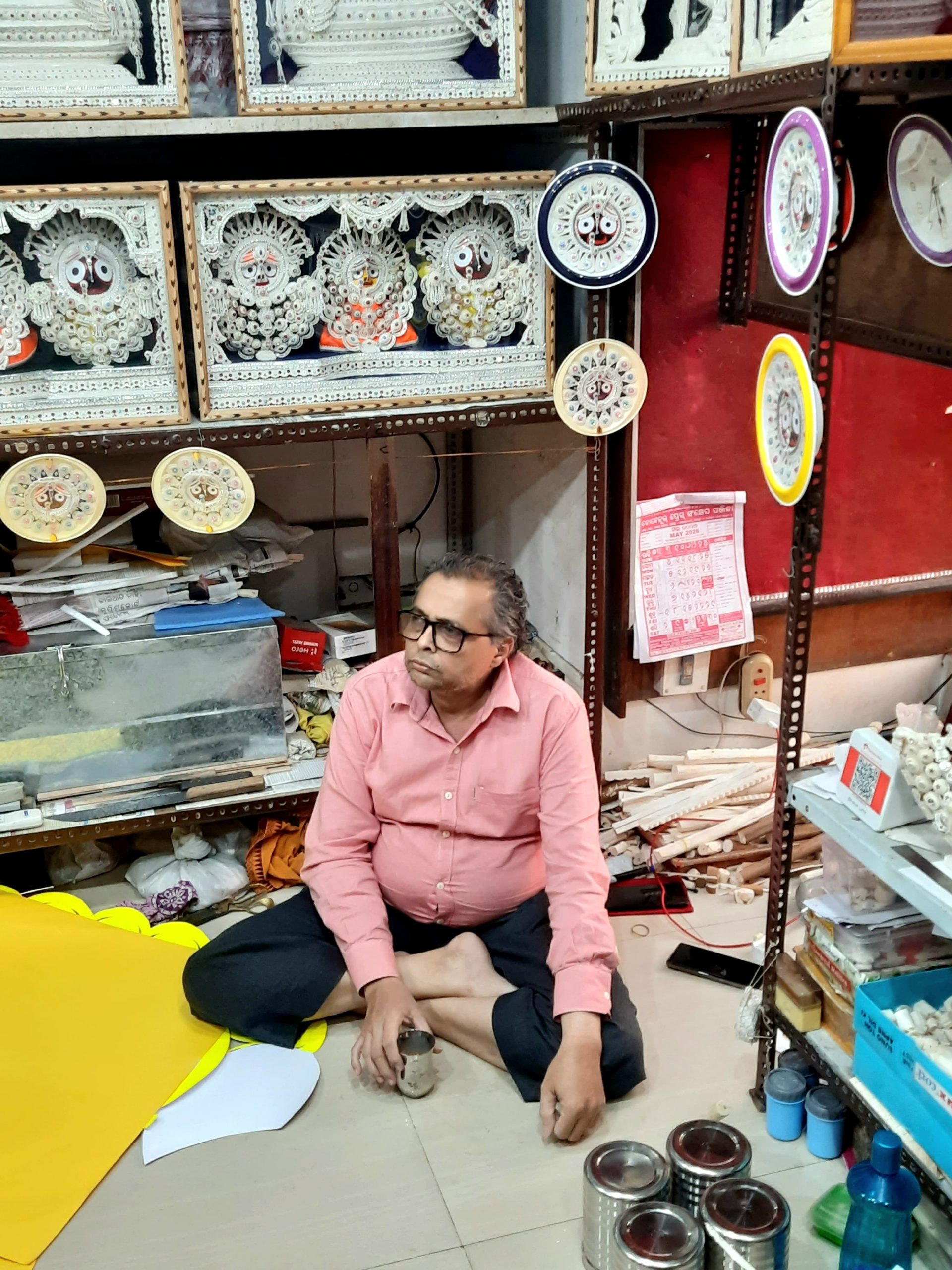
The heritage walks later moved to the Solapith Craft Centre, where participants witnessed the intricate artistry of renowned Sola craftsman and national award winner Baidyanath Khuntia. The participants were mesmerized by the exquisite Solapith artworks depicting Lord Jagannath, Nat Ganesh, Konark Wheel replicas, boats, and various ritual decorations used during “Gosani Jatra, Gajalaxmi Puja, Ganesh Puja”, and “Kartik Puja”. Sola, derived from the pith of the Aeschynomene aspera plant growing near marshlands and riverbanks, has long been an important artistic medium in Puri’s ritual culture.
Despite his immense contribution to Odisha’s traditional art heritage, Shri Khuntia now lives in financial hardship, continuing his craft from a small room at Nilachal Bhakta Nivas on Grand Road alongside his wife. He expressed concern over the declining appreciation for traditional art among younger generations in today’s increasingly materialistic and digital world.
In the final phase of the heritage walk, participants visited noted Odissi music guru Priyabrata Ray of Shyam Sundar Sangeet Mahavidyalaya to experience Puri’s traditional musical heritage. Discussions focused on the deep relationship between Odissi music and Jagannath Culture, especially the tradition of recital of “Gita Govinda” along with the rituals of Shri Jagannatha Temple.
Shri Ray elaborated the contributions of Singari Shyamsundar Kar, regarded as one of the pioneering teachers of Odissi music in Puri, and explained various ragas, rhythms, and Champu traditions associated with Odissi classical music.
Senior PHW member Prashanta Mishra also discussed how legendary music directors such as S.D. Burman and several Odia composers drew inspiration from Odissi and traditional Odia music for film songs.