

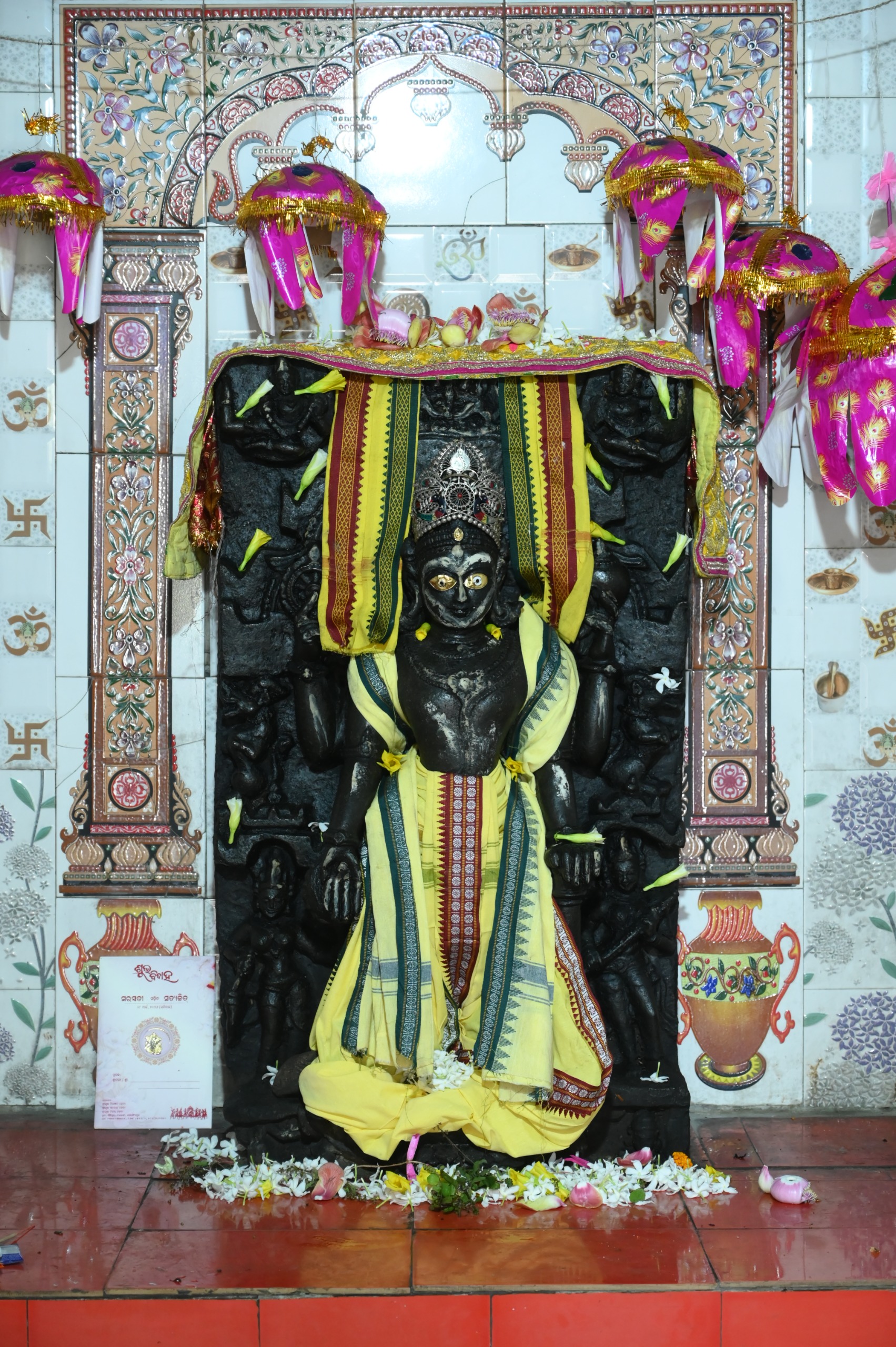
Jagatsinghpur: The landscape of Jagatsinghpur, often celebrated for its vibrant Shiva-Shakti traditions, recently revealed its deeper, syncretic roots during a cultural expedition by the Jagatsinghpur Heritage Walks (JHW). On their 13th journey to the outskirts of town, specifically the village of Kalyanpur, heritage enthusiasts uncovered a fascinating narrative of religious fluidity at the ancient Nagarjuna and Janardana Vishnu temples.
For generations, the local community at Nagarjuna Peeth has offered prayers to two ancient idols, embracing them as manifestations of Lord Vishnu. Yet, a closer iconographic study suggests a Buddhist origin that has transitioned into the Hindu fold over centuries. One figure is identified as Bodhisattva Manjushri, the embodiment of transcendent wisdom, while the other depicts Gautama Buddha’s celestial descent, known as Devavatran. This seamless transition from Buddhist icons to Hindu deities serves as a living testament to how Odisha’s socio-religious fabric absorbs and preserves diverse spiritual legacies.
The historical backdrop of this region is steeped in the early spread of Buddhism. While the physical presence of the Buddha in Odisha remains a matter of scholarly debate, the region of ancient Kalinga was an early bastion of the faith. Canonical texts like the Anguttara-Nikaya recount the story of Tapussa and Bhallika, two merchant brothers from Odisha who became the Buddha’s first lay disciples. They are said to have brought a relic of his hair back to their homeland, planting the initial seeds of the Dharma.
By the 7th Century, the Chinese traveler Xuanzang documented a flourishing Buddhist landscape in Odisha, noting the grandeur of the Pushpagiri University and the bustling port of Chelitalo. Scholars identify Chelitalo with the contemporary Tirtol area of Jagatsinghpur, a region once dotted with monasteries. Nagarjuna Peeth, where the JHW members gathered, is believed to be one such monastic site, possibly influenced by the great Mahayana philosopher Nagarjuna.
Today, the presence of these Mahayana idols in a predominantly Hindu shrine highlights a unique cultural synthesis. The preservation of Manjushri and the Buddha under the guise of Vishnu illustrates a shared sacred geography where different traditions do not merely collide but gracefully overlap, ensuring that ancient heritage remains a vibrant part of modern worship.