

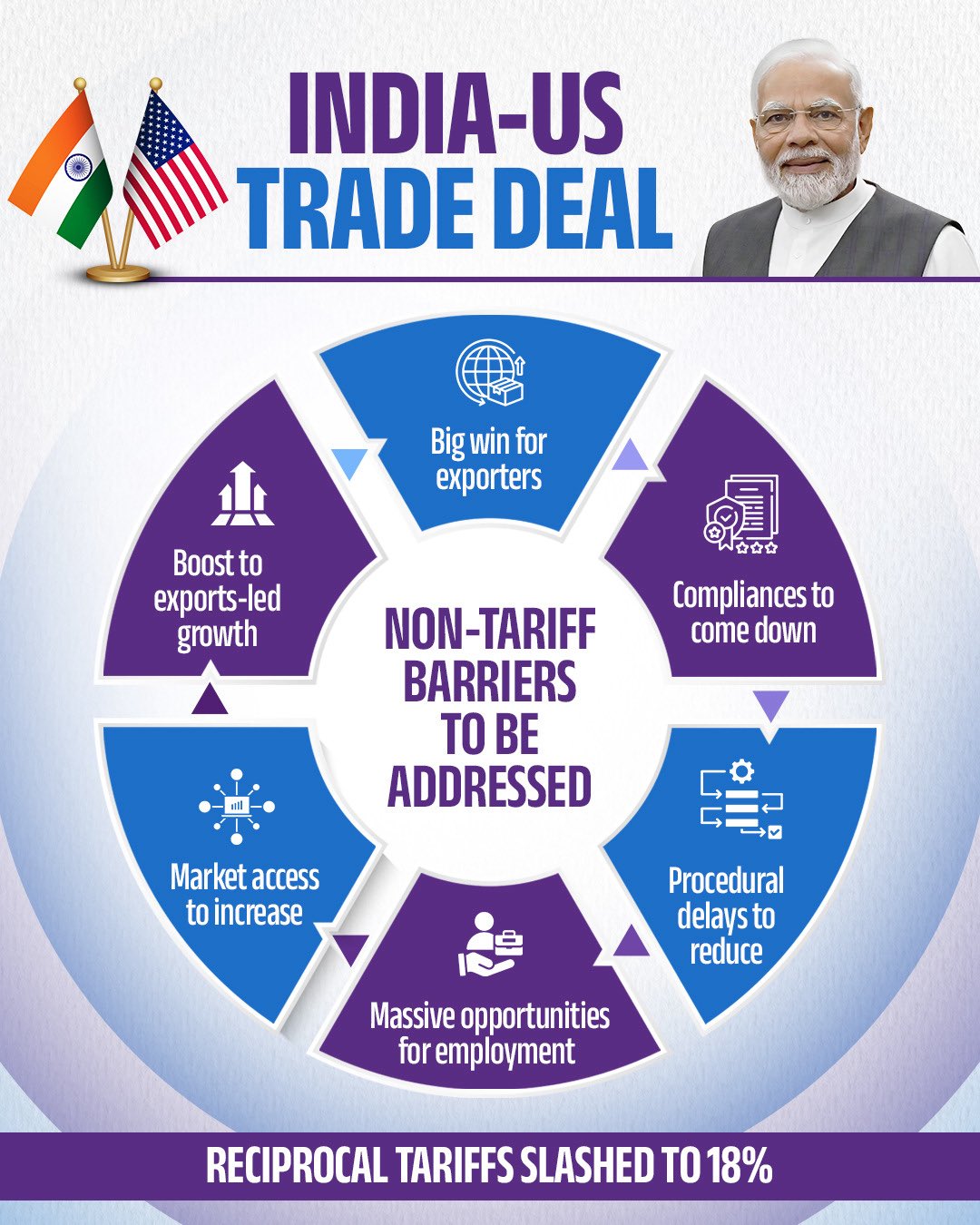
New Delhi: The United States and India have announced the establishment of a framework for an Interim Agreement focused on reciprocal trade benefits. This development reinforces the broader U.S.-India Bilateral Trade Agreement negotiations originally initiated by President Donald J. Trump and Prime Minister Narendra Modi in early 2025. The agreement is designed to create more resilient supply chains and represents a significant milestone in the economic partnership between the two nations.
Under the terms of the framework, India has committed to reducing or eliminating tariffs on various American industrial goods and agricultural products. These items include dried distillers’ grains, red sorghum, tree nuts, fruit, soybean oil, and spirits. In return, the United States will apply a reciprocal tariff rate of 18 percent on several Indian goods, such as textiles, apparel, leather, and organic chemicals. However, once the Interim Agreement is finalized, the U.S. plans to remove these reciprocal tariffs on specific products like generic pharmaceuticals, gems, and aircraft parts.
The agreement also addresses national security-related tariffs. The U.S. will remove duties on certain Indian aircraft parts previously tied to steel and aluminum proclamations. India will also receive a preferential tariff rate quota for automotive parts. Additionally, both nations have agreed to establish rules of origin to ensure trade benefits stay within their respective borders and to tackle various non-tariff barriers. India specifically intends to address restrictions on medical devices, information technology goods, and agricultural products while streamlining testing and standards requirements for U.S. exports.
A major component of the framework involves a commitment from India to purchase 500 billion dollars worth of U.S. energy products, aircraft, technology, and coking coal over the next five years. There is also a shared focus on increasing trade for data center technology, including Graphics Processing Units. Both countries have pledged to cooperate on investment reviews and export controls to counter non-market policies from third parties. Moving forward, the two nations will work to finalize this interim deal while continuing negotiations for a comprehensive Bilateral Trade Agreement that includes robust rules for digital trade