

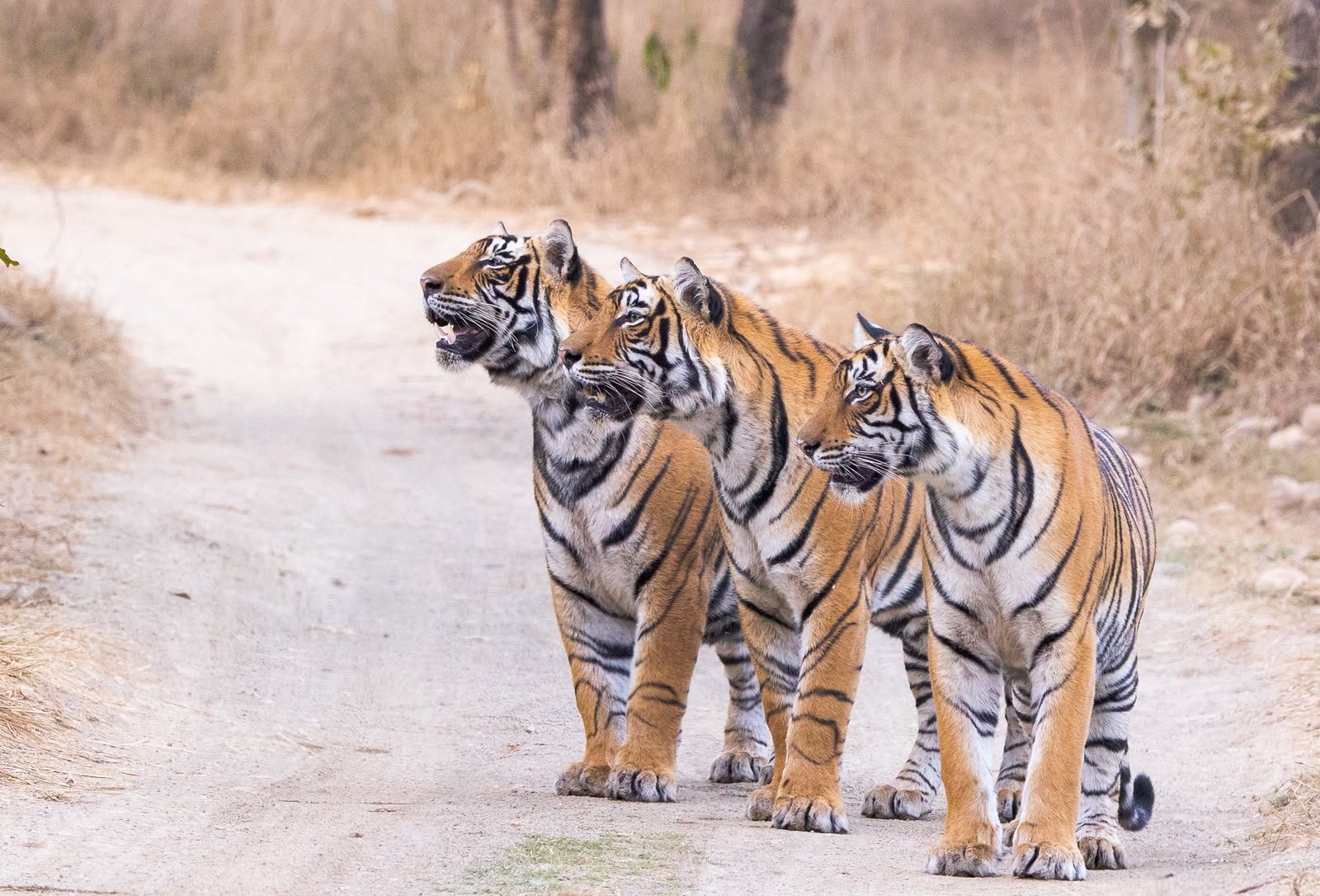
Bhubaneswar: India’s leadership in global tiger conservation is reflected in its hosting of nearly 70 percent of the world’s wild tiger population. This conservation success stems from a deep-rooted cultural ethic of living in harmony with wildlife, combined with modern scientific management, rigorous habitat monitoring, and active community participation to reduce human-wildlife conflicts.
Within this national landscape, the state of Odisha plays a unique and significant role. Odisha is home to vital tiger habitats, most notably the Similipal Tiger Reserve in Mayurbhanj district, alongside habitats such as Satkosia, Hirakud, and Paralakhemundi. Similipal stands out globally as the only wild habitat harboring rare pseudo-melanistic big cats, often known as black tigers, which possess a distinct genetic trait resulting in broad, overlapping dark stripes.
Similipal Tiger Reserve has experienced significant growth in its big cat population. From a baseline of 16 adult tigers recorded during the All India Tiger Estimation in 2022, intensive monitoring and targeted conservation initiatives pushed numbers to 27 in early 2024, and to 35 unique adult tigers in recent state forest department camera-trap surveys.
The reserve’s breeding success is further highlighted by 16 active tiger cubs, supported by successful translocations from Maharashtra to enrich genetic diversity. Notably, 19 of the 35 adult tigers display the rare pseudo-melanistic trait, confirming Similipal as a critical sanctuary for the world’s only wild population of black tigers.
This upward trajectory reflects effective anti-poaching measures, habitat restoration, prey base expansion, and expanding tiger movement from South Similipal into ranges across North Similipal.
Through dedicated state estimation exercises, continuous camera-trap monitoring, prey augmentation, and strategic translocation projects, Odisha has demonstrated a positive path forward in tiger population recovery. The tirelessness of forest personnel, scientists, and frontline workers across Odisha reflects the national commitment to safeguarding apex predators while empowering local communities.