

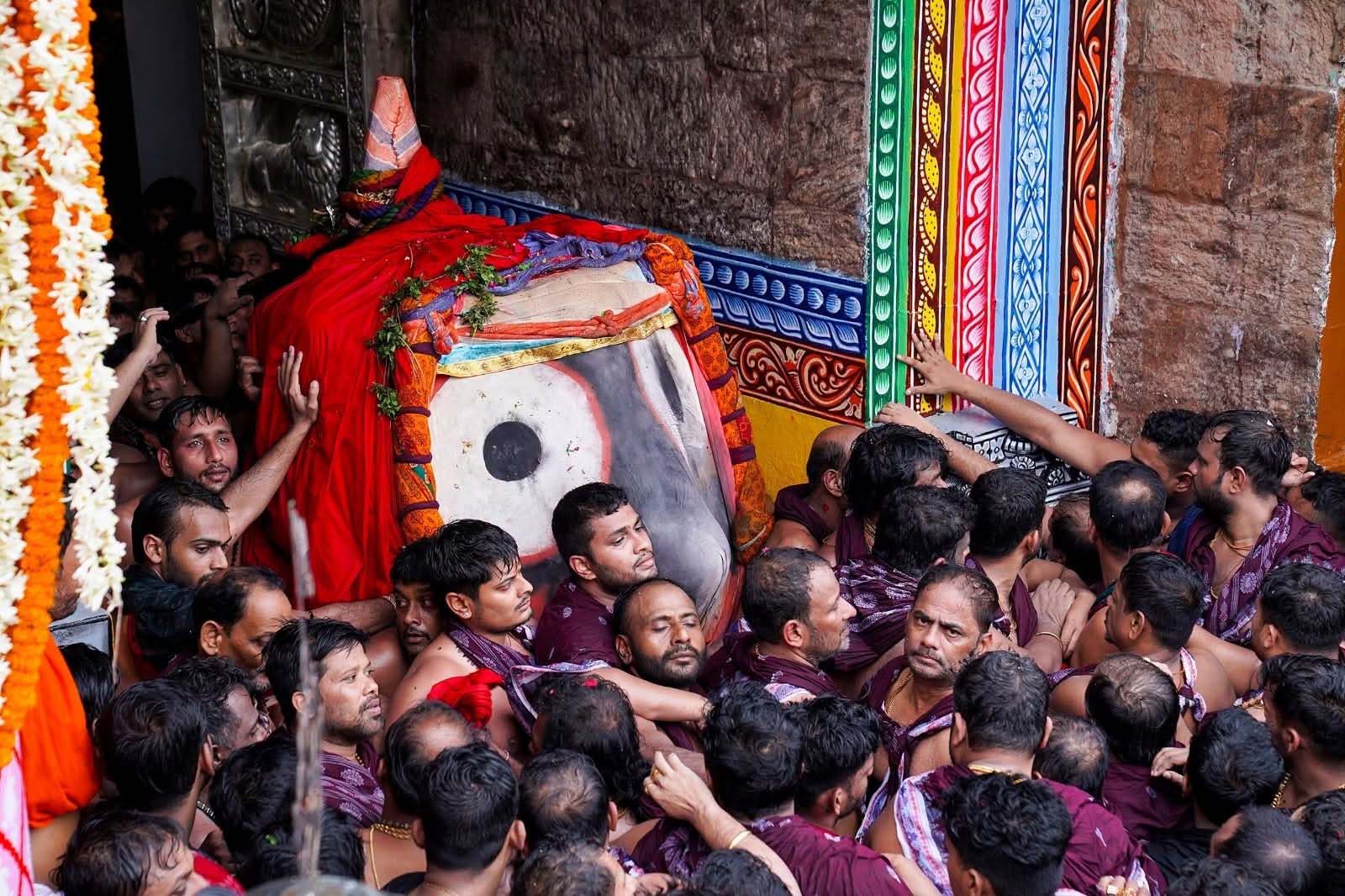
Puri: The World famous Rath Jatra ceremony in Puri witnessed an unprecedented controversy when the ceremonial procession, known as Pahandi, of Lord Jagannatha was conducted without the traditional ornate floral crown, called Tahia. This departure from long-standing visual customs has triggered widespread public dissatisfaction and ignited a sharp political debate across Odisha.
The incident unfolded as Lord Jagannatha emerged from the twelfth-century shrine. Devotees noticed the absence of the towering, majestic headgear made of flowers, cane, and bamboo, which typically serves as a key visual highlight of the procession. The moving Tahia traditionally symbolizes the rhythmic motion of the deity amidst the massive crowds, and its absence left many onlookers feeling that the grandeur of the ritual was significantly diminished.
Politically, the event quickly escalated. The opposition Biju Janata Dal and the Congress party launched a synchronized critique against the State Government. Opposition leaders termed the lapse a direct compromise on Odia Asmita, or regional pride, arguing that the deity represents the cultural identity of millions. Critics strongly rejected explanations centered on weather conditions, pointing out that the Rath Jatra has historically been held during heavy monsoons and storms without breaking tradition. They raised questions about why the floral crown of Lord Balabhadra remained intact while Lord Jagannatha’s was discarded, demanding an official apology from the State Government.
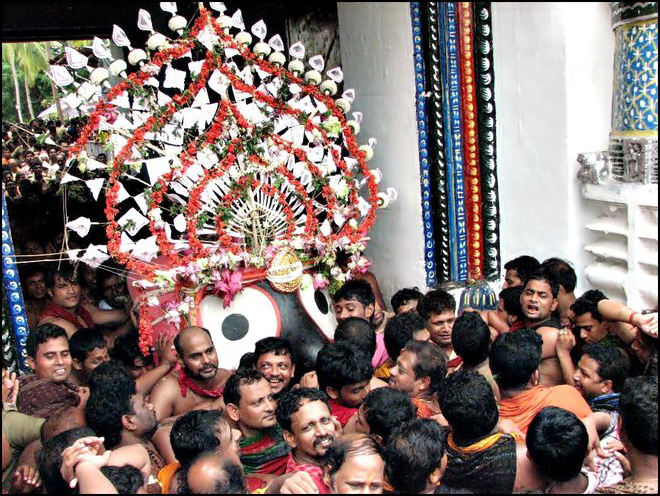
In response to the mounting public and political pressure, the Shree Jagannatha Temple Administration distanced itself from the decision. The administration clarified that overseeing the overall logistics is its primary role, whereas decisions regarding the deity’s immediate attire and movements rest strictly with the traditional servitors. Officials noted that several senior temple associates confirmed that conducting the procession without the crown does not violate or diminish the internal spiritual sanctity of the sacred traditions.
The traditional servitors, specifically the Daitapati Nijog, firmly defended the removal of the structure on practical grounds. According to their testimonies, continuous downpours had thoroughly soaked the delicate floral and bamboo materials, making the crown exceptionally heavy and unwieldy. Servitors explained that the waterlogged bamboo plates began shifting dangerously, obstructing their vision and posing a physical risk to those physically carrying the heavy idol down the temple steps. The decision to remove the crown was presented as a necessary measure to ensure safety and prevent major delays in the Lord’s journey to the chariot.
While the State Government maintained that the overall festival was managed smoothly despite the inclement weather and massive influx of pilgrims, the visual absence of the Tahia remains a sensitive subject. The situation highlights the delicate balance between maintaining ancient ritualistic aesthetics and addressing the immediate, practical safety concerns encountered by the traditional custodians during major public celebrations.