

Bhubaneswar: The intensification of the cold wave across Odisha represents a critical intersection of meteorological volatility and socio-economic fragility. As of January 6, 2026, the state is experiencing a sharp systemic decline in thermal stability, with the India Meteorological Department (IMD) recording a precipitous drop in night temperatures across both coastal and interior belts. This climatic shift is not merely a seasonal transition but a multi-layered crisis affecting the structural integrity of public health and logistics.
The cold wave’s trajectory is evidenced by the severe readings in western and interior Odisha. Jharsuguda has emerged as a primary locus of this cooling trend, recording a season-low of 5.1°C, a significant 5.6°C departure from recent averages. Other interior pockets, including Rourkela at 6.6°C and Keonjhar at 9°C, underscore a broadening corridor of extreme chill. Even the urban centers of Bhubaneswar and Cuttack have seen mercury levels slide toward 12.9°C and 15.4°C respectively, compounded by light cold winds and high humidity that amplify the perceived chill factor.
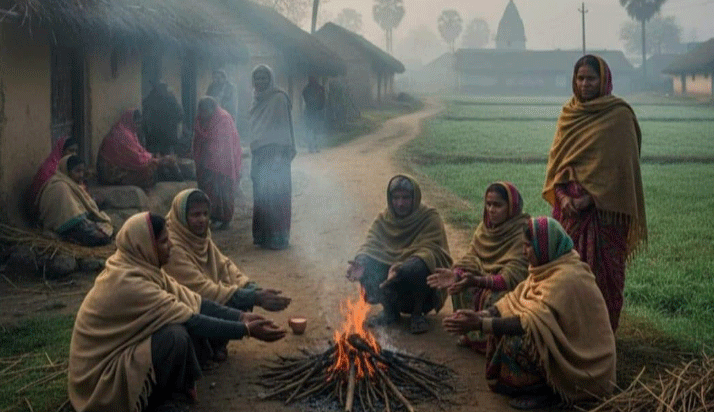
This thermal decline has established a state of systemic vulnerability characterized by the following causal layers: Socio-Economic Fragility: In rural areas, the abrupt drop in temperature creates a survivalist burden for marginalized populations lacking adequate insulated housing. The “bonfire economy”—where destitute families congregate around open fires for warmth—has become a visible marker of this vulnerability, as seen in urban outskirts like the Khandagiri flyover.
Logistic and Safety Disruptions: A persistent dense fog regime, particularly in districts like Nayagarh, Kandhamal, and Ganjam, has reduced visibility to below 50 meters in some corridors. This has resulted in hazardous transit conditions, evidenced by recent vehicular accidents and the grounding of regional transport, including disruptions at Bhubaneswar airport.
Agricultural and Public Health Risks: The IMD has issued specific advisories for the agricultural sector, where prolonged frost and dense fog threaten early morning operations. Simultaneously, the state faces a dual health burden; the cold suppresses immune responses while a concurrent jaundice outbreak in Khurda and respiratory vulnerabilities among the elderly strain the existing medical infrastructure.
Looking forward, the synthesis of current weather patterns—including a well-marked low-pressure area over the Bay of Bengal and subsequent moisture incursion—suggests that while night temperatures may temporarily stabilize, light to moderate rainfall forecasted for January 10 could exacerbate the damp-chill effect. This prolonged exposure necessitates a robust socio-legal and administrative response to provide shelter and emergency heating for at-risk communities.