

Bhubaneswar: In a decisive move toward democratizing fiscal governance and enhancing the transparency of state expenditure, the Department of Finance, Government of Odisha, has officially commenced its pre-budget consultation process for the 2026-27 Annual Budget.
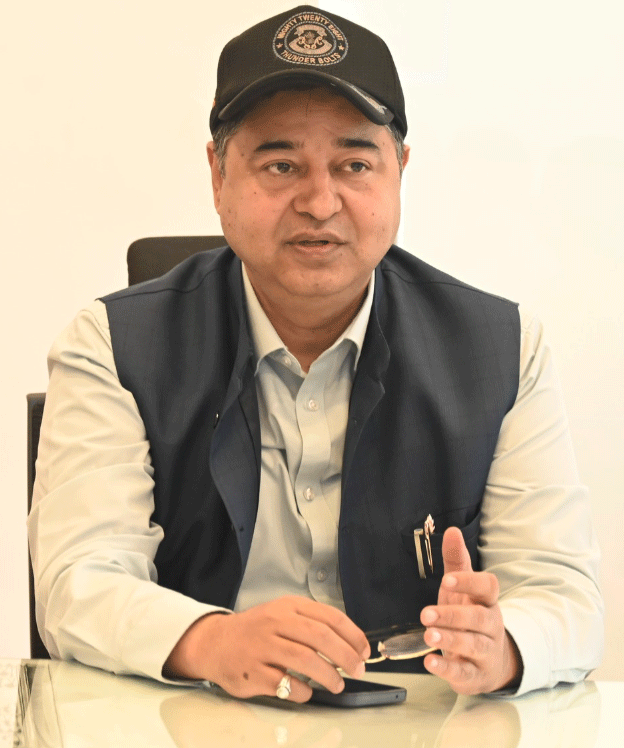
Principal Secretary, Finance, Shri Sanjeeb Kumar Mishra, emphasized that these consultations are designed to incorporate a systemic synthesis of perspectives from a broad cross-section of society, ensuring that the final budgetary allocations reflect the moral urgency of contemporary socio-economic demands.
The initiative represents a continuation of the state’s commitment to Information and Communication Technology (ICT) as a vehicle for participative democracy.
By transitioning from traditional closed-door drafting to an open-access evidence-based narrative, the Finance Department seeks to leverage digital infrastructure to capture the diverse needs of the public. The dedicated Budget web-portal serves as a centralized repository where all historical and current budget documents are displayed, providing citizens with the socio-legal precision necessary to provide informed commentary.
Stakeholders, including members of the public, Civil Society Organizations (CSOs), and various advocacy groups, are invited to submit suggestions through a structured format on the official portal at https://budget.odisha.gov.in/.
Recognizing the layered causality between accessibility and civic engagement, the Department of Finance has also activated multiple digital channels to facilitate communication.
Observations can be directed via e-mail to odisha.budget@gov.in, or through a dedicated WhatsApp line at +91-9438161111. Furthermore, the state is actively monitoring feedback on social media platforms including X (@FdOdisha), Facebook (@FinanceOdisha), and Instagram (@fdodisha).
This consultative window remains open until January 31, 2026. The integration of public input into the 2026-27 fiscal framework is intended to bridge the gap between institutional policy and the lived realities of the citizenry, fostering a more inclusive economic trajectory for the state.