

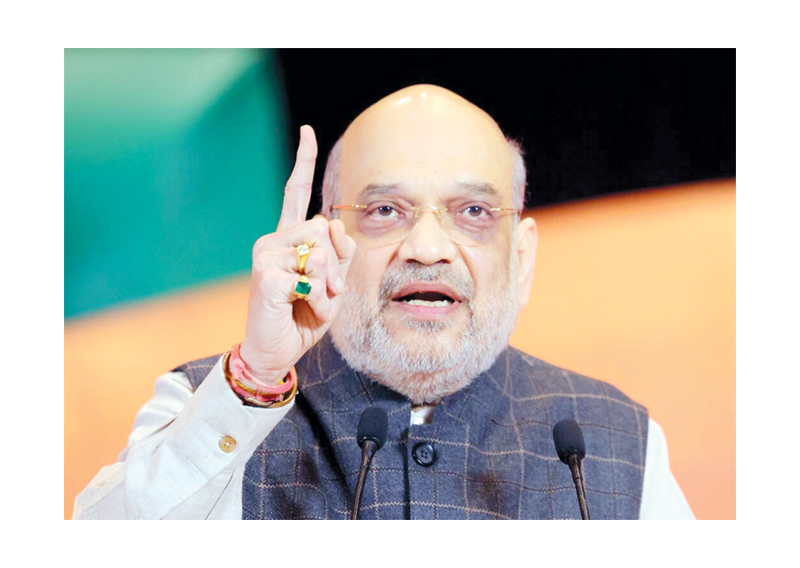
Kolkata: The political landscape of West Bengal is currently undergoing a profound transformation as Union Home Minister Shri Amit Shah spearheads an intensive strategic offensive to challenge the Trinamool Congress’s long-standing hegemony.
Under the direct command of Shri Amit Shah, the BJP has mobilized a multi-tiered operational framework, integrating localized booth-level tactics with a centralized war-room apparatus.
This systematic escalation follows a significant upward trajectory in the party’s electoral presence, which rose from three to 77 seats in the previous assembly cycle, positioning the organization as the primary institutional opposition to the incumbent administration.
The master strategy articulated by Shri Amit Shah centers on a synthesis of national security imperatives and internal governance critiques.
By identifying systemic vulnerabilities within the state’s administrative fabric, he has prioritized the resolution of Bangladeshi infiltration, which he characterizes as a deliberate demographic alteration sanctioned by the ruling party for electoral preservation.
To counteract this, Shri Shah has proposed the implementation of a national security grid designed to fortify the border and terminate illegal migration.
This narrative of moral and legal urgency is further bolstered by his focus on political violence, the safety of women, and pervasive corruption, all of which he identifies as symptoms of a 15-year decline in institutional integrity.
Data-driven interventions, such as the Special Intensive Revision of electoral rolls, form a critical component of this systemic push to ensure electoral transparency.
Shri Amit Shah’s confidence in securing a two-thirds majority is rooted in the perceived fracturing of the TMC’s internal coalition. The emergence of new political entities, such as the party launched by Shri Humayun Kabir, presents a specific threat to the TMC’s traditional support bases by potentially fragmenting the vote share. Furthermore, high-level diplomatic engagements, including the recent meeting between Prime Minister Shri Narendra Modi and Congress leader Shri Adhir Ranjan Chowdhury, have introduced new variables into the state’s socio-legal and political calculus.
The structural density of this campaign reflects a broader intent to dismantle the TMC’s control through a combination of ground-level mobilization and high-decibel ideological positioning.
While the incumbent government maintains a stance of defiance, projecting a victory that surpasses its previous tally of 216 seats, the intensive oversight provided by Shri Amit Shah indicates a shift toward a more aggressive, evidence-based electoral contest.
The focus remains on whether this comprehensive strategic deployment can effectively leverage the existing systemic cracks to finalize a transition of power in West Bengal.