

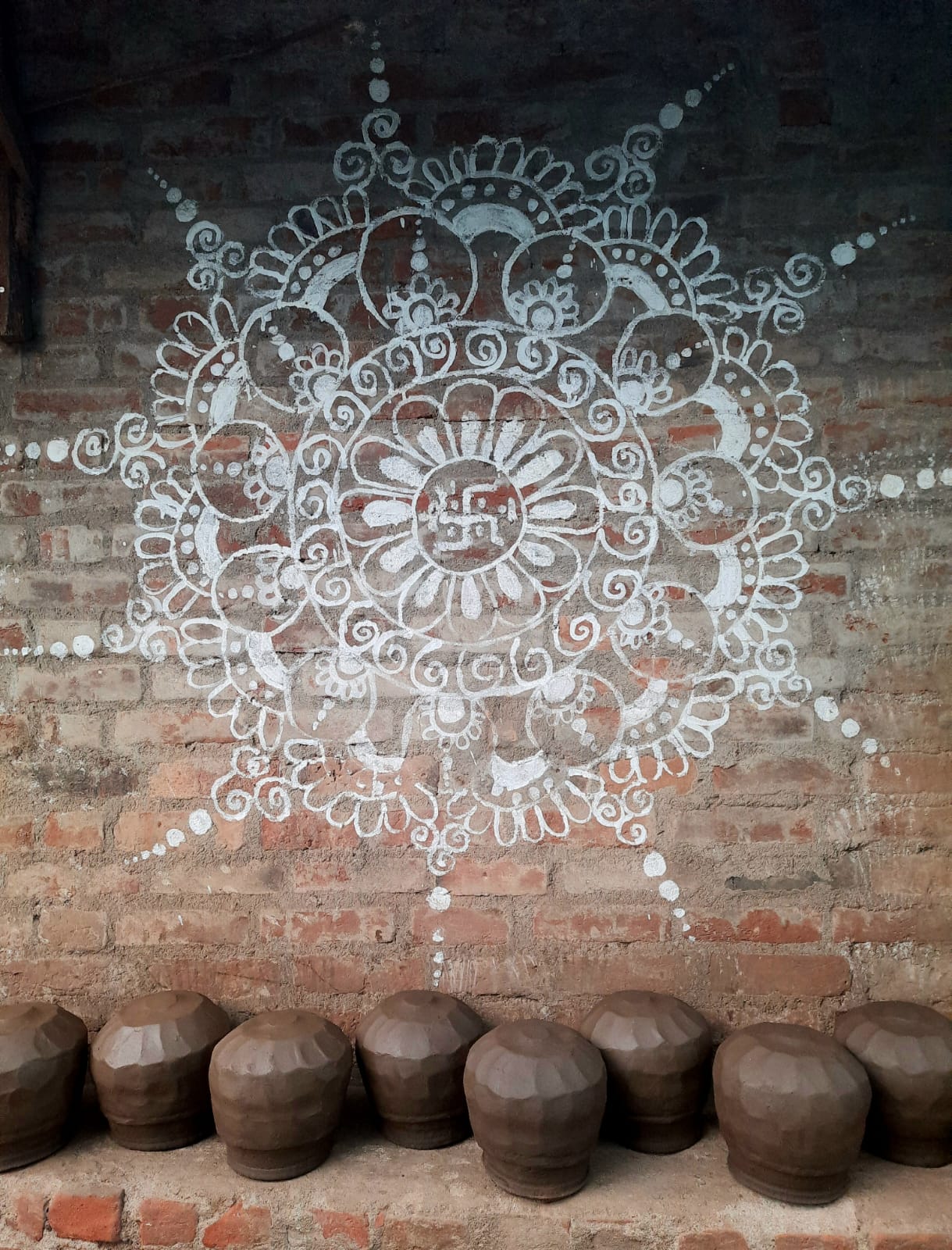
Puri: Members of the Puri Heritage Walks (PHW) on Sunday experienced a culturally enriching journey as they explored Kumharapada village, known for its traditional pottery used in preparing the sacred offerings of Mahaprabhu Shree Jagannatha.
The 20th edition of the heritage walk commenced from the historic Alamchandi Temple near Atharanala, where heritage enthusiasts gathered to begin the event. Goddess Alamchandi, one of the revered Ashta Chandi deities of Puri, holds significant religious importance. During the sacred Nabakalebara rituals, temple servitors traditionally rest at this temple after carrying the holy Neem logs (Daru).
Historically, Atharanala Ghat and Harini Ghat served as important entry points to Puri. The deities Alamchandi and Alamba were believed to guard these routes, and Goddess Alamchandi continues to be worshiped as the presiding deity of the potter community of Kumharapada.
Participants learned about traditional rituals such as Makar Tada and Saptapuri Tada, which are ceremonially taken in procession to the Jagannath Temple with traditional instruments like Ghanta, Chhata, and Kahali. Inside the temple, the four-armed idol of Goddess Alamchandi is uniquely depicted in a seated posture with one leg extended. Local youth potter Debaraj Das and heritage member Priyankar Maharana provided insights into the rituals and temple traditions.
Atharanala Bridge: History and Legends
The group then visited the historic Atharanala Bridge, known for its eighteen arches. While different opinions exist regarding its origin, historical accounts suggest that the bridge was constructed in the 13th Century by King Bhanu Deva I over the Mangala River. It facilitated pilgrim movement to Puri and aided in floodwater drainage.
A popular local legend associated with the bridge speaks of a couple with 18 sons, symbolically linked to the 18 arches. Heritage researchers Tanmay Chatterjee, Ashok Manjari Nayak, and Jyotsna Mohapatra elaborated on the historical and geographical significance of Atharanala, including the two ancient ghats such as Atharanala Ghat and Harini Ghat. The latter is believed to have derived its name from deer (harini) that once frequented the area for drinking water in ancient times.
Under the guidance of Debaraj Das, participants visited Makardhwaja Mahavir Temple and Budha Banambar Temple. Heritage member Arpan Gaurav Das described the rare idol of Makardhwaja Mahavir, depicted holding a crocodile and subduing a demon beneath his feet. According to some beliefs, the figure represents Makardhwaja, the son of Lord Hanuman.
Pottery Traditions of Kumharapada:
A major highlight of the walk was the live demonstration of traditional pottery-making. Under the supervision of senior potter Laxmidhar Bishoi, participants observed the preparation of ritual pots such as Adharapana handis and other earthen vessels used in the Jagannath Temple kitchen.
At the residence of veteran servitor Gopal Krishna Bishoi, participants witnessed the making of various earthen items including “kudua, sara oli”, and “dahi oli”. They also learned about the complete process; from clay collection and shaping on the wheel to drying and kiln firing.
The heritage trail further included visits to an ancient Banambar Temple, the Rajballav Math area, and the local Bipada Mochana Mahavir Temple. Participants also observed local youths practicing traditional physical exercises in preparation for the upcoming Pana Sankranti festival.
The event was conducted under the leadership of Dr. Kumar Arojyoti and Ashok Manjari Nayak, with guidance from heritage researcher Debi Prasanna Nanda. Students and heritage enthusiasts from Bhubaneswar, Balasore, and other regions actively participated.