

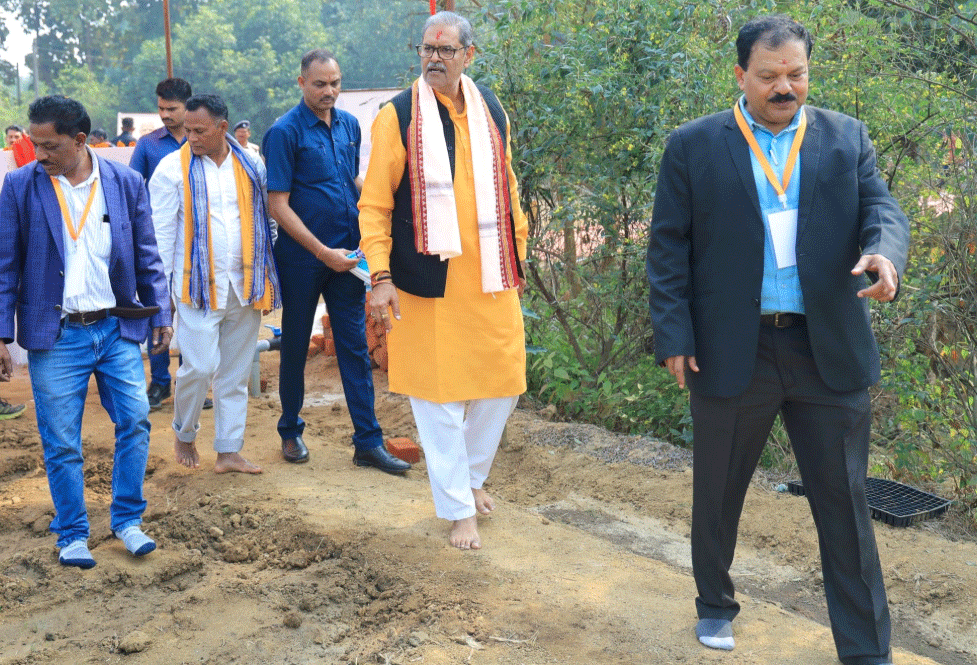
Balangir: Shri Subrat Kumar Panda, Director of Soil Conservation & Watershed Management said that Odisha has been a recipient of World Bank support under the Rejuvenating Watersheds for Agricultural Resilience Through Innovative Development (REWARD) project, which is a subset of the WDC-PMKSY 2.0 program.
This support is helping the state to adopt and scale up science-based, community-led watershed sub-projects. The Patnagarh event is a step in mobilizing community participation, which is critical, as past efforts in districts like Nuapada have demonstrated that active involvement from Village Development Committees and women-led Self-Help Groups is fundamental to the long-term sustainability of the conservation measures.
Shri Panda, who leads Watershed Mission said the Mission Watershed Revival aligns directly with the core tenets of WDC-PMKSY 2.0, a “next-generation” approach that emphasizes a shift from merely mechanical treatments to integrated, science-based, and community-driven watershed management .
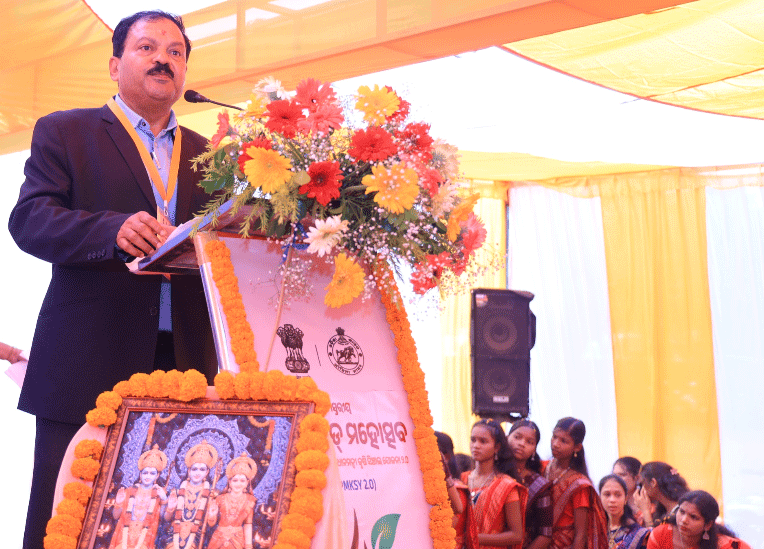
Shri Panda said that the Deputy Chief Minister Shri K V Singh Deo’s interaction with the local populace during the festival reaffirmed the importance of decentralized and participatory planning, which is central to the success of watershed development in the state’s rainfed and tribal-dominated regions. The focus remains on strengthening community-based institutions to ensure the long-term management of water and land resources, securing a resilient agricultural future for Odisha.
This national scheme, implemented by the Department of Land Resources, aims to cover a substantial area of degraded land between 2021 and 2026 across the country, with Odisha being a key implementing state.
Key features of the WDC-PMKSY 2.0, which are being strategically adopted in Odisha, include: Integrated Natural Resource Management (NRM): Moving beyond basic soil and water conservation to incorporate ridge area treatment, drainage line treatment, and in-situ moisture conservation.
Livelihood Enhancement: The program links NRM activities with income-generating options for landless farm labourers, livestock keepers, and artisans, promoting diversification into areas like horticulture, afforestation, fisheries, and animal husbandry.
Focus on Climate Resilience: The projects seek to increase ground water levels, enhance soil moisture, and enable double or triple cropping, thus fortifying farmers against erratic rainfall and droughts. Prior evaluations of the first phase (WDC-PMKSY 1.0) indicated an increase in farmers’ income and a significant rise in groundwater levels in project areas.
Technological Integration: State is using GIS and Remote Sensing techniques for improved planning and better project design, ensuring that interventions are scientifically mapped to the unique needs of each micro-watershed.