

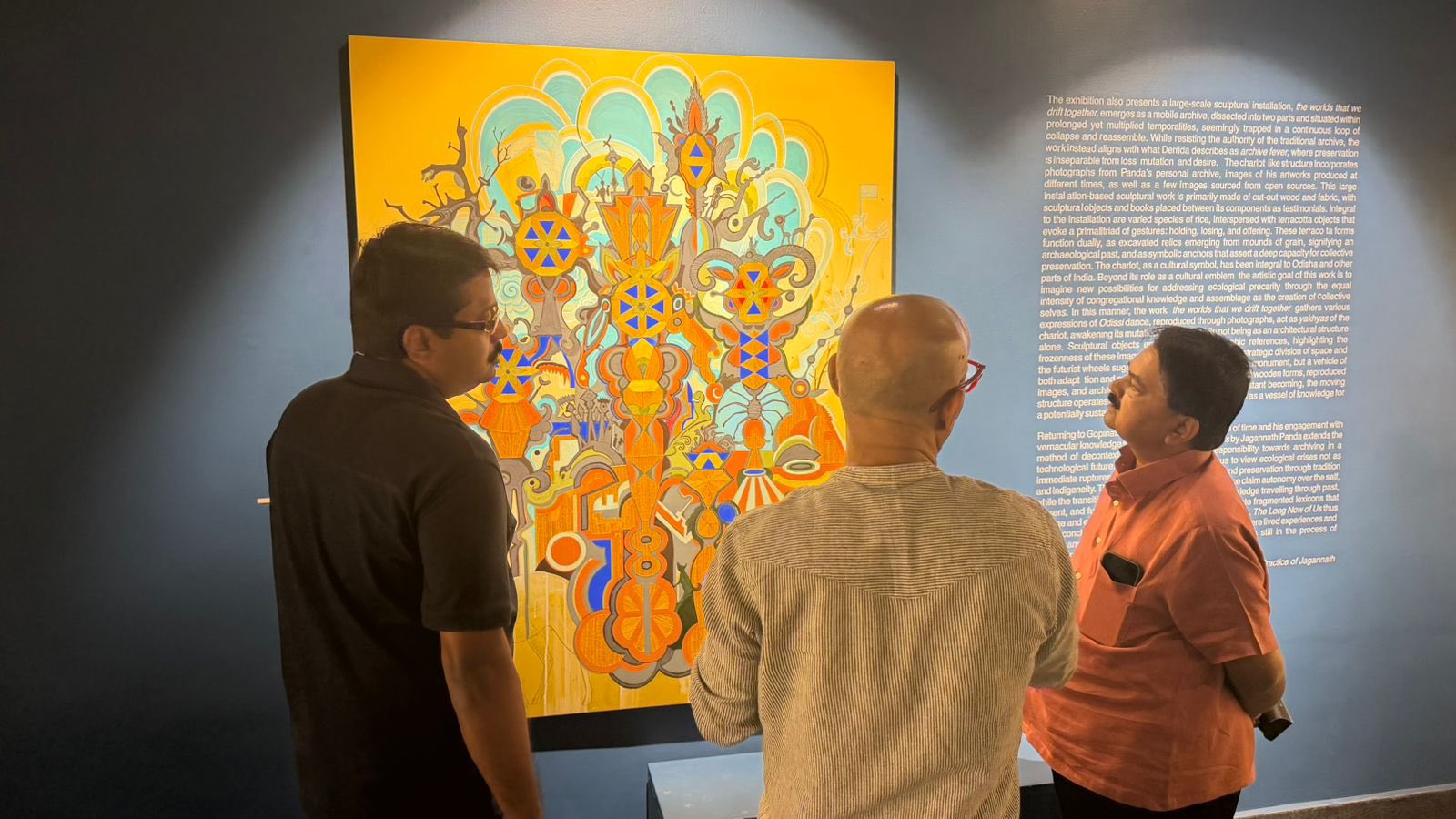
Bhubaneswar: The solo exhibition “The Long Now Of Us” at the Lalit Kala Akademi in Bhubaneswar serves as a significant intersection of artistic mastery and cultural patronage in Odisha. While the exhibition showcases the complex mixed-media works and symbolic abstractions of artist Shri Jagannath Panda, its realization highlights the vital role played by leading figures in the state’s cultural landscape.
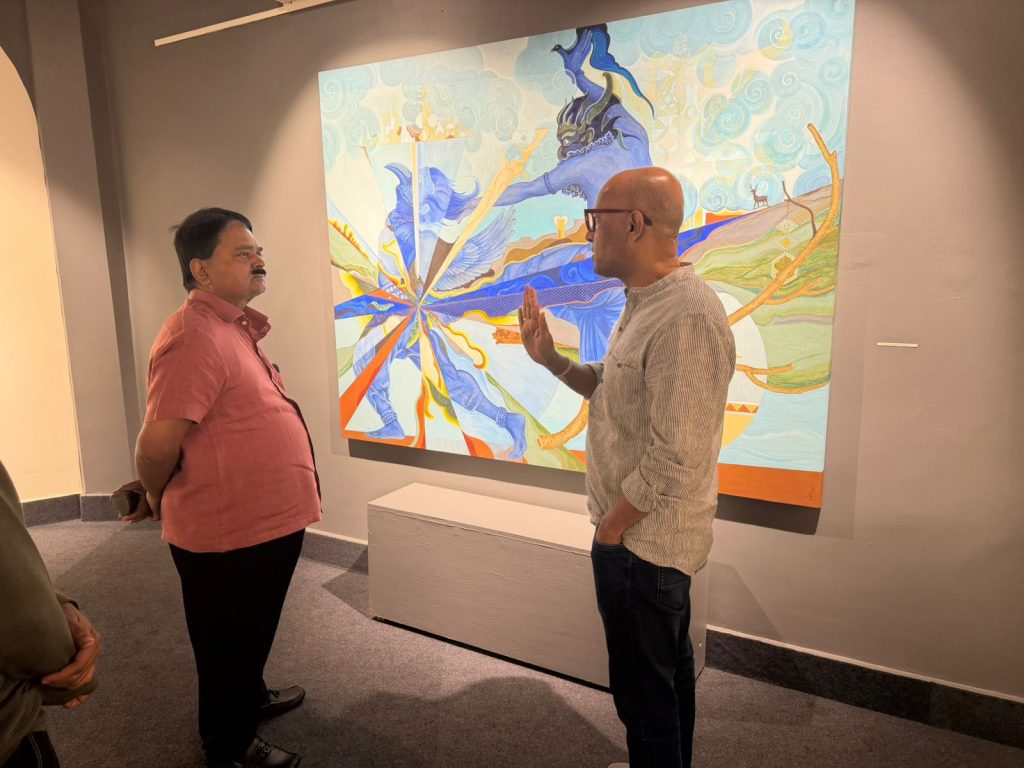
Shri Pankaj Lochan Mohanty, Chairman and Managing Director of the MGM Group, has long been a dedicated connoisseur of fine art and a champion of Odia Identity. His leadership has seen the MGM Group move beyond industrial excellence to become a cornerstone of heritage preservation, specifically through the revitalization of the traditional bell metal craft known as kansa and the sustained support of the Guru Kelucharan Mohapatra Award Festival.
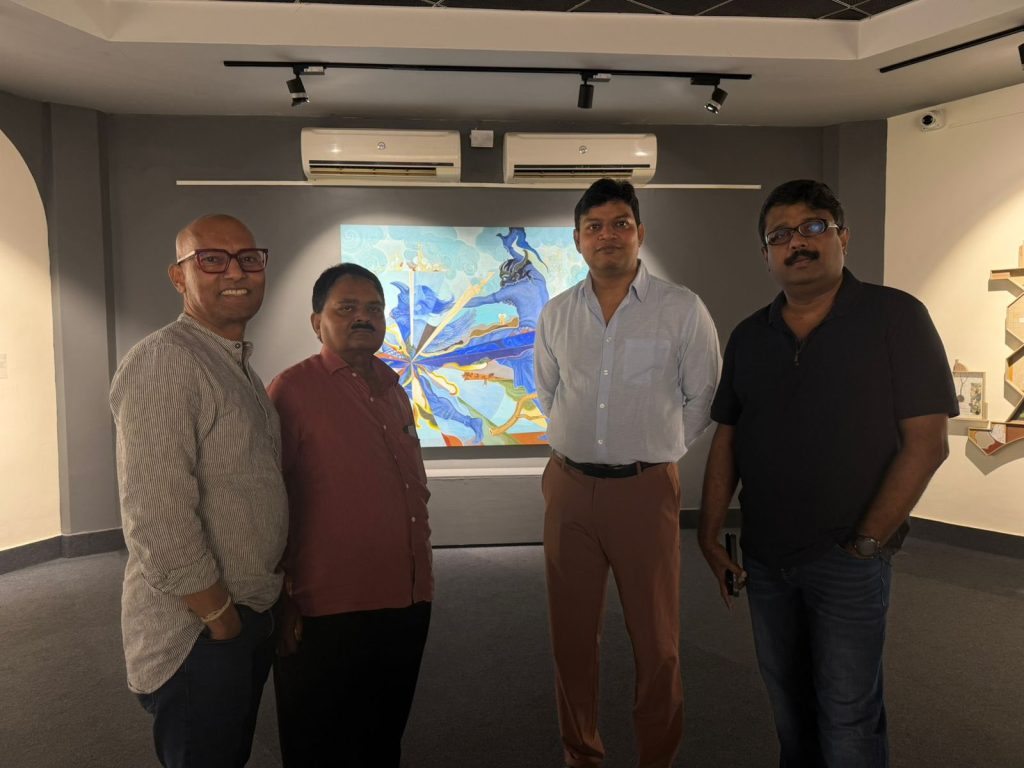
This vision of cultural stewardship is shared by Shri Siddartha Mohanty, Director of the MGM Group, who has been instrumental in bridging the gap between historical traditions and modern artistic ecosystems. His advocacy for documenting indigenous crafts and supporting contemporary platforms ensures that the artistic brilliance of Odisha reaches a global audience.
The presence of such patrons at landmark events like Shri Jagannath Panda’s homecoming solo exhibition underscores a collective effort to foster a pedagogical infrastructure for art in the region. By integrating corporate social responsibility with a genuine passion for creative expression, these leaders are ensuring that Odisha’s rich heritage is not only preserved but continues to evolve.
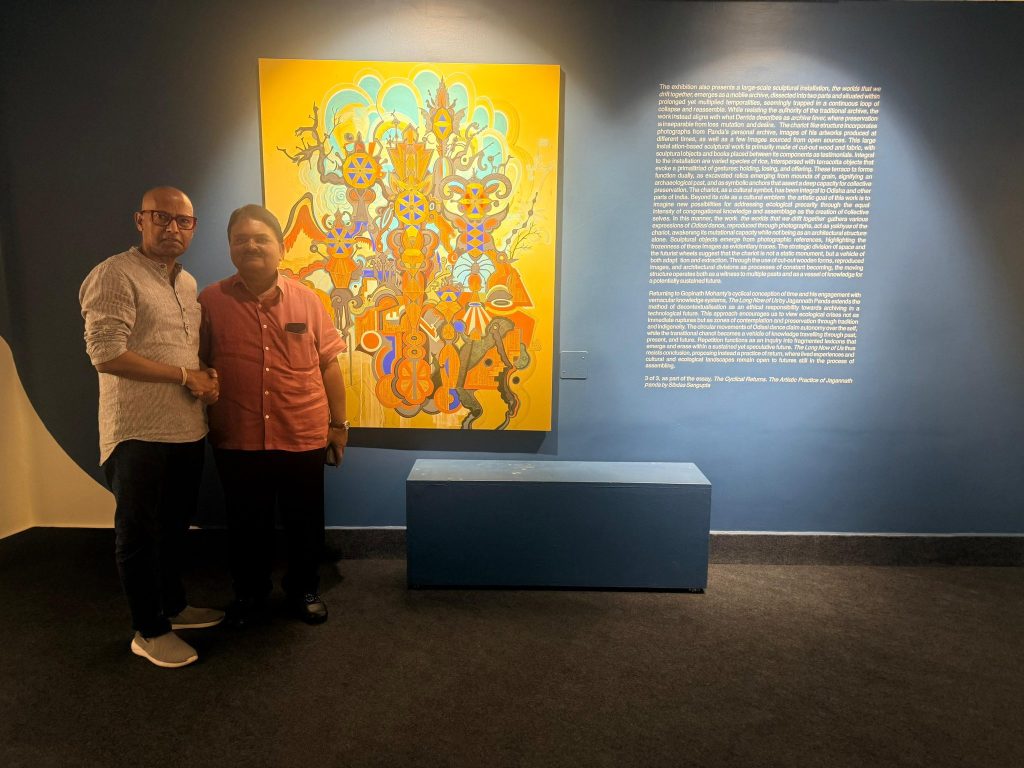
The solo exhibition “The Long Now Of Us” marks a significant homecoming for Shri Jagannath Panda, one of India’s most internationally recognized contemporary artists. Held at the Lalit Kala Akademi Regional Centre in Bhubaneswar, the show opened on February 13, 2026, and is scheduled to run through February 27 or 28, 2026. This exhibition is particularly noteworthy as it is Shri Panda’s first major solo presentation in his home State of Odisha, despite a career spanning over three decades and numerous shows in global art hubs like London, Tokyo, and San Francisco.
Curated by Shri Sibdas Sengupta and presented by the Entrepreneurs’ Organization Odisha, the exhibition serves as a profound inquiry into time, memory, and the evolution of artistic language. The title itself suggests a space where the past and present are not separate but coexist in a state of constant recurrence. This theme is deeply influenced by the cyclical understanding of time found in Odia literary traditions and the works of legendary writer Gopinath Mohanty.
The exhibition features an expansive range of works including mixed-media paintings, large-scale sculptural installations, drawings, and digital elements. Central to the display is Shri Panda’s signature technique of collage, which he uses not just as a visual method but as a conceptual framework to address themes of urban growth, ecological fragility, and cultural displacement. Many pieces draw direct inspiration from the architectural and ritual landscape of Bhubaneswar, incorporating fragments of temple iconography, traditional brocade fabrics, and motifs from Odissi dance.
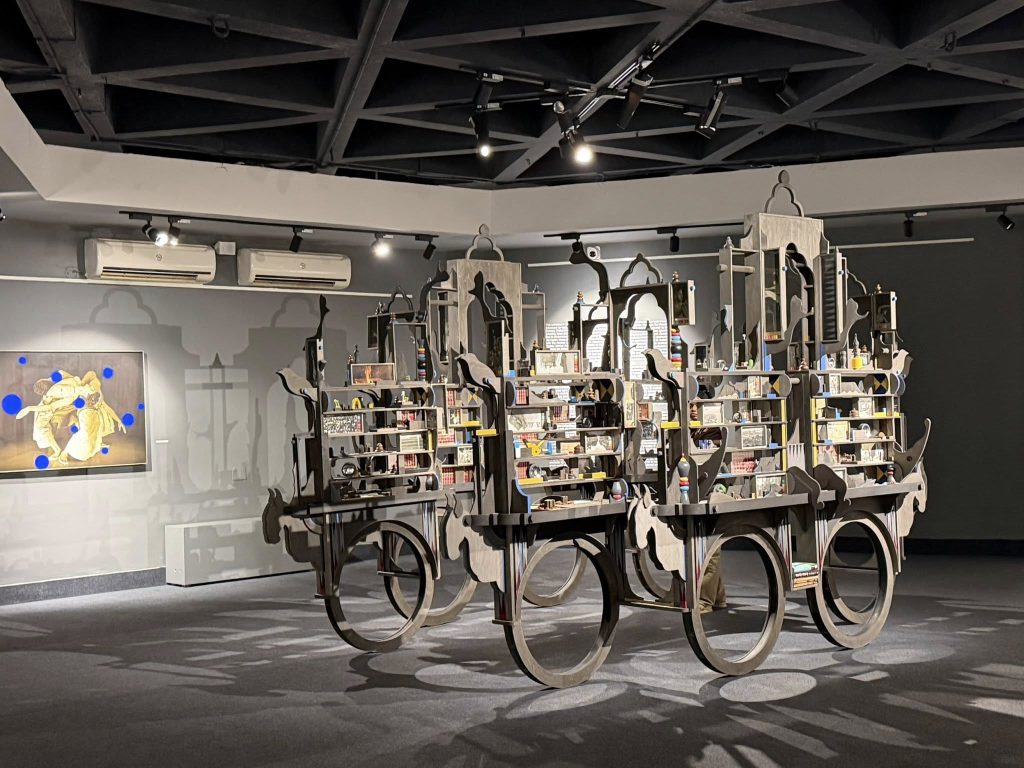
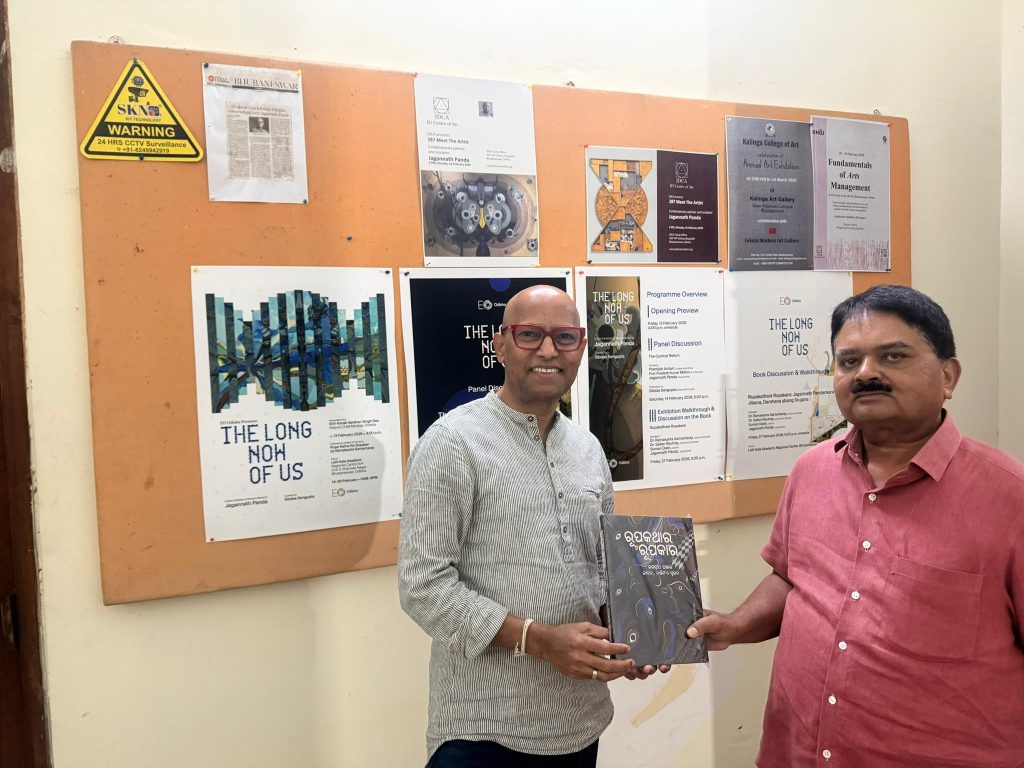
One of the standout themes in the show is the reimagining of the chariot as a fragile, shifting structure—a mobile archive of social life and memory. Other works, such as the Alchemist of the Earth series, explore the tensions between human intervention and the natural world. Beyond the visual art, the event includes a pedagogical program with panel discussions and the release of a book titled Rupa Katha Ra Rupakar by Shri Ramakanta Samantaray aiming to foster a deeper contemporary art ecosystem within the region.
The exhibition, features installations like the sixteen-foot archival chariot and works from the Alchemist of the Earth series, drawing together motifs from temple iconography and Odissi dance. The support from the entrepreneurial community and visionary leaders ensures that such high-level contemporary discourse remains accessible to the local public, marking a new era for the art scene in Bhubaneswar.