

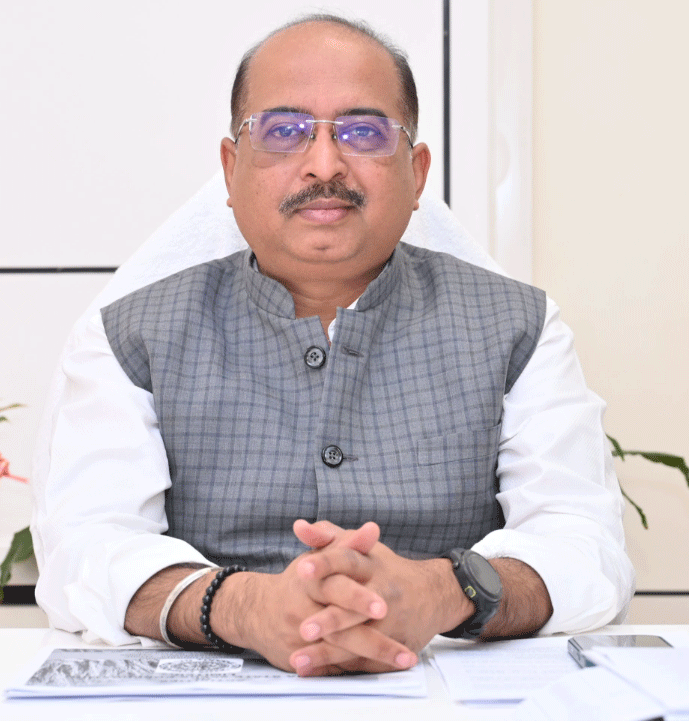
Bhubaneswar: Shri Sachin Ramachandra Jadhav, Secretary Agriculture and Farmers’ Empowerment has said that the Odisha Economic Survey 2025-26 characterizes the agriculture and allied sector as a vital component of the state’s economy.
Shri Jadhav said that in the 2025-26 fiscal year, this sector contributed 19.6 percent to the state economy, a figure that stands significantly higher than the national average of 16.8 percent.
Furthermore, the sector achieved a robust growth rate of 5.3 percent during this period, which is notably higher than the 3.1 percent growth recorded at the national level. These figures indicate that Odisha’s agricultural sector is expanding at a faster pace than India’s average.
In terms of foodgrains production, the state reached a record high of 150.5 lakh metric tonnes in 2024-25. This marks a 5.2 percent increase from the 143.04 lakh metric tonnes produced in the 2023-24 fiscal year. Rice production specifically stood at 118.6 lakh metric tonnes in 2024-25, representing a 2.8 percent growth since the previous year. This growth in rice output was bolstered by state initiatives such as the Samrudha Krushak Yojana and CM-Kisan, alongside increased Minimum Support Prices and input subsidies.
The report also emphasizes a growing trend toward crop diversification within the state. Cultivation of cash crops, including cotton, maize, vegetables, and spices, has been increasing. The government views this transition as a key strategy to enhance the overall income of farmers in Odisha.
The state’s procurement and support systems have also seen substantial strengthening. Paddy procurement reached 92.6 lakh metric tonnes in 2024-25, involving roughly 20 lakh farmers. The government disbursed 21,300 crore rupees in Minimum Support Price payments and 7,140 crore rupees in input subsidies. Notably, government procurement now covers 78 percent of total paddy production. Furthermore, the Odisha Millets Mission saw ragi procurement double to 8.8 lakh quintals, driven by a competitive price and state bonuses.
Infrastructure and allied activities have provided additional momentum to these gains. Irrigation potential has expanded to 74.2 lakh hectares, raising cropping intensity to 165 percent. The livestock and fisheries segments are growing even faster than traditional farming. Odisha has secured its position as the fourth-largest fish producer in India, with marine exports valued at 4,708 crore rupees. Additionally, egg production surged from 242 crore in 2020-21 to 406 crore in 2024-25, maintaining a 14 percent compound annual growth rate. This shift toward allied activities is credited with providing vital secondary income for rural households and contributing to a 9.2 percent rise in the state’s per capita income.