

Bhubaneswar: Odisha has embarked on a strategic fiscal journey in 2025 that balances the rigors of institutional discipline with an ambitious scale-up in budgetary performance. The state’s financial roadmap is defined by a dual commitment to the Fiscal Responsibility and Budget Management (FRBM) framework and a robust pursuit of Gross State Domestic Product (GSDP) growth, which is projected to reach 10.63 lakh crore with a nominal growth rate of 12%. This trajectory ensures that Odisha remains a leader in national fiscal indices while aggressively pivoting toward high-impact social and capital investments.
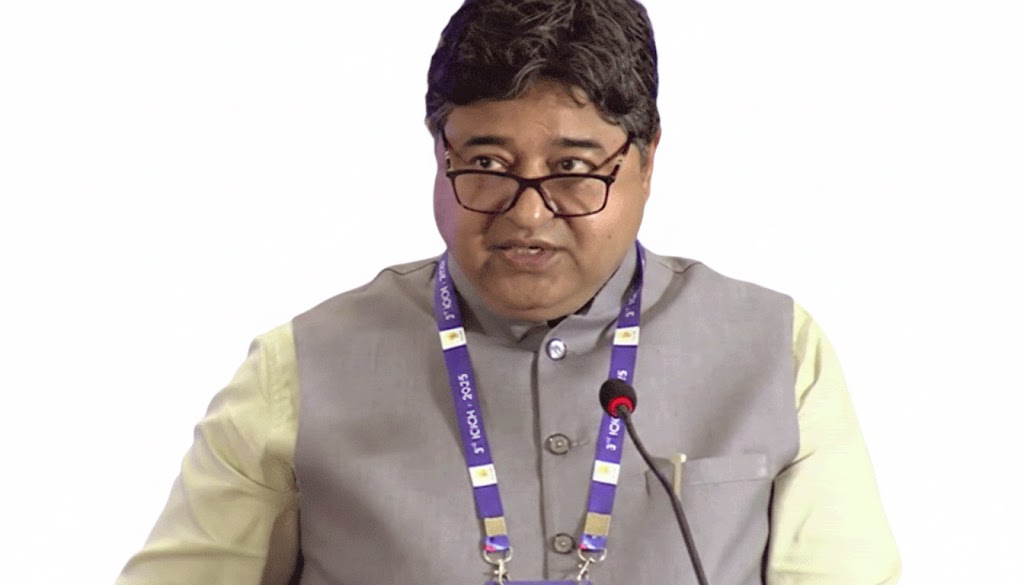
The 2025-26 annual budget, with a total outlay of 2.90 lakh crore, reflects a significant expansion in developmental capacity. At the heart of this strategy is the maintenance of exceptional fiscal health. The state has achieved a Fiscal Health Index score of 67.8, underpinned by a debt-to-GSDP ratio of approximately 12.7%. This figure is notably lower than the 25% ceiling recommended by the 15th Finance Commission, providing the government with a substantial fiscal cushion. Furthermore, by targeting a revenue surplus of 3% of GSDP (31,800 crore), the Department handled by Shri Sanjeeb Kumar Mishra, Principal Secretary Finance has ensured that operational earnings comfortably fund recurring expenses, thereby freeing up resources for transformative asset creation.
A defining feature of the current fiscal management is the strategic emphasis on capital outlay, which has been pegged at 65,012 crore. At 6.1% of GSDP, this represents one of the highest levels of capital spending in India. This investment is directed toward big-ticket infrastructure and port-led industrialization, aiming to bridge the gap between the state’s mineral wealth and local value addition. While the manufacturing sector continues to contribute 35% to the GSDP—bolstered by Odisha’s dominance in iron ore and chromite production—there is a concerted effort to diversify the tax base and improve tax buoyancy beyond the mining sector to mitigate the risks of global commodity price fluctuations.
Under the renewed focus on social sector spending, the budget allocates 1,19,565 crore, accounting for roughly 41% of the total expenditure. This includes significant outlays for education (35,513 crore) and healthcare (23,635 crore), alongside major welfare initiatives such as the Subhadra Yojana and CM Kisan. The objective is to ensure that the benefits of high GSDP growth are equitably distributed across the state’s geography, particularly in the tribal and southern districts. By integrating these social programs with productive capital investments, the state seeks to elevate its per capita income—currently at 2,03,085—toward the national average.
The agricultural sector, which remains the primary livelihood for nearly half the workforce, has seen a 12% increase in funding to 37,838 crore. Through schemes like the Samrudha Krushak Yojana, the Finance Department is focusing on enhancing productivity to ensure that agriculture’s 28% contribution to the GSDP becomes more efficient. Simultaneously, the services sector is being nurtured as a high-growth driver, expanding at 10% to provide modern employment opportunities for a growing urban population.
Ultimately, the 2025 financial landscape of Odisha demonstrates a sophisticated management of public pulse and purse. By strictly adhering to the 3.2% fiscal deficit limit under the FRBM Act while simultaneously scaling up programmatic spending, the state is transitioning from a model of mere fiscal prudence to one of aggressive, inclusive growth. The focus remains clear: leveraging the state’s institutional strength to ensure that a wealthy state treasury translates into a prosperous citizenry.