

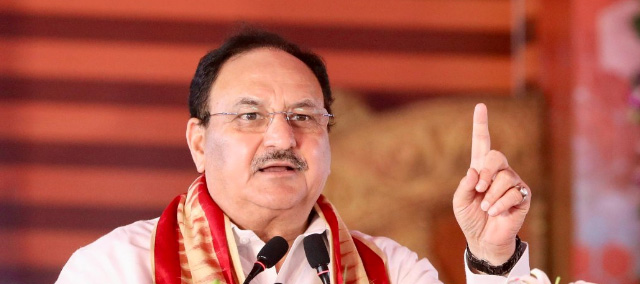
New Delhi: Odisha is maintaining a comfortable supply of key fertilizers for the Kharif 2026 cropping season, backed by continuous monitoring and advance allocation from the Central Government.
According to data presented by Union Minister of Chemicals and Fertilizers Shri Jagat Prakash Nadda in the Lok Sabha, the state’s fertilizer availability across major categories has exceeded the required seasonal estimates between April 1 and July 21, 2026.
For urea, against a requirement of 2.73 lakh metric tonnes (LMT), Odisha received an availability of 4.17 LMT. Similarly, for Diammonium Phosphate (DAP), against an estimated requirement of 1.67 LMT, the state recorded an availability of 2.49 LMT.
For NPK complex fertilizers, against a requirement of 1.22 LMT, availability stood at 1.53 LMT. Single Super Phosphate (SSP) availability reached 0.76 LMT against a requirement of 0.55 LMT. Muriate of Potash (MOP) recorded an availability of 0.73 LMT against a requirement of 0.80 LMT.
The Department of Agriculture and Farmers Welfare assesses seasonal requirements in consultation with state governments prior to every cropping cycle. The Department of Fertilizers then executes monthly allocation plans and tracks supply movement right down to retail points using the Integrated Fertilizer Management System (iFMS). Distribution within Odisha’s districts is managed directly by state agriculture authorities.
To ensure DAP remains affordable to farmers at 1,350 rupees per 50 kg bag, special provisions of 3,500 rupees per metric tonne have been extended to cover additional logistics and handling costs from factory gates to farm gates, alongside the Nutrient Based Subsidy (NBS) rates.
The Ministry also highlighted that balanced fertilization under the Soil Health Card scheme has helped farmers cut overall chemical fertilizer application by 8 to 10 percent while improving crop yields by 5 to 6 percent. About 62.8 percent of farmers are now applying fertilizers based on soil test recommendations, which has reduced input costs per acre by 4 to 10 percent.
Overall fertilizer security across Odisha remains stable, with state authorities conducting regular field monitoring to ensure smooth distribution to farmers during peak demand periods.