

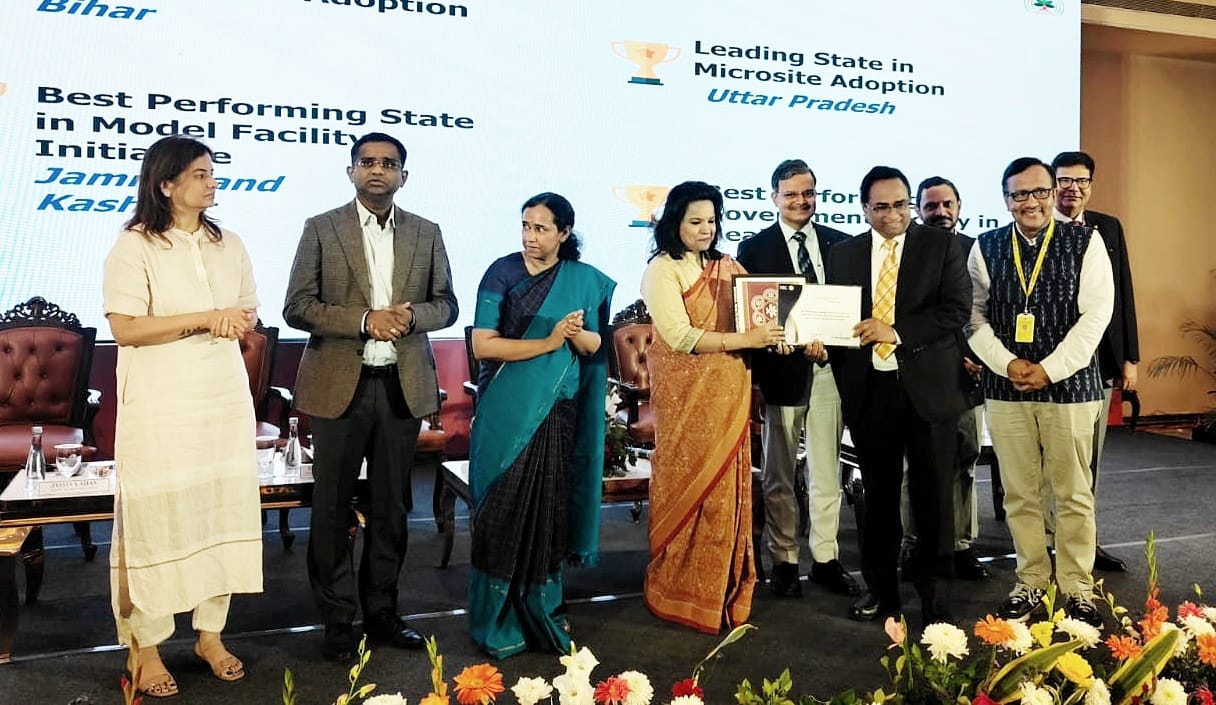
Bhubaneswar: Chief Secretary Shrimati Anu Garg concluded a two-day national Chintan Shivir in Bhubaneswar today, emphasizing that technology and artificial intelligence must be the backbone of modern healthcare.
Addressing the valedictory session, Shrimati Garg advocated for a “last person in line” approach to governance, highlighting the need to eliminate the confusion and anxiety patients often face when navigating hospital registries, sample collections, and doctor consultations.
The Shivir, which focused on the implementation of the Ayushman Bharat Pradhan Mantri Jan Arogya Yojana (ABPMJAY) and the Ayushman Bharat Digital Mission (ABDM), saw Odisha emerge as a frontrunner in healthcare accessibility.
Under the leadership of Shrimati Garg, the state was recognized for its stellar performance in the generation and distribution of co-branded ABPMJAY-GJAY cards. In a span of just nine months, Odisha has successfully issued 3.46 crore cards, ensuring that a vast majority of its population is covered under the converged health scheme.
During the event, Shrimati Garg presented Performance-Based National Health Authority (NHA) Awards to several states and institutions. Odisha secured two major awards, while AIIMS Bhubaneswar was specifically lauded for its excellence in digital health record linking. Other awardees included Uttar Pradesh, Bihar, and Gujarat, cited for their best practices in diverse indicators of the Ayushman Bharat mission.
The deliberations over the two days covered 25 critical dimensions of healthcare, ranging from fraud prevention and claim settlements to the adoption of NABH standards. A major highlight was the discussion on how AI can be utilized to analyze healthcare dynamics and reduce waiting times for patients. National Health Authority CEO Sunil Kumar Barnwal praised Odisha for setting a national benchmark in organizing the event and urged both public and private sectors to prioritize digital data creation to facilitate informed medical decisions.
The session was attended by health secretaries and senior officials from 27 states and 7 territories, marking a collaborative milestone for the future of universal health coverage in India.
Shrimati Garg closed the session by urging administrators to develop robust facilitation mechanisms that allow patients to focus on recovery rather than administrative hurdles.