

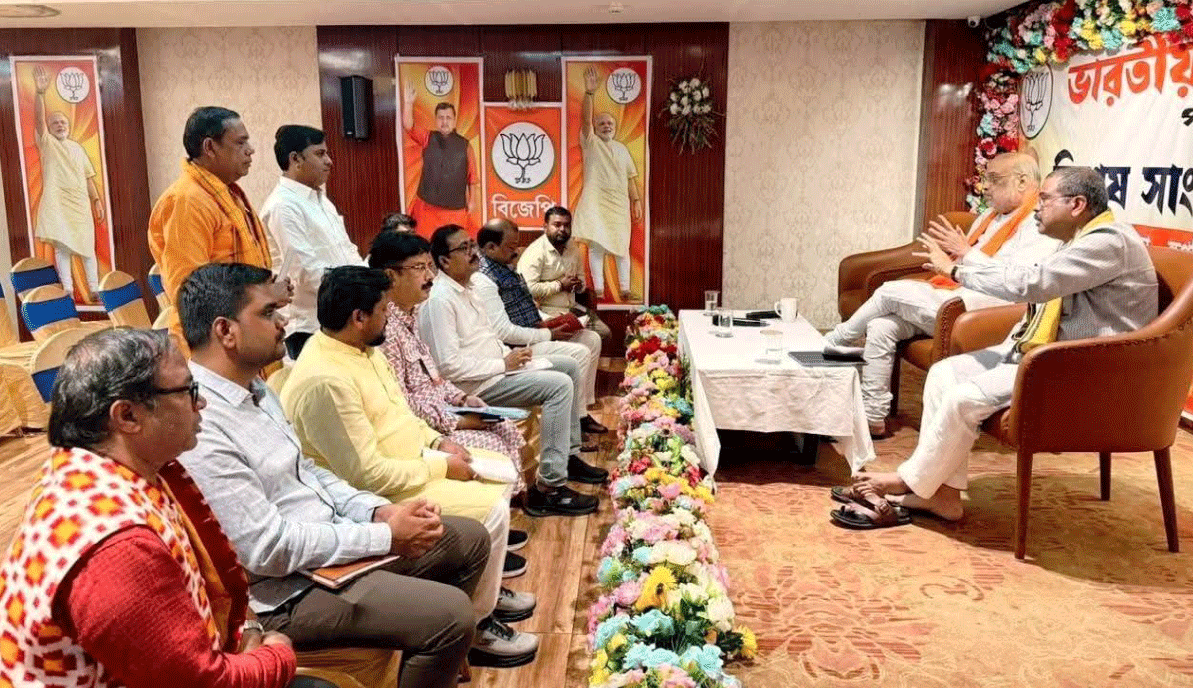
Kolkata: The involvement of Odisha’s political leadership in the West Bengal electoral landscape marks a significant shift in regional campaign strategies, particularly as the Bharatiya Janata Party (BJP) seeks to leverage its recent successes in Odisha.
This cross-border maneuver is largely focused on the 2026 Assembly elections, where senior leaders from Odisha, including Chief Minister Shri Mohan Charan Majhi and Union Minister Shri Dharmendra Pradhan, have been deployed to influence specific demographic blocks.
By assigning dozens of Odisha-based leaders to oversee dozens of constituencies, the party is attempting to create a seamless organizational structure that transcends state lines.
The primary target of this outreach is the substantial Odia-speaking diaspora residing in West Bengal. For over a century, the industrial belts of Kolkata, Howrah, and the coastal districts have been home to a large Odia population that maintains deep cultural and linguistic ties to their home state.
Odisha leaders are engaging directly with community associations, known as Odia Samaja, to foster a sense of regional pride and kinship. This strategy aims to present the BJP’s governance in Odisha as a successful model that could be replicated in West Bengal, specifically addressing concerns like better rail connectivity and cultural preservation.
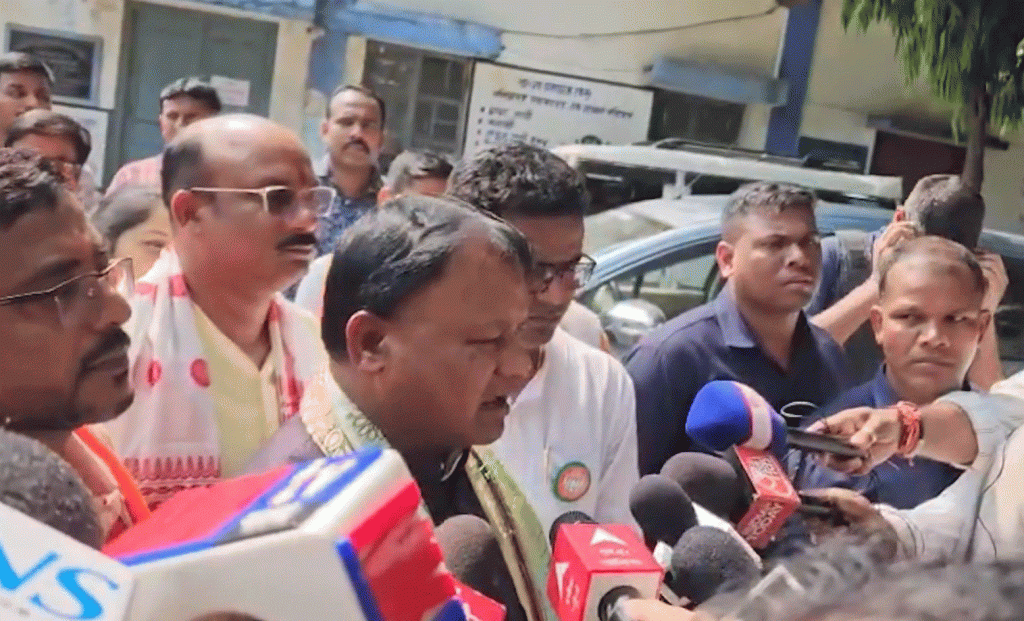
Geographic proximity plays a crucial role in this political synergy, with the campaign being most intensive in the Junglemahal belt and the Medinipur districts. In these areas, the overlap of culture and language is most pronounced, making the presence of Odisha ministers feel more like a local visit than an outside intrusion. Beyond the permanent residents, leaders are also focusing on the migrant labor force. By coordinating with workers who travel between the two states, the Odisha unit provides a logistical and motivational bridge that encourages voters to participate in the democratic process back home.
However, this influx of neighboring leadership has not gone unchallenged. Local political rivals often frame the presence of these leaders as a challenge to West Bengal’s unique identity, labeling the effort as an attempt by outsiders to influence local sentiments. Despite this pushback, the strategic use of Odisha’s political heavyweights allows for a more personalized form of outreach that resonates with voters who feel a dual sense of belonging. This collaborative effort highlights how regional politics is becoming increasingly interconnected, with the success of a party in one state being used as a primary tool for expansion in another.