

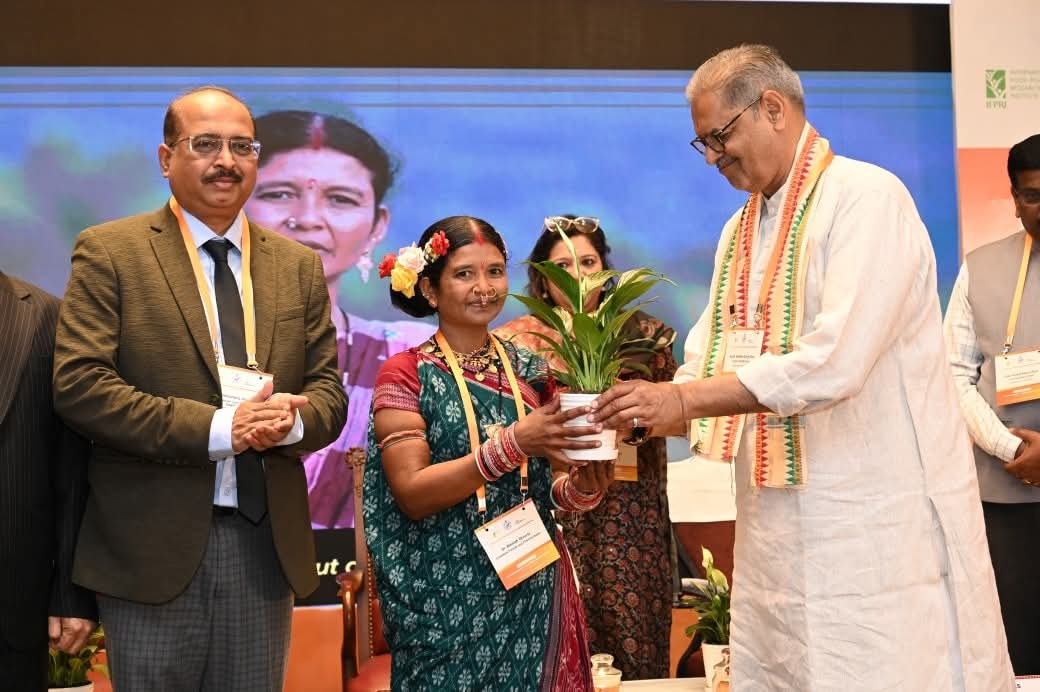
Bhubaneswar: Odisha is taking a major step toward gender-inclusive governance as the Department of Agriculture and Farmers’ Empowerment, in partnership with the International Food Policy Research Institute and the Gates Foundation, launched an inception workshop to operationalize the state’s new Gender Responsive Cell (GRC).
This initiative, which follows the cell’s inauguration at Krushi Bhavan, aims to move beyond policy intent by institutionalizing a framework that ensures gender equity is a core operational principle across all agricultural services and systems.
During the session, Deputy Chief Minister Shri Kanak Vardhan Singh Deo highlighted Odisha’s leadership in this field, noting that it is the only state to have developed a Standard Operating Procedure for manufacturing women-friendly farm machinery. Shri Sachin Ramachandra Jadhav, Secretary Agriculture & Farmers’ Empowerment graced the occasion.
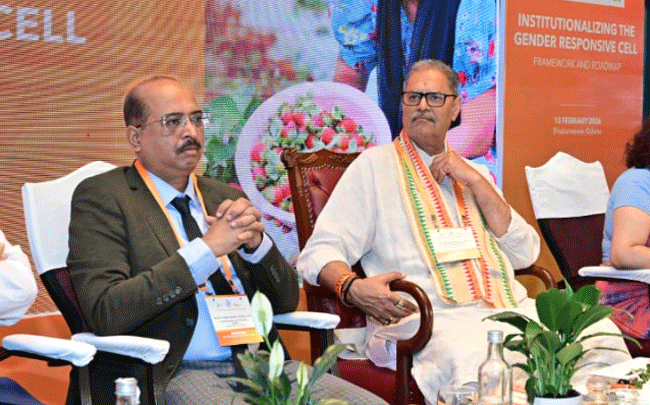
Shri Jadhav described the GRC as a governance reform. This inception workshop marks the beginning of collective action. Today’s discussions will help translate the GRC vision into a practical and achievable roadmap. GRC represents a shift toward accountable and evidence-driven agricultural governance.
The event also celebrated grassroots leadership by honoring Dr. Raimati Ghiuria, known as Millet Rani, for her work in traditional crop conservation, and Smt. Rina Behera for her technical expertise in farm machinery.
The workshop focused on creating a practical roadmap to bridge existing gender gaps through evidence-led reforms and interdepartmental convergence between agriculture, data systems, and women’s development sectors.
By integrating research insights with the lived experiences of women farmers and Self-Help Groups, the state aims to build a more accountable and climate-resilient agricultural landscape that prioritizes women-led development.
The workshop included technical sessions on gender-responsive agricultural transformation, evidence from IFPRI-led research initiatives such as the Gender, Climate Change and Nutrition Integration Initiative (GCAN), and experience-sharing by women leaders from Self Help Groups (SHGs) and Farmer Producer Organizations (FPOs).
Discussions focused on structural transformation in agriculture, climate resilience, women-centric agricultural mechanization and custom hiring models, women’s leadership, and the need for robust monitoring and evaluation frameworks.