

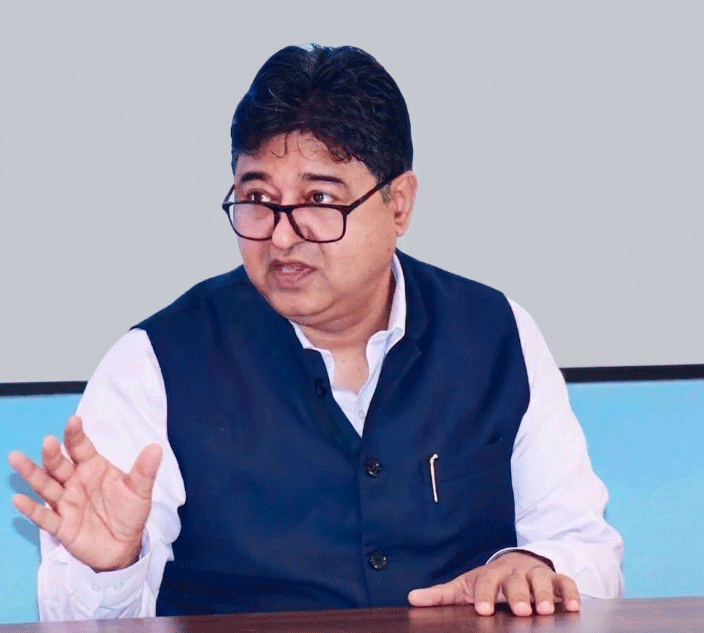
Bhubaneswar: Odisha Government has initiated a transformative shift in its administrative operations by implementing comprehensive amendments to the Delegation of Financial Power Rules of 1978.
This strategic move, notified by Principal Secretary Finance Shri Sanjeeb Kumar Mishra, is designed to instill a culture of efficiency, transparency, and rapid execution within the state’s governance framework.
By decentralizing financial authority, the government aims to empower senior officials and district-level administrators, allowing them to make critical fiscal decisions without the prolonged wait for cabinet or ministerial approvals that often stall essential public works.
Department of Finance has redefined the expenditure landscape for various administrative tiers. Departmental Secretaries have been granted full autonomy over incidental expenses, a move that simplifies the day-to-day management of government offices.
For the procurement of goods and specialized consultancy services, the financial ceiling for Department Heads has been set at 10 crore, while Secretaries now possess the authority to sanction up to 20 crore. This doubling of previous limits ensures that routine departmental needs and expert hiring processes move at a pace consistent with the state’s development goals.
The reform also places a heavy emphasis on infrastructure, recognizing that sectors like water resources, works, and energy are the backbone of economic growth. Consequently, these departments have been authorized to approve projects related to irrigation, power, and connectivity up to a limit of 200 crore.
This substantial increase in power is intended to bypass bureaucratic bottlenecks that previously delayed large-scale utility projects. At the same time, the government has maintained a system of checks and balances by ensuring that any procurement or service contract exceeding 100 crore still requires a mandatory review and approval from the State Cabinet.
Furthermore, the decentralization extends to the grassroots level by significantly strengthening the financial hands of district collectors. In an effort to address local needs more effectively, Collectors can now independently approve up to 8 crore for the construction of non-residential buildings and up to 2 crore for drinking water projects.
This localized empowerment ensures that community-level infrastructure is built and maintained without unnecessary interference from the state capital.
Principal Secretary Shri Mishra emphasized that these changes are not merely about spending more money, but about spending it more wisely and quickly to ensure that the benefits of government schemes reach the citizens of Odisha in a timely and effective manner.