

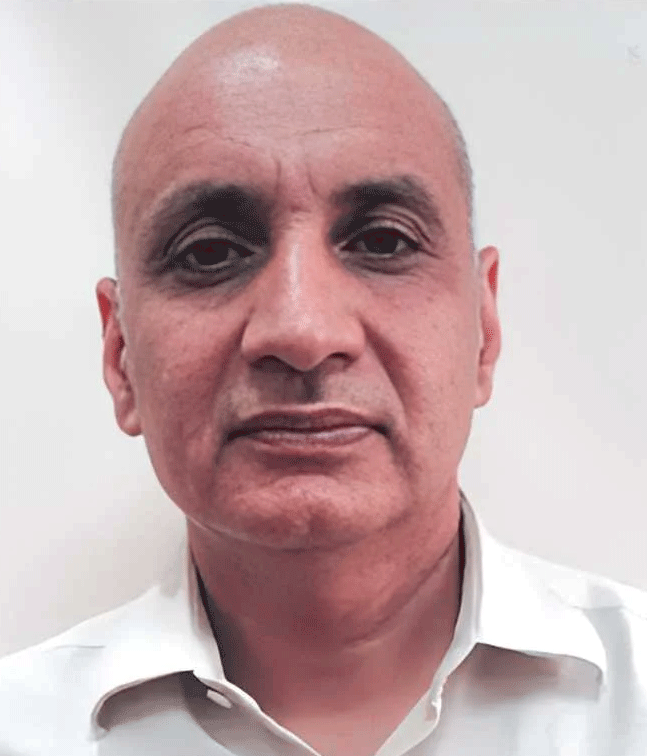
New Delhi: Shri Vir Vikram Yadav has officially taken charge as the Director General of Civil Aviation (DGCA). Appointed as part of a high-level bureaucratic reshuffle on March 31, 2026, Shri Yadav moves from his previous role as Additional Secretary in the Ministry of Environment, Forest and Climate Change to succeed Shri Faiz Ahmed Kidwai.
The new DGCA, a 1996-batch IAS officer of the Odisha cadre, is widely regarded as an honest, hard working and grounded mandarin who maintains a strong connection to grassroots realities and a reputation for making impartial, merit-based decisions.
This “ground touch” is expected to be a vital asset as he steps into the cockpit during a period of intense turbulence for the industry. His primary challenge involves restoring public and regulatory confidence following a series of high-profile safety incidents in 2025 and early 2026.
This includes overseeing the final investigation into the Air India Flight 171 crash and addressing recent concerns surrounding non-scheduled operators after a fatal charter plane crash in Baramati earlier this year.
Operational stability stands as another urgent priority. Shri Yadav must navigate the fallout from mass flight cancellations that have plagued major carriers, often linked to poor pilot roster planning and staffing shortages. He also inherits a regulator facing its own internal resource crunch, with significant vacancies in technical positions that complicate the oversight of a rapidly expanding market.
A critical and sensitive issue awaiting the new DGCA’s attention is the ongoing crisis surrounding pilot fatigue and the implementation of Flight Duty Time Limitations (FDTL). The transition to stricter rest norms—which increased mandatory weekly rest from 36 to 48 hours—triggered massive flight cancellations and operational disruptions across major carriers like IndiGo in late 2025.
DGCA Shri Yadav must now navigate the legal and operational deadlock after the regulator previously allowed airlines to count earned leave as weekly rest to stabilize schedules, a move currently being challenged in the Delhi High Court.
Beyond safety and staffing, the new DGCA Chief faces external economic pressures. Rising global fuel costs and geopolitical tensions in West Asia have forced carriers onto longer, more expensive routes. On the consumer front, Shri Yadav will be responsible for enforcing new passenger-friendly reforms, such as the mandate requiring airlines to offer at least 60% of seats without additional charges and ensuring transparent seat allocation policies.
As India aims to become the world’s third-largest aviation market by 2030, the industry will be watching closely to see how Yadav applies his pragmatic and fair administrative style to balance aggressive growth targets with the stringent safety and regulatory oversight required to maintain the sector’s integrity.