

New Delhi: In a significant leadership transition, Shri Nitin Nabin formally took charge as the National President of the Bharatiya Janata Party today, January 20, 2026. The 45-year-old leader from Bihar was elected unopposed to the top organizational post, marking a major generational shift within the party as it prepares for the next decade of political challenges.
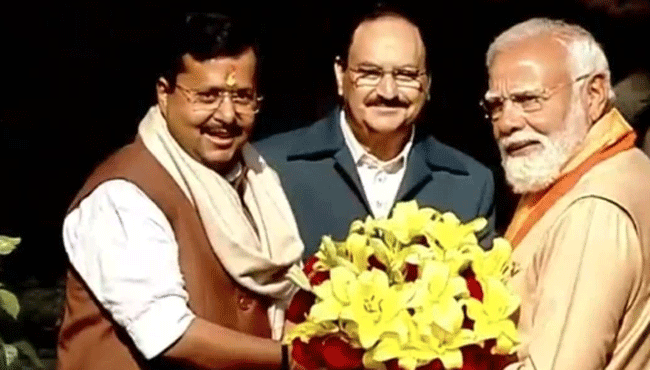
The transition ceremony took place at the BJP national headquarters in New Delhi at 11:30 am. The event was attended by high-ranking leaders including Prime Minister Narendra Modi, Home Minister Amit Shah, and Defence Minister Rajnath Singh. Outgoing President J.P. Nadda handed over the reins to Nabin, who previously served as the party’s National Working President since December 2025.
According to Dr. K. Laxman, the National Returning Officer for the party’s organizational elections, Nabin’s election was the result of a unanimous consensus within the party. A total of 37 sets of nomination papers were filed in his favor on January 19, with proposals coming from senior leaders, various state unit chiefs, and members of the National Council. No other candidate entered the fray, leading to his unopposed declaration.
Nitin Nabin brings a mix of administrative experience and deep organizational roots to the presidency. A five-term MLA representing the Bankipur assembly constituency in Bihar, he has held several key portfolios in the Bihar government, including Road Construction and Urban Development. He is the son of the late Nabin Kishore Prasad Sinha, a veteran BJP leader, and has risen through the ranks of the Bharatiya Janata Yuva Morcha, where he served as National General Secretary.
Political analysts view Nabin’s elevation as a strategic move to energize the party’s younger base and solidify its organizational structure. His tenure begins at a time when the BJP is focused on expanding its footprint in southern and eastern India while maintaining its dominance in traditional strongholds. As the youngest president in the party’s history, his leadership is expected to focus on digital mobilization and grassroots connectivity.