

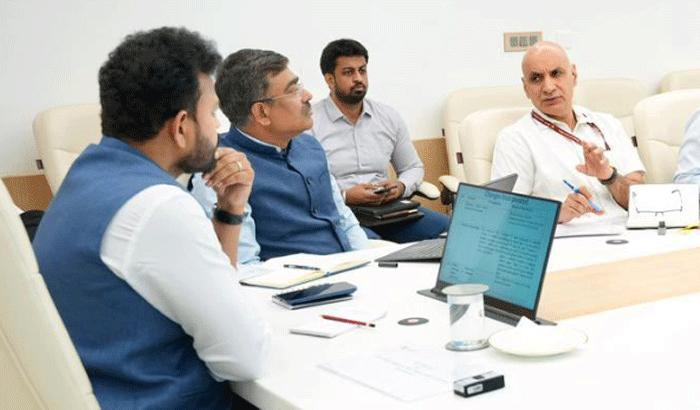
New Delhi: The Ministry of Civil Aviation (MoCA), under the leadership of Minister Shri Ram Mohan Naidu, has officially released the second phase of the DGCA Approved Flying Training Organizations (FTOs) rankings for April 2026.
Presented by DGCA Shri Vir Vikram Yadav, this data-driven framework serves as a landmark reform aimed at elevating training standards, safety, and accountability across India’s aviation institutions. This follows the successful launch of the first phase on October 1, 2025.
Minister Shri Ram Mohan Naidu articulated that the primary objective of this ranking system is to bring transparency to pilot training and make aviation a more accessible and attractive career for Indian youth. By providing objective performance indicators, the ministry aims to help aspiring cadets and their families make decisions with greater clarity and conviction.
The Minister highlighted the immense growth potential within the sector, driven by Prime Minister Narendra Modi’s focus on regional connectivity. Over the next five years, the Indian aviation landscape is projected to expand by 50 airports and 500 new aircraft. With an estimated requirement of nearly 30,000 additional pilots over the next decade and a historic 29,000 crore outlay for Modified UDAN, the government is creating a fertile environment for local talent.
The impact of the FTO ranking system is already visible. Training flying hours have increased from 32% to 50%, and there has been a notable expansion in aircraft fleets. These improvements have streamlined training efficiency, allowing cadets to obtain their Commercial Pilot Licenses (CPL) in less time.
Broader strategic goals include enhancing the global competitiveness of Indian FTOs and promoting self-reliance through the Train in India, Fly in India initiative. The government has supported this by liberalizing FTO policy, removing airport royalties, and rationalizing land rentals. Furthermore, the DGCA has digitized CPL examinations and introduced a single-window system for CPL and RTR licenses under the Bharatiya Vayuyan Adhiniyam.
Progress remains steady, with the number of CPLs issued growing by over 2.5 times in the last eight years. Recent data shows record numbers for 2024 and 2025, alongside the licensing of six new FTOs in the last 18 months and six more currently in development. This second phase ranking reinforces the Ministry’s commitment to a quality-oriented and competitive pilot training framework.