

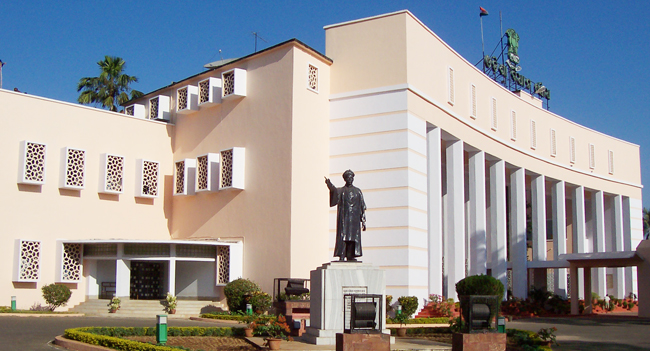
Bhubaneswar: The ongoing standoff in the Odisha Legislative Assembly highlights the deep-seated political frictions surrounding state resource rights and central legislation. The repeated disruptions, including the recent session where Question Hour lasted a mere four minutes before Deputy Speaker Shri Bhabani Shankar Bhoi was forced to adjourn proceedings until 4 PM, reflect a strategic confrontation between the Governing Bharatiya Janata Party and a united opposition consisting of the Biju Janata Dal and Congress.
At the heart of the friction is the Mines and Minerals Development and Regulation (MMDR) Amendment Act, which opposition parties condemn as detrimental to a mineral-rich state like Odisha. Both the BJD and Congress argue that the central legislation curtails the state’s autonomy over its vast natural resources and mineral-bearing lands, directly impacting local revenue, regional control, and tribal livelihoods. By positioning the issue as an assault on state rights and federal structure, the opposition aims to tap into regional sentiment and project the ruling party as indifferent to the economic interests of Odisha.
Politically, these continuous disruptions serve specific goals for each side. For the BJD, aggressive posture inside the Assembly allows the party to re-establish its strong regional identity following its transition to the opposition bench, demonstrating that it remains the primary custodian of Odisha’s interests. For Congress, participating in the protests consolidates its stance on tribal rights and natural resource protection, ensuring it stays visible in national and state narratives.
Conversely, the Treasury Bench accuses the opposition of creating artificial panic and deliberately preventing meaningful debate. Governing BJP Members maintain that parliamentary discussion, rather than parliamentary paralysis, is the appropriate route to voice concerns, alleging that the protests are driven by political positioning rather than public welfare.
Because both camps treat the MMDR legislation as a high-stakes ideological battleground, neither is willing to back down easily. As long as the opposition views floor disruptions as an effective political tool to mobilize public opinion, and the government holds its ground on federal policy execution, the legislative process remains stalled in persistent deadlock.