

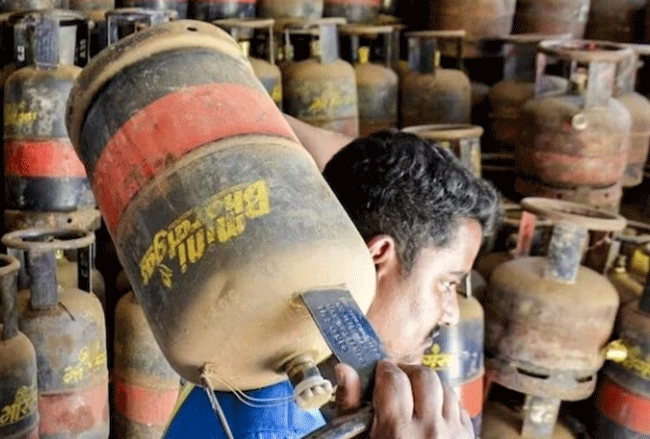
Bhubaneswar: The price of commercial LPG has undergone a dramatic transformation since 2014, fundamentally altering the economic landscape of Odisha. In early 2014, a 19 kg commercial cylinder was priced at approximately 1,241.
Following a series of volatile market adjustments and a massive single-day surge in May 2026, the price has climbed to over 3,000, marking an increase of roughly 141 percent over the twelve-year period.
This steep rise acts as a direct tax on the hospitality sector, which is a vital part of Odisha’s service economy. Because fuel is a non-negotiable operational cost for restaurants and hotels, the spike has severely compressed profit margins, leading to a precarious environment for hospitality jobs.
Smaller establishments that cannot absorb these costs often face the risk of closure or are forced to reduce staff numbers to stay solvent, directly impacting the livelihoods of thousands of workers across the state.
The most visible indicator of this inflation for the common citizen is found at the ubiquitous tea stalls of Odisha. For years, a standard cup of tea was a budget-friendly staple priced around 5 to 7.
However, the recurring hikes in commercial LPG have pushed this price point to 10 or 12 per cup in most urban and semi-urban areas. Many vendors now find themselves in a difficult position where they must either raise prices further or compromise on quality and quantity to maintain a thin margin of profit.
This change in tea pricing serves as a micro-level reflection of broader inflationary pressures, where the rising cost of a basic commodity signals the increasing financial burden on both small business owners and everyday consumers throughout the region.
Following a series of volatile market adjustments and a massive single-day surge in May 2026, the price in Bhubaneswar has climbed to 3,238, marking an increase of over 160 percent since 2014. This steep rise acts as a direct tax on the hospitality sector, which is a vital part of Odisha’s service economy.
Because fuel is a non-negotiable operational cost, the spike has severely compressed profit margins for hotels and restaurants. Many establishments are now forced to choose between raising menu prices or facing closure, especially those locked into fixed catering contracts for the current wedding season.
This financial strain has a direct impact on hospitality jobs, as businesses are forced to reduce staff numbers or cut wages to stay solvent, creating a precarious environment for the thousands of workers who depend on the industry.
The impact on hotels and restaurants in Odisha has moved beyond simple pricing changes into a full-scale operational crisis. Large-scale catering services and hotels are reporting that the cost of fuel has nearly doubled for commercial users, forcing them to trim menu items and renegotiate terms with clients who booked months in advance.
Many vendors now find themselves compromising on quantity or quality to maintain a thin margin of profit. This change in tea pricing serves as a micro-level reflection of broader inflationary pressures, where the rising cost of a basic commodity signals the increasing financial burden on both small business owners and everyday consumers throughout the region.