

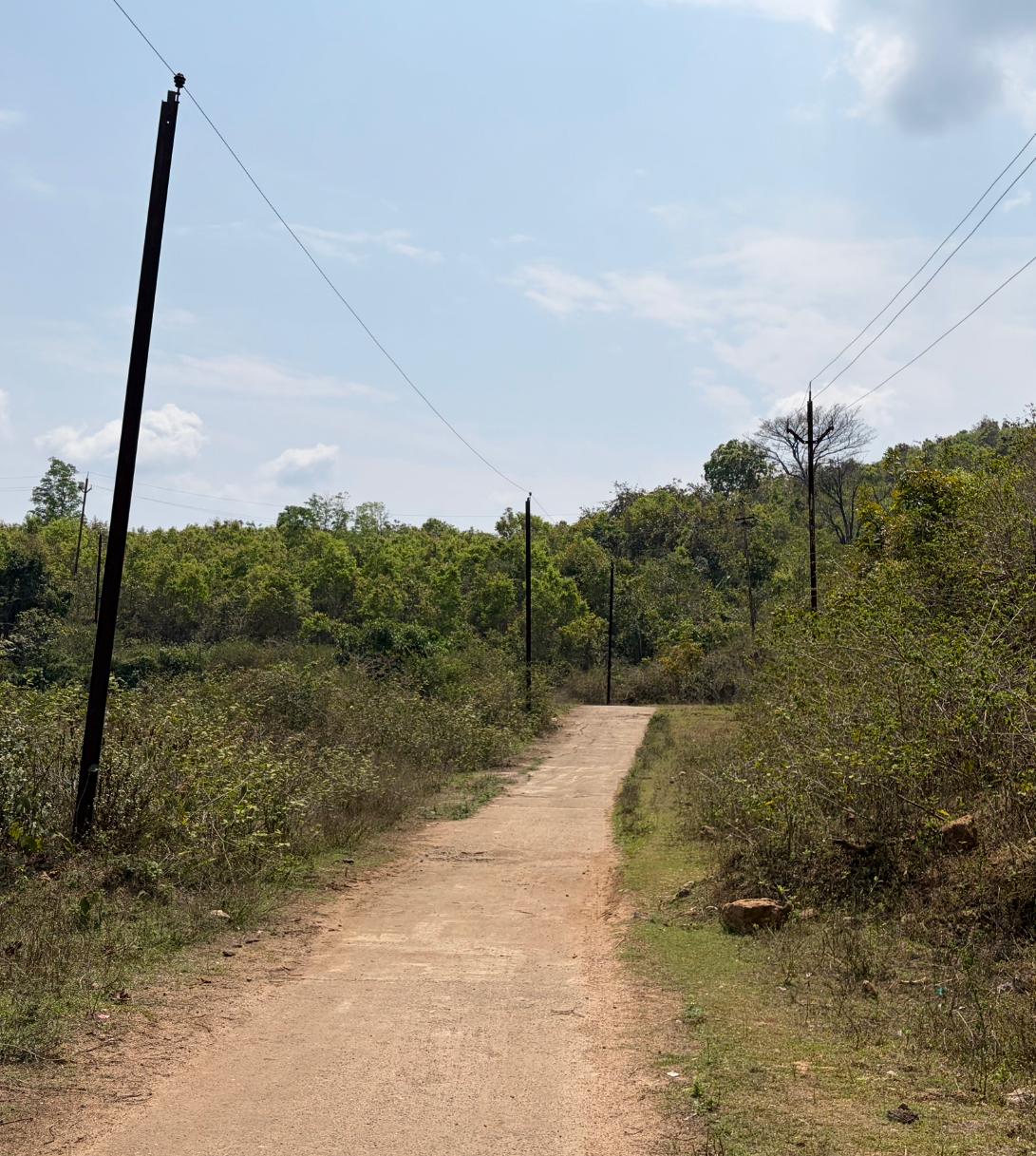
Koraput: The two electric poles standing side-by-side in the Kotia villages of Koraput serve as a striking visual metaphor for a unique administrative tug-of-war.
One pole, often a slim concrete or galvanized steel structure, represents the rapid outreach of the Andhra Pradesh government. By extending its power grid from the Salur Mandal, Andhra Pradesh uses these utility lines as a physical claim of jurisdiction, attempting to integrate the tribal residents into its socio-economic fold through immediate service delivery.
These poles are not just infrastructure; they are silent messengers of a neighboring state’s intent to establish a de facto presence in a long-disputed territory.
In contrast, the sturdier poles set up by the Odisha Government are part of a massive, structured developmental push aimed at solidifying its historical and legal sovereignty.
Under the Ama Kotia initiative, Odisha has poured hundreds of crores into the region, building high-capacity power lines to support permanent infrastructure like hospitals, police stations, and residential schools.
While Andhra’s approach is often seen as agile and grassroots-focused, Odisha’s strategy relies on heavy-duty, institutional permanence to prove that the 21 villages of the Kotia cluster are an inseparable part of its administrative map.
This competition has created a peculiar “dual citizenship” reality for the local residents. It is common to see households that possess ration cards and voter IDs from both states, effectively doubling their access to welfare schemes.
They might receive a monthly pension from Andhra Pradesh while benefiting from Odisha’s subsidized rice and housing programs. Even in education, a single family might send one child to an Odia-medium school and another to a Telugu-medium one, hedging their bets for future employment opportunities in either state. This duality provides a temporary economic cushion but leaves the residents in a state of long-term political uncertainty.
As of early 2026, the situation remains a high-stakes game of competitive federalism where electricity is the ultimate tool of influence. While the Supreme Court maintains a status quo on the border dispute, the presence of two distinct power lines in a single village ensures that the light in a tribal home comes with a political signature.
The “war of the poles” highlights a rare scenario where a remote border region receives surplus attention and resources, yet remains caught in a limb between two governance models, each waiting for the other to blink.