

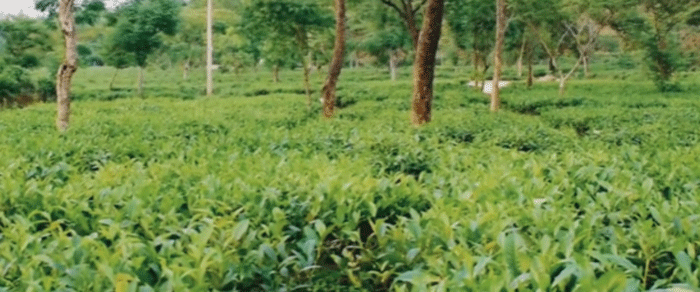
Kendujhar: Efforts to revive and expand commercial tea cultivation in the mineral-rich district of Kendujhar have received a major push with Chief Minister Shri Mohan Charan Majhi taking interest and senior officials visit and active local governance initiative. Chief Secretary Shrimati Anu Garg has harped on revival of tea gardens and promote tea tourism in Kendujhar.
Agriculture and Farmers Empowerment Department Secretary Shri Sachin Ramachandra Jadhav today toured prospective areas across Kendujhar where agro-climatic conditions offer ample scope for large-scale tea plantations. During his field assessment, he held extensive discussions with the district administration to evaluate feasibility, address bottlenecks, and chart a sustainable roadmap for crop diversification and rural employment.
Beyond agricultural productivity, Shri Jadhav specifically looked into the prospects of integrating tourism within the prospective tea garden areas. Drawing parallels with renowned tea tourism hubs in states like Kerala, West Bengal, and Assam, which successfully attract large numbers of travelers annually, he emphasized how verdant plantation landscapes could position Kendujhar as a unique eco-tourism destination.
District Collector Shri Vishal Singh has taken a keen interest in the dual initiative, closely monitoring potential tracts of land and coordinating administrative measures to facilitate both agricultural expansion and tourism infrastructure in the region. The collaborative push aims to leverage local terrain advantages to create new economic and experiential avenues for farming communities and visitors alike.
This renewed momentum brings attention back to the region’s historical tryst with commercial tea cultivation, which dates back decades. The pioneering venture took root in the early 1980s with the establishment of the Bhuyanpirh Tea Estate in the Taramkanta area of Kendujhar. Operationalized commercially, the estate initially flourished and generated substantial local employment, particularly supporting livelihoods among indigenous Bhuyan and Juang communities.
However, operational setbacks, shifting market demands, and infrastructural hurdles led to a severe decline in production by the early 2000s, eventually resulting in the closure of the plantation. For years, agricultural experts and local stakeholders have maintained that the undulating topography and microclimate of Kendujhar remain inherently suited for tea horticulture if backed by modern institutional support.
The current administrative focus under Shri Jadhav and Collector Shri Singh marks a strategic effort to unlock this dormant potential. By combining modern agricultural extensions, policy backing, and structured district support with tourism-driven economic models, the initiative seeks to transform Kendujhar into a vibrant alternative hub for tea cultivation and green tourism in Odisha.