

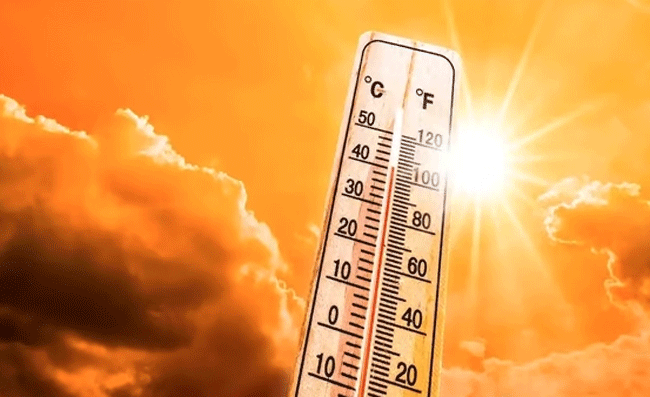
Bhubaneswar: An intense summer heatwave has firmly gripped Odisha, severely impacting daily life as day temperatures soared past the 40-degree Celsius threshold in 18 towns and cities across the state today. The combination of a scorching sun, searing heat, and high humidity has brought a dramatic end to a brief lull, causing widespread discomfort from the interior western districts all the way to the coastal belt.
According to data compiled from the Bhubaneswar Regional Meteorological Centre, Jharsuguda emerged as the hottest location in the state, recording a blistering maximum temperature of 43.4 degrees Celsius. The western region bore the brunt of the extreme conditions, with Boudh trailing closely behind at 42.9 degrees Celsius. Severe summer conditions were also heavily felt in Sonapur and Angul, which both touched a sweltering 42.1 degrees Celsius, while Sambalpur and Talcher clocked in at 41 degrees Celsius.
Other key industrial and urban centers reported highly elevated daytime temperatures, including Hirakud at 40.5 degrees Celsius, Nayagarh at 40.4 degrees Celsius, and Bolangir at 40.2 degrees Celsius.
The heatwave has completely disrupted normal routines, making its presence felt early in the morning. Residents reported that the outdoors became unbearable as early as 7:00 AM, significantly lowering foot traffic in local marketplaces and forcing people to remain indoors during peak daytime hours.
The India Meteorological Department has issued a weather warning for the state, projecting that the situation could intensify further. Meteorologists predict that maximum temperatures could witness a subsequent rise of an additional 3 degrees Celsius over the next three days, potentially pushing mercury levels close to the 45-degree Celsius mark in the most vulnerable pockets of Odisha.
Concurrently, the weather department noted that atmospheric instability might trigger isolated thunderstorms, lightning, and gusty winds in select districts, offering temporary, localized relief but doing little to break the broader, oppressive heat pattern. Public health authorities and weather officials have strongly advised citizens to take necessary precautions, including staying thoroughly hydrated, wearing loose clothing, and avoiding direct sun exposure during the afternoon.