

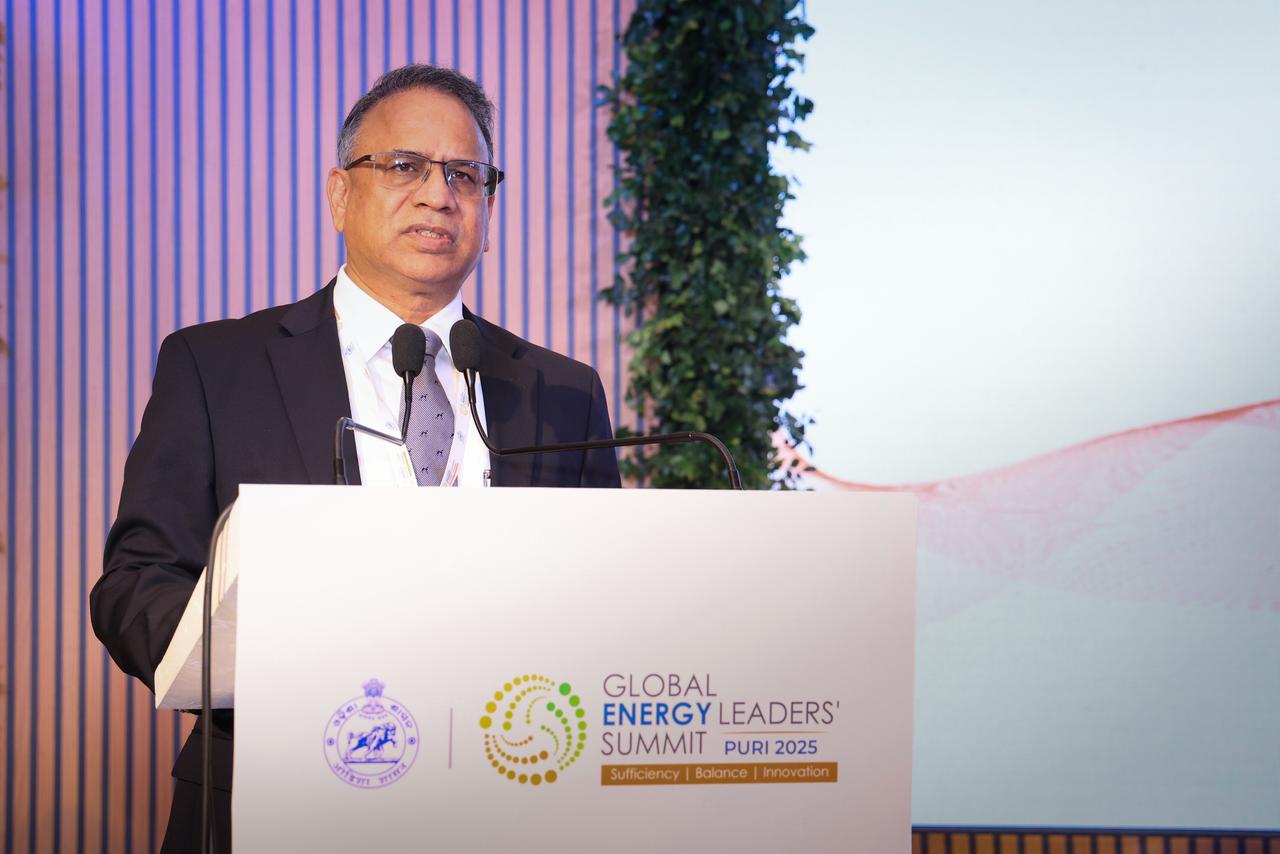
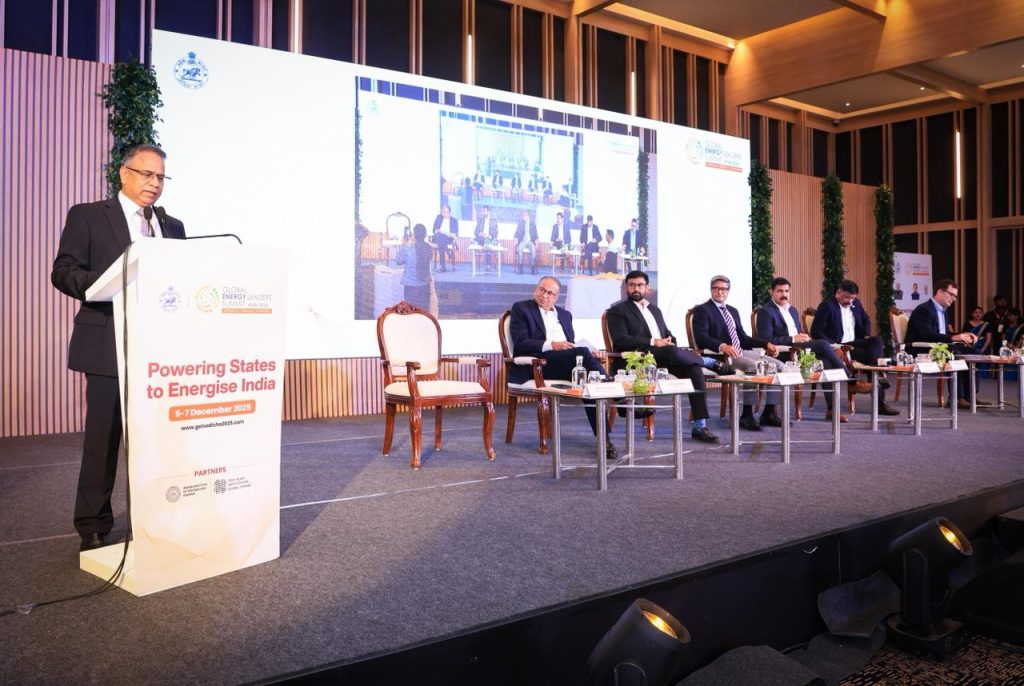
Puri: The second day of the Global Energy Leaders Summit 2025 in Bhubaneswar featured a significant Public-Private Dialogue session on the theme “Partnership,” focusing on the critical elements of sustainability, balance, and innovation in the national energy transition.
Deputy Chief Minister and Energy Minister Shri Kanak Vardhan Singh Deo attended the pivotal session, which was moderated by Mr. William Morrison, Chairman of MetricsLed.
Shri Vishal Dev, Principal Secretary, Energy, set the stage by emphasizing the urgent requirement to shift the country’s energy paradigm from fossil-based fuels to non-fossil-based energy sources to ensure a successful transition.
Principal Secretary Shri Vishal Dev spoke extensively on the Green Energy Plan of Odisha for Viksit Odisha 2036. The plan outlines Odisha’s strategy to achieve energy self-reliance and become a leader in the green energy sector by 2036, coinciding with the state’s centenary.
Key components of this vision include the development of green hydrogen hubs, leveraging the state’s hydropower potential for pumped storage systems, and substantial investments in solar and wind capacity, with a strong focus on drawing private investment for these projects. The state’s commitment to skill development in the green sector and advancing household solar adoption were also noted as core parts of the inclusive green transition roadmap.
The distinguished panel, which included Dr. Praveer Sinha, CEO of Tata Power, Shri Debabrata Ghosh, India Head of Aurora Energy, Shri Chandra Bhusan, CEO of iForest, Shri Vivek Jaswal, EVP (Green Hydrogen & PMO) of Renew, and Shri Prashant Choubey, President of Avaada Group, unanimously underscored that robust Public-Private Partnership (PPP) models, supported by a strong balance of investment, are essential to overcome the complex challenges of the energy transition.
Odisha’s distribution system, operating under the DISCOM framework, was cited as a classic example of effective energy management achieved through such partnerships.
Discussions highlighted that innovative PPP investments and a balanced approach to developing energy infrastructure are indispensable for realizing a sustainable, non-fossil-based energy future and building resilient distribution systems nationwide.