

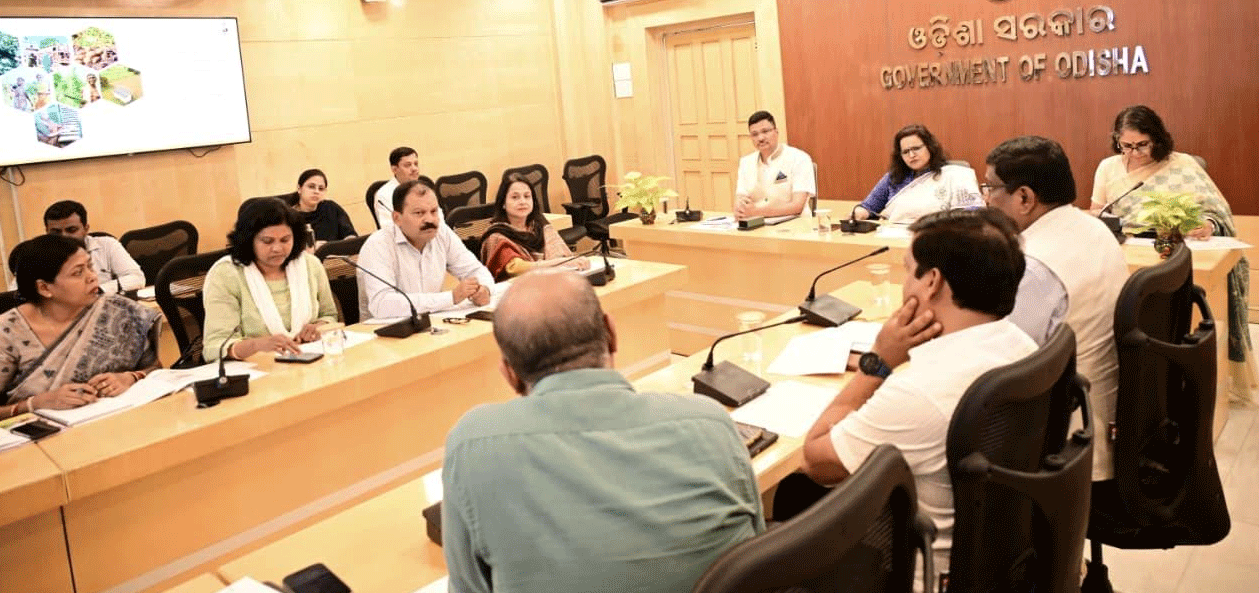
Bhubaneswar: Amidst the quiet of a public holiday, when administrative corridors usually fall silent, the pulse of governance beat with deep empathy and urgency at the Lokaseba Bhawan. Demonstrating an exemplary commitment to the state’s farming community, Chief Secretary Shrimati Anu Garg convened and led a high-level review meeting to meticulously assess preparedness for the Kharif 2026 agricultural season, specifically focusing on mitigating the potential impacts of the El Nino phenomenon. Her decision to dedicate a holiday to safeguarding the livelihoods of millions of farmers underscores a profound administrative sensitivity toward the backbone of the state’s economy.
The high-level deliberations brought together a dedicated cohort of senior administrators, including Dr. Arabinda Kumar Padhee, Additional Chief Secretary of Revenue and Disaster Management; Shrimati Subha Sharma, Principal Secretary of Water Resources; Shri Sachin Ramchandra Jadhav, Commissioner-cum-Secretary of Agriculture and Farmers’ Empowerment; Shri Rajesh Prabhakar Patil, Special Relief Commissioner and Cooperation Secretary; and Dr. Manorama Mohanty, Regional Director of the India Meteorological Department, Bhubaneswar, alongside the Vice-Chancellor of OUAT and other key officials. Together, they formed a unified front to shield the agrarian community from climate uncertainties.
The central focus of the meeting was El Nino, a complex climate phenomenon capable of altering global weather patterns and casting shadows of doubt over the Indian monsoon. While data and long-term forecasts presented by the IMD suggest that the impact of El Nino in Odisha is likely to be minimal—with rainfall expected to hover close to normal parameters—Shrimati Garg refused to leave the fate of the farmers to chance or statistical probabilities. Driven by a proactive philosophy that prioritizes ultimate caution over complacency, the Chief Secretary emphasized that the state must remain fully prepared for any unforeseen deficit in rainfall. She directed departmental secretaries to maintain a continuous, vigilant watch over rainfall distribution, reservoir levels, and ongoing agricultural activities.
In a vital decision aimed at ensuring that not a single drop of water is wasted, the meeting resolved to constitute a dedicated Task Force Committee for comprehensive water management and irrigation. With the Department of Water Resources acting as the nodal agency, and working in close coordination with the Department of Agriculture and Farmers’ Empowerment, this committee will oversee water availability, design precise irrigation schedules for both Kharif and Rabi seasons, enhance irrigation capacities, and actively guide farmers in optimizing water usage. The discussion heavily featured strategic planning around water conservation, micro-irrigation, and the highly efficient management of reservoirs for the critical year of 2026.
During the review meeting, the Commissioner-cum-Secretary of the Agriculture and Farmers’ Empowerment Department, Shri Sachin Ramchandra Jadhav, presented a detailed status report and comprehensive preparedness plan for the Kharif 2026 season in light of the El Nino year.
Shri Jadhav informed that the Honorable Deputy Chief Minister of Odisha had previously conducted a meeting on May 27 to discuss the potential impacts of El Nino and review agricultural preparedness, issuing vital guidance for the season. Furthermore, a national-level conference was held in New Delhi on May 29 to provide additional strategies and recommendations. To support the agrarian community, agricultural information and expert guidance are being continuously provided to farmers through the Krushi Samrudhi Helpline in Odisha.
According to the data presented by the agriculture department, a total cultivation target of 57.88 lakh hectares has been set for the current Kharif season in Odisha. Alongside this, the state aims to provide irrigation facilities to 39.04 lakh hectares of farmland. To meet the cultivation needs, a plan has been made to supply 2,66,780 quintals of seeds for the Kharif season. Out of this target, more than 1,18,787 quintals of seeds have already been made available to the farmers. Additionally, a buffer stock of 14,350 quintals of seeds has been safely reserved to tackle any emergency situation. Shri Jadhav also highlighted that review meetings concerning Kharif cultivation are being conducted every single week to dynamically monitor and assess the state’s readiness.
On the crucial front of fertilizer availability, the Cooperation Secretary Shri Patil informed that against a requirement of 11.43 lakh metric tonnes for the Kharif season, the current supply and availability at the district level remain highly satisfactory. To protect vulnerable farmers from exploitation, enforcement squads are actively conducting raids at the district and block levels to curb any irregularities or black-marketing. Additionally, the state aims to bring nearly 25 lakh farmers under the protective safety net of the Pradhan Mantri Fasal Bima Yojana this season.
Concluding the review, Chief Secretary Shrimati Anu Garg issued directive instructions to strengthen inter-departmental coordination down to the grassroots district administration. Looking beyond just water scarcity, she expressed deep concern for post-deficit challenges, urging officials to prioritize potential pest management and focus on groundwater recharge. Her message was clear: wherever groundwater is heavily extracted, rigorous awareness and replenishment systems must be instituted. This intensive holiday review stands as a testament to an administration that acts as a proactive guardian, standing firmly with its farmers to ensure prosperity and resilience against the unpredictable forces of nature.