

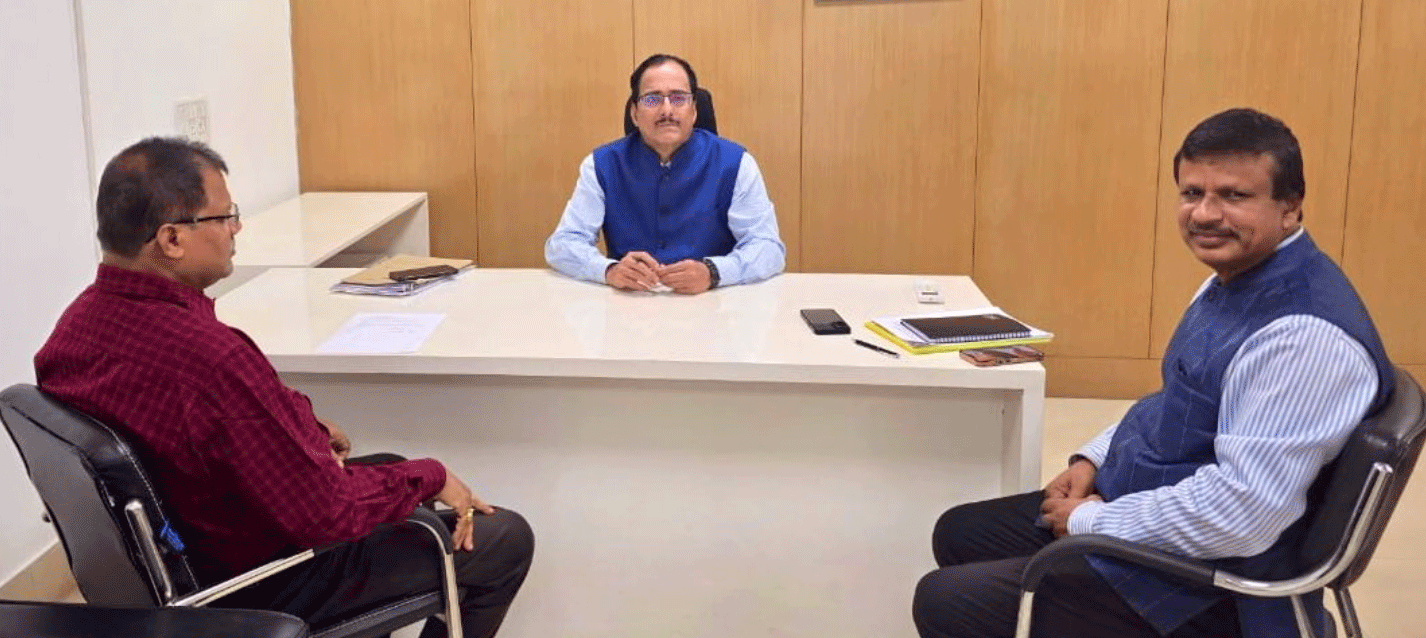
Bhubaneswar: The Experts Committee on Education, headed by Shri Ashok Kumar Tripathy recently established by the Odisha Government to provide a definitive resolution to the systemic grievances within the academic sector, officially initiated its administrative operations today.
Chaired by Shri Ashok Kumar Tripathy, an Indian Administrative Service (IAS) (R), the committee held its inaugural high-level consultative session at the state capital. The meeting saw the participation of key stakeholders, including the Secretary of the School and Mass Education Department and senior representatives from the Higher Education Department.
Alongside the Chairperson, committee member Shri Santanu Kumar Sahoo and Member Convener Shri Sanatan Panda were present to outline the strategic roadmap for the coming months.
The formation of this committee follows a significant announcement by Chief Minister Shri Mohan Charan Majhi in the State Assembly, aimed at addressing the persistent demands of teachers, lecturers, and non-teaching staff across government, aided, and unaided private institutions. For several years, educational employees have sought clarity on multiple fronts, most notably concerning the regularization of contractual service years into their service books and the upward revision of grade pay for primary teachers to the level of 4,200. The committee has been given a strict six-month deadline to analyze these demands thoroughly and submit a comprehensive set of recommendations to the state government.
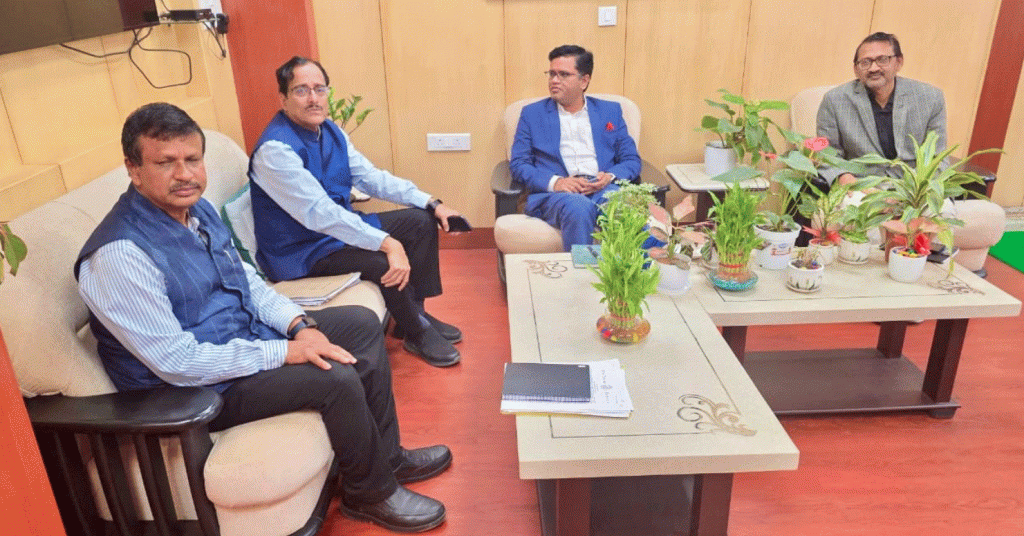
During today’s deliberations, the Chairperson Shri Tripathy emphasized the importance of a coordinated approach between the School and Mass Education and Higher Education departments. This integration is crucial, as the grievances often overlap across different levels of the educational hierarchy, particularly regarding career advancement and pension schemes. The discussions today touched upon the logistical and financial implications of the employees’ demands, as well as the complex legal frameworks surrounding the grant-in-aid and block-grant systems. The committee intends to conduct extensive consultations and hold meetings with various teachers’ associations to ensure that all segments of the academic workforce are represented in the final report.
The move is regarded as a strategic attempt by the state administration to end the recurring cycle of protests and strikes that have historically disrupted the academic calendar. By involving seasoned administrative experts like Shri Tripathy, the government is signaling its intent to find sustainable, policy-driven solutions rather than temporary fixes. As the committee moves forward, its primary challenge will be balancing the fiscal constraints of the state with the urgent need for professional security and financial parity demanded by thousands of educators across Odisha who have long advocated for equitable treatment.