

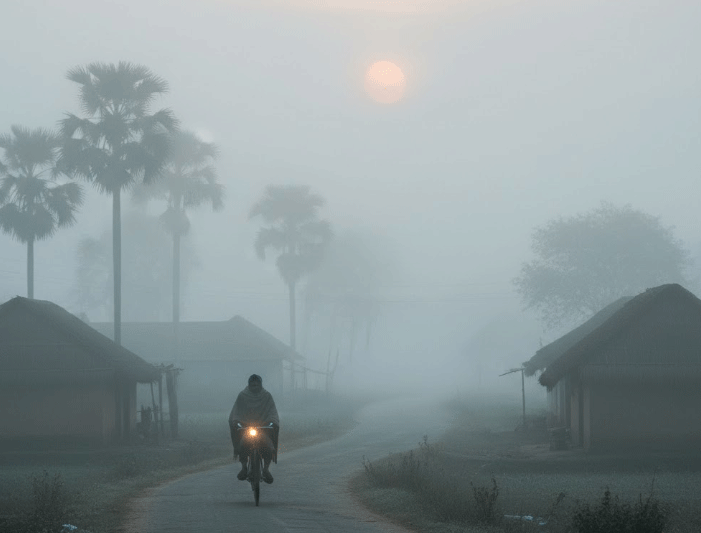
Bhubaneswar: A white veil has descended upon the coastal edges of Odisha, where the morning sun now struggles to pierce through a thick, milky haze. As of January 29, 2026, the Meteorological Centre in Bhubaneswar has placed four key districts—Bhadrak, Kendrapara, Jagatsinghpur, and Puri—under a yellow warning for isolated dense fog. In these areas, visibility has plummeted to between 50 and 200 meters, effectively turning early morning commutes into a cautious crawl. While the interior heartland remains mostly clear and green on the maps, the coastal belt is navigating a ghostly landscape that is doing much more than just slowing down traffic.
For the farming communities in the affected regions, this persistent moisture is a double-edged sword. While it provides a brief respite from the dry winter air, the prolonged lack of sunlight and high humidity are breeding grounds for pests and fungal diseases. Farmers in Puri and Jagatsinghpur are reporting concerns over vegetable crops like brinjal and cabbage, which are susceptible to rotting under these damp conditions. Meanwhile, rabi crops such as moong and biri are facing growth delays due to the reduced photosynthetic activity caused by the sun being hidden behind the fog until late morning.
On the health front, the sudden fluctuations in temperature combined with the heavy air are taxing for the elderly and those with respiratory vulnerabilities. The dense fog traps pollutants closer to the ground, often worsening symptoms for asthma and bronchitis patients. Health officials have noted a seasonal uptick in common flu and throat infections, advising citizens to keep warm as the state navigates this transition period where night temperatures are expected to rise slightly before another potential dip.
Looking at the broader climatic canvas, the temperature patterns in Bhubaneswar and across Odisha have shown a marked shift over the last two decades. Data from 2006 to 2026 indicates a steady climb in both mean annual temperatures and the frequency of extreme weather events. In Bhubaneswar, the average maximum temperature has seen a rise of approximately 1 to 1.5 degrees Celsius over this period. The city, once known for its comfortable winters, now experiences more “warm nights” even in January, with minimum temperatures frequently staying 2 to 3 degrees above the long-term historical average.
This 20-year trend reveals that while the state still faces sharp cold snaps, the overall duration of intense winter has shrunk. In contrast, the summer months have become more punishing, with the mercury in Bhubaneswar and interior districts like Jharsuguda and Angul regularly breaching the 45-degree mark earlier in the season than they did in the mid-2000s. This long-term warming trend suggests that the current foggy spells are part of a more volatile atmospheric system, where the balance between the land’s heat and the sea’s moisture is becoming increasingly unpredictable.