

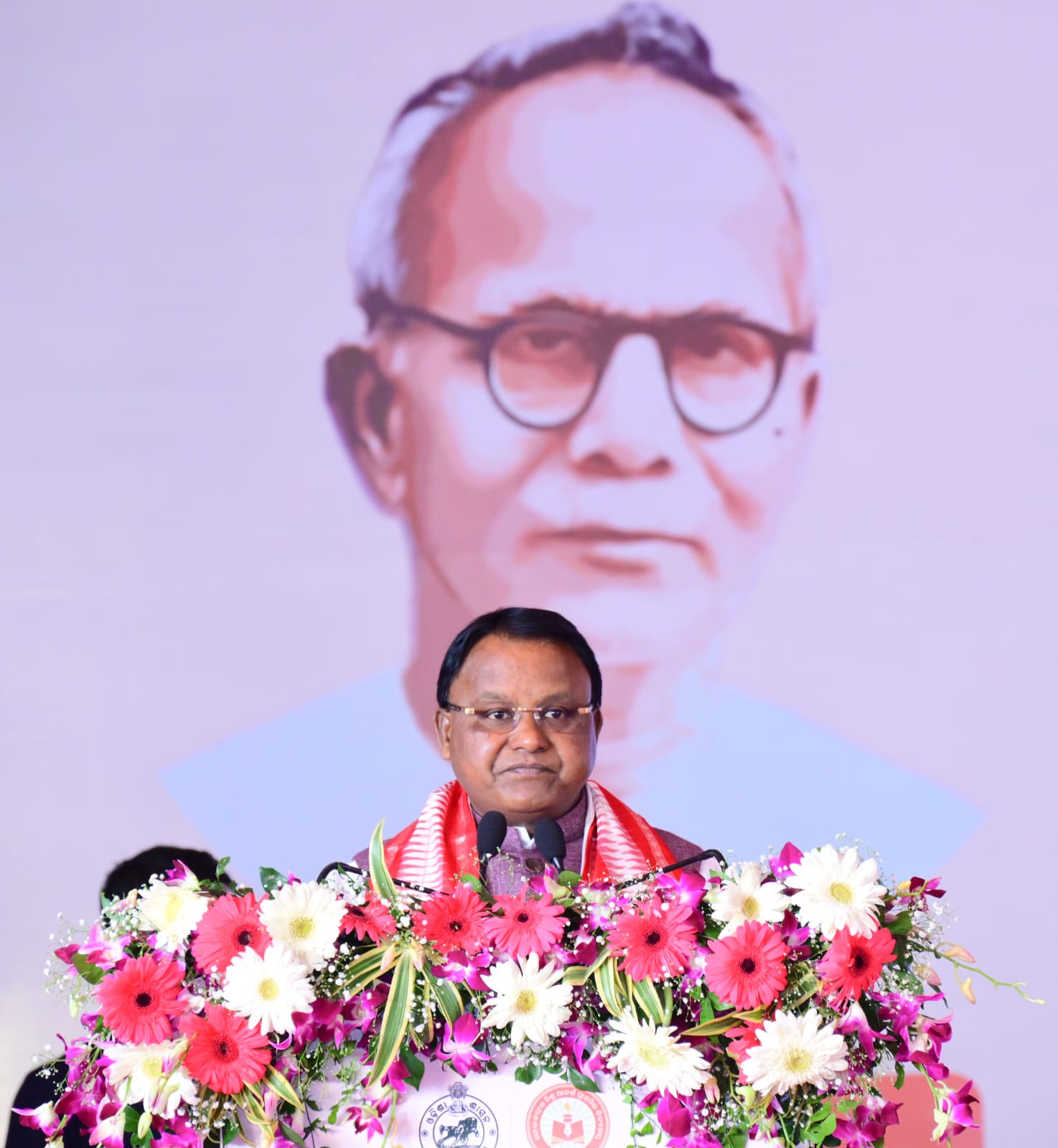
Banapur: The Foundation Laying of 118 Godabarisha Adarsha Prathamik Vidyalayas marks a transformative epoch in Odisha’s educational governance, propelled by the vision of Chief Minister Shri Mohan Charan Majhi.
This initiative is not merely an administrative expansion but a profound moral response to the systemic inequities that have historically marginalized rural learners.
Drawing from his foundational experience as an educator, Shri Majhi has engineered a policy framework that bridges the chasm between constitutional mandates and localized reality, ensuring the Right to Education Act is manifested through qualitative excellence rather than mere quantitative compliance.
By situating these centers of excellence at the panchayat level, the State addresses the layered causality of rural educational underperformance, which often stems from deficient infrastructure and the lack of high-quality pedagogical environments.
The Godabarisha Adarsha Prathamik Vidyalayas are structured to align with the National Education Policy 2020, offering a continuous developmental trajectory from Shishu Vatika through Class VIII.
This systemic synthesis integrates advanced physical assets—such as smart panels, gender-sensitive sanitation, and multi-purpose facilities—with an evidence-based narrative focused on socio-emotional learning and life skills.
The deliberate focus on school ambience, including greenery and musical instruments, reflects a holistic understanding of child psychology, aiming to transform the rural classroom into a space of intellectual dignity and cultural growth.
The socio-legal precision of this program is reinforced by a tiered governance structure designed to ensure rigorous accountability. At the apex, the State Level Steering Committee provides the centralized policy vision and implementation guidelines.
This is coupled with regional oversight where District Collectors and District Magistrates exercise monitoring authority through District Level Committees.
Crucially, the model decentralizes agency to the community level, entrusting School Headmasters with the formation of local committees to maintain the high standards of this intervention.
This structural investment functions as a catalyst for social mobility, seeking to rectify historical disparities and equip the youth of Odisha with the requisite cognitive and ethical tools to navigate a globalized landscape.