

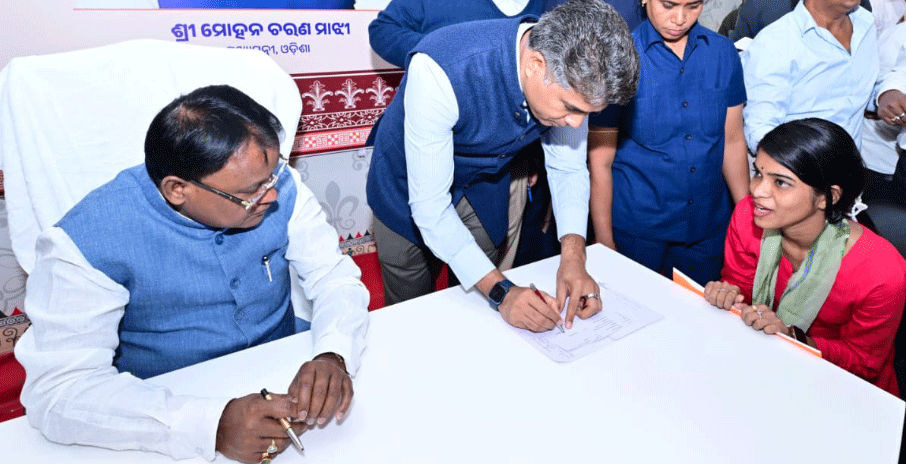
Bhubaneswar: In a definitive move toward administrative decentralization and the democratization of state power, Chief Minister Shri Mohan Charan Majhi presided over the Jan Sunani Program at the Grievance Cell in Bhubaneswar, signaling a systemic shift toward a “people’s government.”
Under the sincere coordination of PS to CM Shri Manoj Kumar Sahoo, the grievance redressal mechanism has been calibrated to address the layered causality behind public distress.
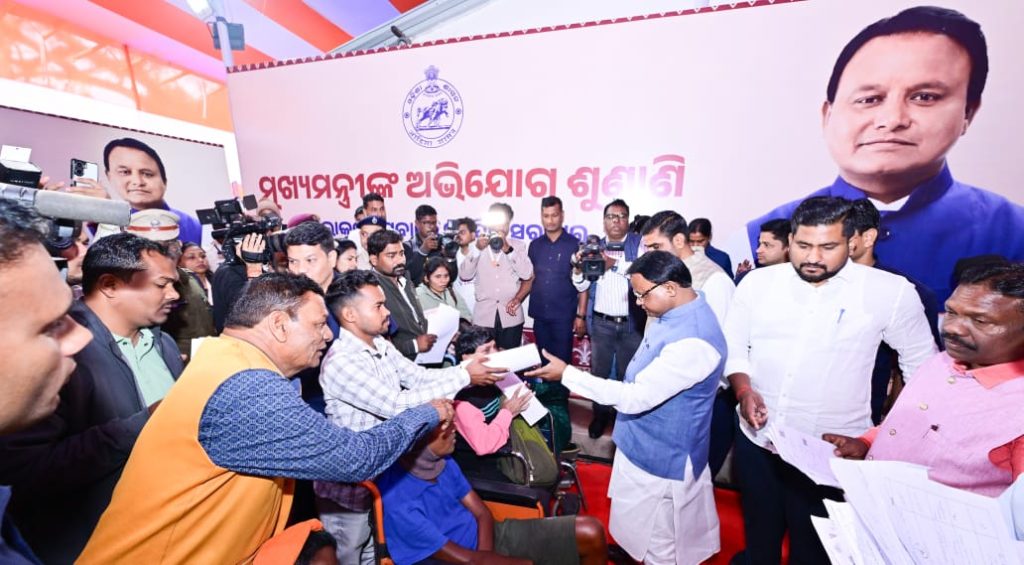
The presence of senior ministers and high-ranking officials during the redressal process serves as a critical structural signal, ensuring that directives issued by the Chief Minister are integrated immediately into the departmental workflow rather than being stalled by bureaucratic inertia.
This 16th session of the institutionalized public hearing underscores a strategic effort to dissolve the historical insulation of the executive branch, replacing it with a mechanism of direct accountability and socio-legal precision.
The administrative philosophy articulated by the Chief Minister rests upon the collapse of the vertical distance between the governing elite and the governed populace.
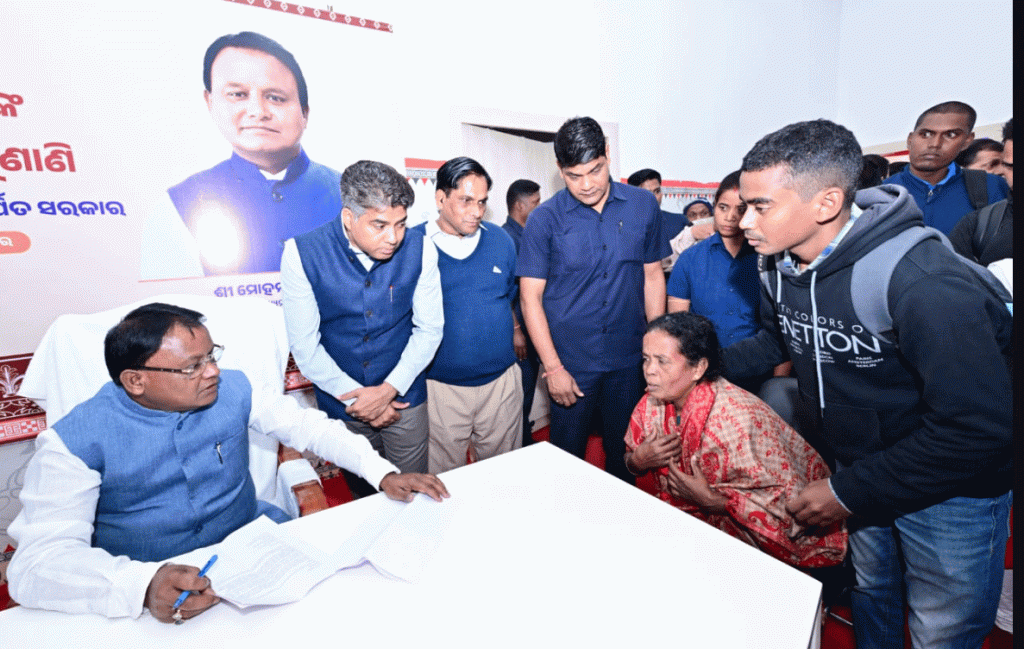
By framing public trust as the primary fuel for state functionality, the administration is attempting to reposition the citizen not as a passive recipient of policy, but as the central stakeholder in a transparent governance loop.
The processing of over several individual cases from various districts highlights a commitment to geographical inclusivity, ensuring that the peripheral voices of Odisha are heard within the capital’s administrative core. This proactive engagement is not merely a gesture of political empathy but a rigorous administrative exercise aimed at identifying systemic bottlenecks that prevent the delivery of justice.
The Chief Minister’s mandate—to bring the system as close as possible to the people—functions as a corrective measure against the traditional isolation of the bureaucracy.
By mandating immediate remedial steps, the state is prioritizing evidentiary action over rhetorical promises, fostering a governance model where institutional strength is derived from the resolution of individual grievances.
This evidentiary narrative of service is designed to build the foundational trust necessary for the long-term project of constructing a prosperous and developed Odisha, ensuring that the state’s trajectory is anchored in the lived realities of its citizens.