

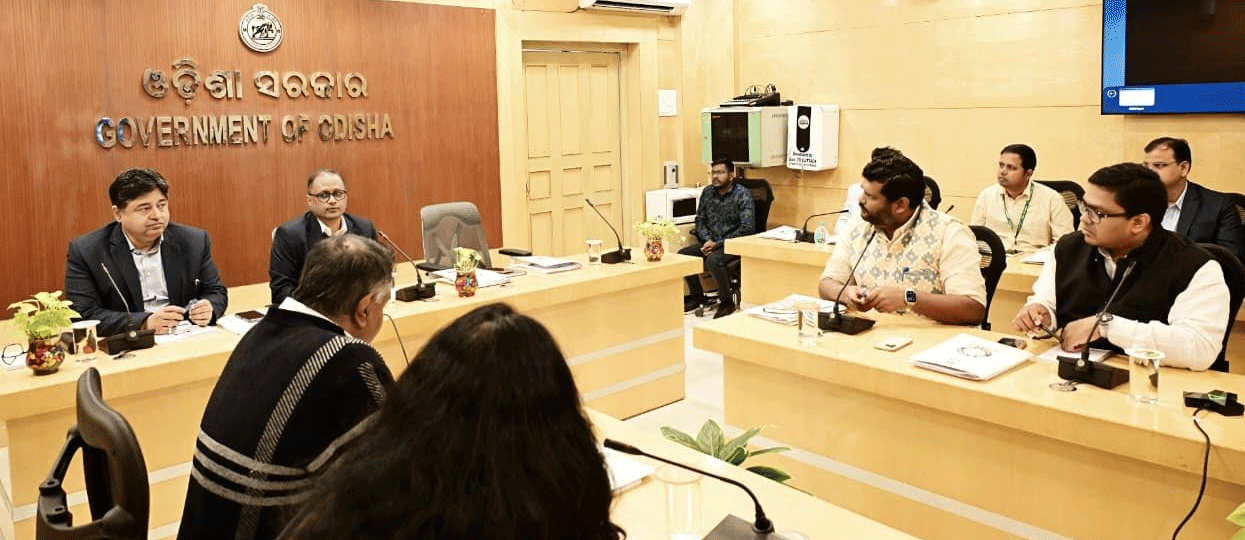
Bhubaneswar: In a definitive move toward mapping the demographic and socio-economic landscape of the state, the Government of Odisha has activated the preparatory phase for the 2027 Census of India.
A high-level meeting of the State-level Census Co-ordination Committee was convened today at Lok Seva Bhawan under the chairmanship of Development Commissioner, Shri Deoranjan Kumar Singh. Principal Secretary Finance, Shri Sanjeeb Kumar Mishra and other senior officers were present.
This exercise, characterized by its structural density and moral urgency, seeks to establish a precise evidence-based narrative for future policy interventions through a rigorous systemic synthesis of state data.
The administrative roadmap for this monumental task is divided into two distinct phases to ensure socio-legal precision. The first phase, encompassing house listing and housing census operations, is scheduled to take place over a one-month duration between April and May 2026. This foundational step will be followed by the primary population enumeration phase, which is mandated to occur from February 9 to February 28, 2027. A brief revision round will conclude the process in early March 2027 to ensure no resident is excluded from this critical count.
Reflecting a shift toward modern governance, nearly 90 percent of the census operations will utilize digital platforms. This technological integration includes an OTP-based self-enumeration facility, allowing citizens to contribute their data with unprecedented accuracy and security. The workforce for this operation will comprise approximately 100,000 enumerators and supervisors, primarily drawn from the ranks of teachers and local government officials. To uphold the professional rigor required for such a significant undertaking, the government has authorized a financial incentive of 25,000 rupees for the field staff.
Director of Census Operations, Shri Nikhil Pavan Kalyan, confirmed that the state has finalized the administrative boundaries for all local bodies, including newly established municipal entities, to prevent any geographic fragmentation of data. The layered causality of this census—linking individual household metrics to statewide developmental planning—underscores the government’s commitment to a meticulously documented future. As the state embarks on this journey of self-documentation, there is a shared spiritual and civic resolve to ensure that the process is conducted with the highest integrity